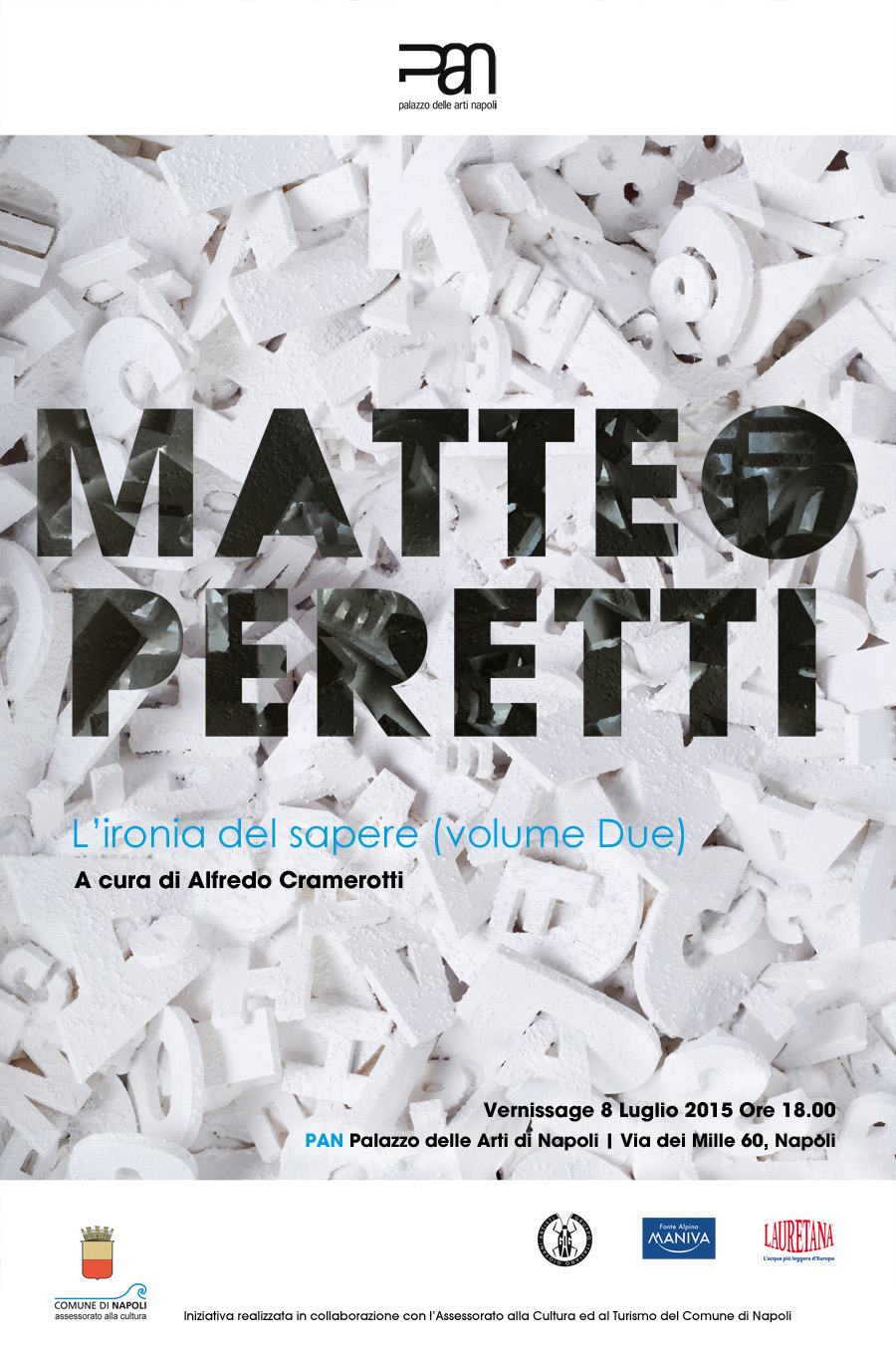
Matteo Peretti: L’Ironia del Sapere (Volume Due) / The Irony of Knowledge (Volume Two) @ PAN Museum Naples
MATTEO PERETTI
L’Ironia del Sapere (Volume Due) / The Irony of Knowledge (Volume Two)
Curated by Alfredo Cramerotti
PAN Museum, Palazzo delle Arti Napoli
9-31 July 2015
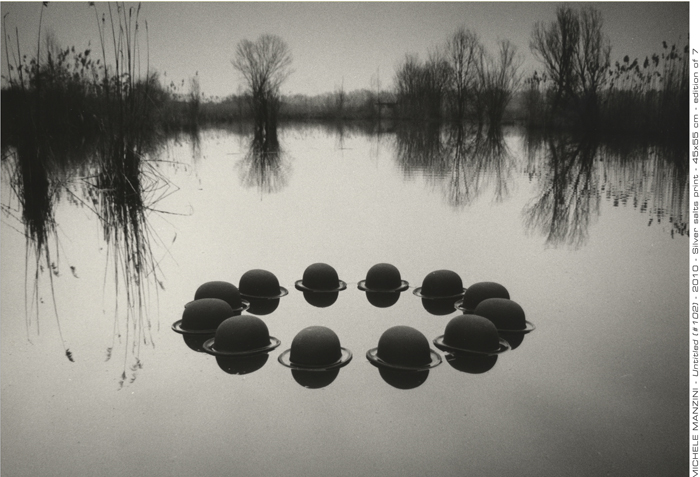
… the tragedy bloomed. And deceit became knwoledge. Exhibition by Michele Manzini
English:

“When we recognize the cultural rather than political or physical traits of a context we can call it cultural geography.
“For example, this is what happens when the relationship between artists and the public is based equally on the two sides in order to generate, first knowledge (the ‘what’), and then meaning (in what terms). An artist’s ability consist in pushing himself beyond this artist/viewer dichotomy to create a third space, a cultural geography, an attempt to communicate. And not just communication between artistic and historical disciplines, but above all between “other” undertakings: economy, industrial design, philosophy, agriculture, law, town planning or whatever is most relevant in a particular place at a particular moment. Artists relate together spheres of activity and knowledge through a set of disciplines – and at every step they question themselves about what, how, and why. At least at this point.
“Every event linked to a cultural geography sets off a new challenge for the next action: new formats, new physical and mental spaces, new kinds of relationships, new times. Artists do not invent but simply transform existing infrastructures as the public slowly becomes receptive to them. They might start from museums of natural history and books about the economy to arrive at YouTube and the San Remo festival. They can incorporate buses, advertising hoardings, and scientific measurements. Art comes about when knowledge comes into conflict with the imagination, and this is a healthy, productive, and relevant conflict. “The work of an artist is a centre for possible studies. Not surefire but imaginable ones. And thus doable for the very fact that we can conceive of them.”
Alfredo Cramerotti, 2011
The show by this Veronese artist, who for years has been involved with the theme of landscape, will therefore be characterized by a kind of dissemination of the exhibition across various interpretative planes and levels. A curatorial approach consisting of semantic shifts, the dismantling of conceptual apparatuses, anomalous choices of exhibiting, iterations, invasions of other fields, talks, and the production of texts that describe aims which, at times, are divergent with respect to the artist’s figurative interests and his solid theoretical underpinning.
—
Italiano:

” Possiamo definirla geografia culturale, quando riconosciamo tratti culturali anziche’ politici o fisici di un contesto.
” Per esempio succede quando la relazione tra artista e pubblico si poggia equamente su ambedue le parti per generare prima conoscenza (che cosa), e poi significato (in che termini). L’abilita’ di un artista sta nello spingersi oltre questa dicotomia artista/spettatore, creando uno spazio terzo, una geografia culturale, un tentativo di comunicazione. Non solo tra discipline artistiche o storiche, ma soprattutto tra pratiche ‘altre’: economia, design industriale, filosofia, agricoltura, legge, urbanistica o quello che e’ piu’ rilevante in un determinato posto e un dato momento. L’artista mette in relazione sfere di attivita’ e conoscenza attraverso un ‘set’ di discipline – e a ogni passo si interroga sul cosa, come e perche’. O almeno a questo punta.Ogni evento legato a una geografia culturale fa scattare una nuova sfida per la prossima azione; nuovi formati, nuovi spazi fisici e mentali, nuovi tipi di relazioni, nuovi tempi. L’artista non inventa, semplicemente trasforma le infrastrutture esistenti man mano che il pubblico si apre a queste. Puo’ partire dai musei di storia naturale e dai libri di economia e arrivare a YouTube e al Festival di Sanremo. Puo’ incorporare autobus, tabelloni pubblicitari e misurazioni scientifiche. L’arte succede dove la conoscenza entra in conflitto con l’immaginazione, ed e’ un conflitto sano, produttivo, rilevante. ll lavoro di un artista e’ un centro per studi possibili. Non certi, immaginabili. E percio’ fattibili, proprio perche’ riusciamo a concepirli.”
Alfredo Cramerotti, 2011
La mostra dell’artista veronese, da anni impegnato sul tema del paesaggio, sarà quindi caratterizzata da una sorta di disseminazione dell’evento espositivo su più piani e livelli interpretativi. Un approccio curatoriale fatto di slittamenti semantici, smontaggio degli apparati concettuali, anomale scelte espositive, iterazioni, intersezioni, invasioni di campo, talk, produzione di testi che descriveranno traiettorie talvolta divergenti rispetto alla ricerca figurativa dell’artista e al suo solido corpus teorico.


 Curatorview [Alfredo Cramerotti]
leave a comment