CPS 54th Venice Biennale Project – Beirut Talk Trailer
‘The ownership and the status of Lebanese history’ is a performative theoretical research project consisting of three public performances – In Beirut, Messina and Venice
The research performances will form the theoretical base for the 52 min investigative video documentary about the research process and restitution attempt of artworks and artifacts whose stay in Lebanon draws a blank in their provenance description. Artworks such as Guercino’s ‘Samson Captured by the Philistines’, presently part of the New York Metropolitan Museum of Art’s collection, for instance.


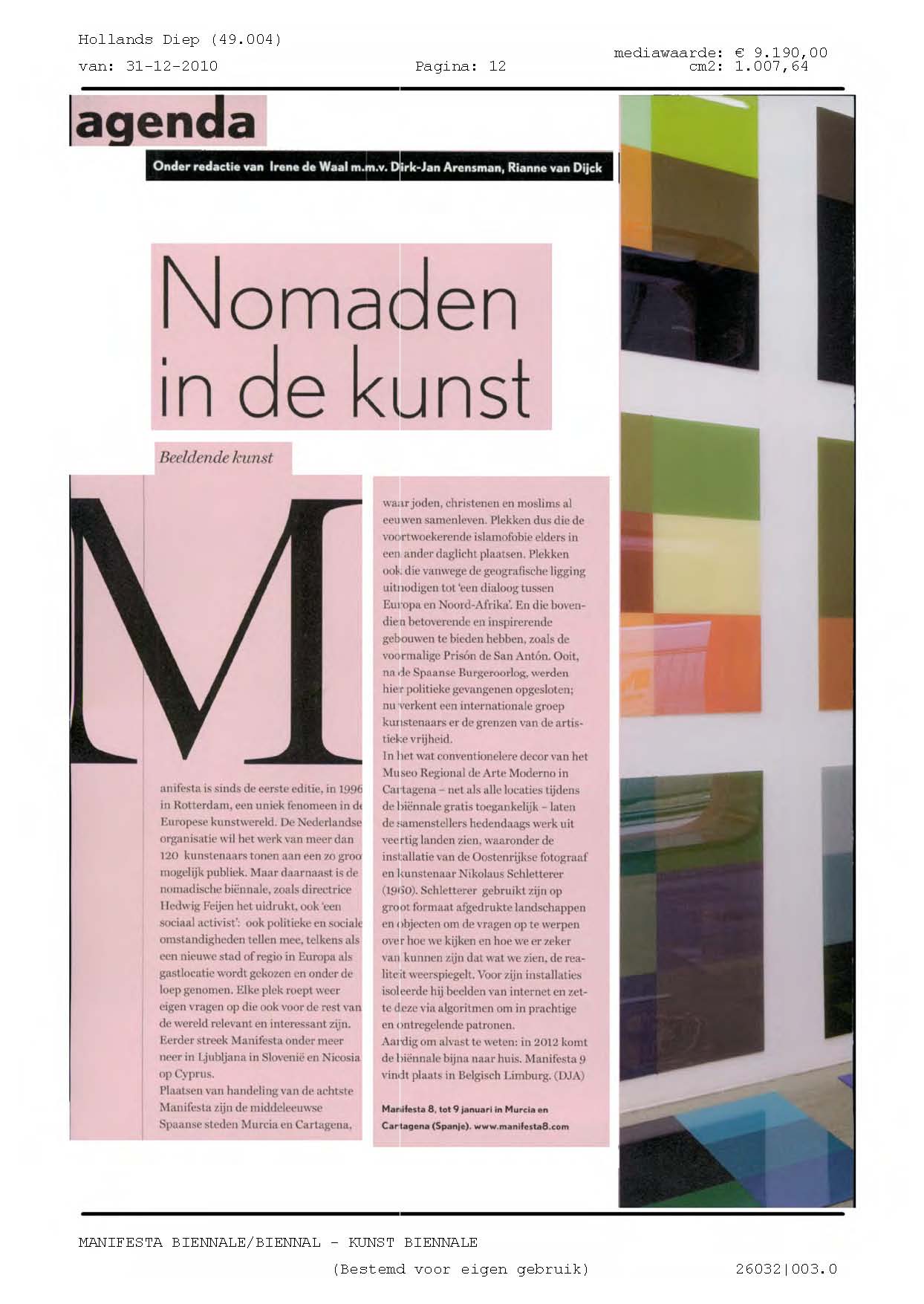
Hollands Diep magazine: Manifesta 8 review
Hollands Diep Magazine
31.12.2010
by Irene de Waal, Dirk-Jan Arensman and Rianne van Dijck
(in Dutch)

artmagazine: Manifesta 8 review
artmagazine.cc – An den Rändern der Festung Europa
17.12.2010
by Roland Schöny
(in German)

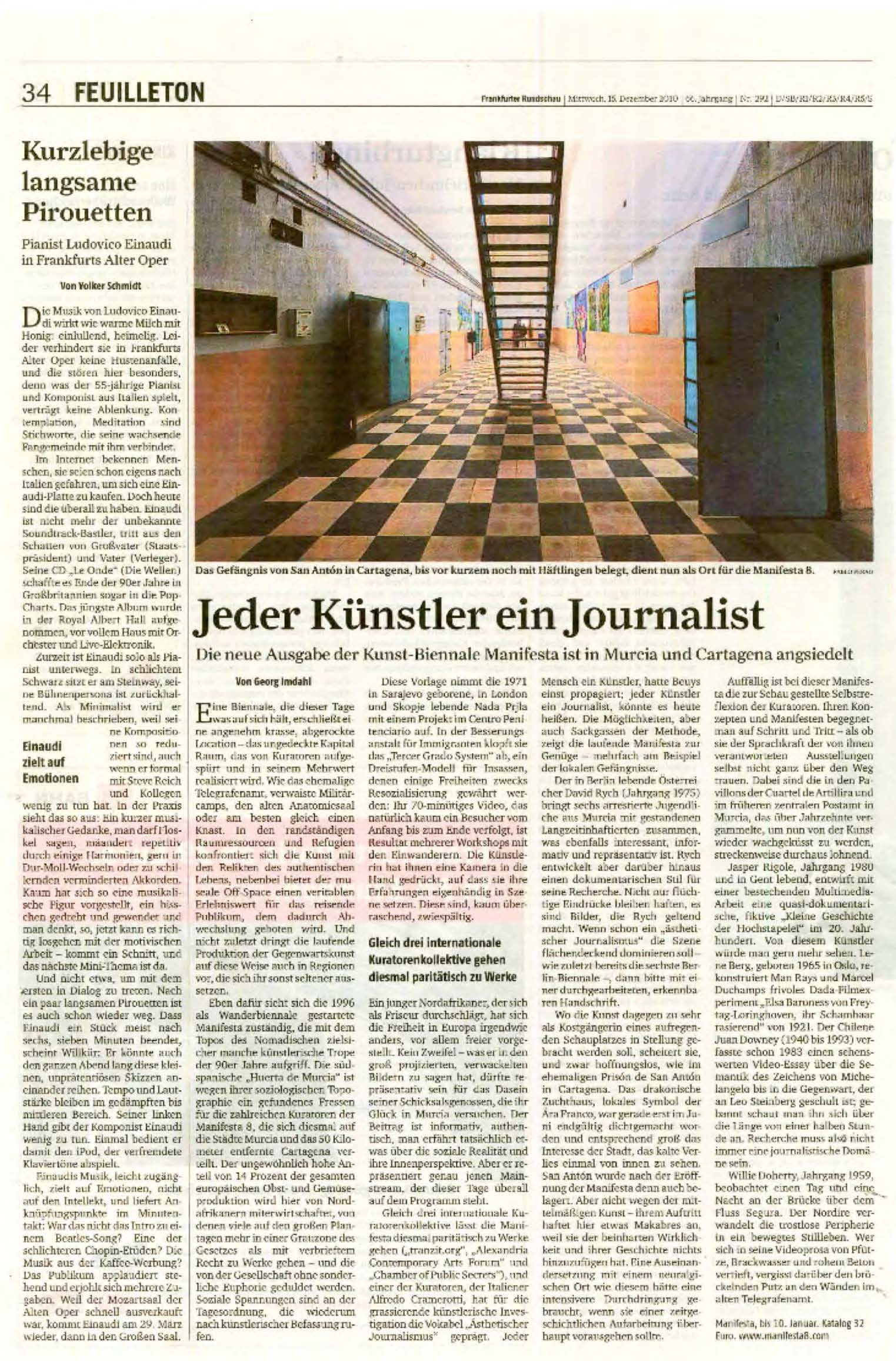
Frankfurter Rundschau: Manifesta 8 review
Frankfurter Rundschau Newspaper
15.12.2010
by Georg Imdahl
(in German)
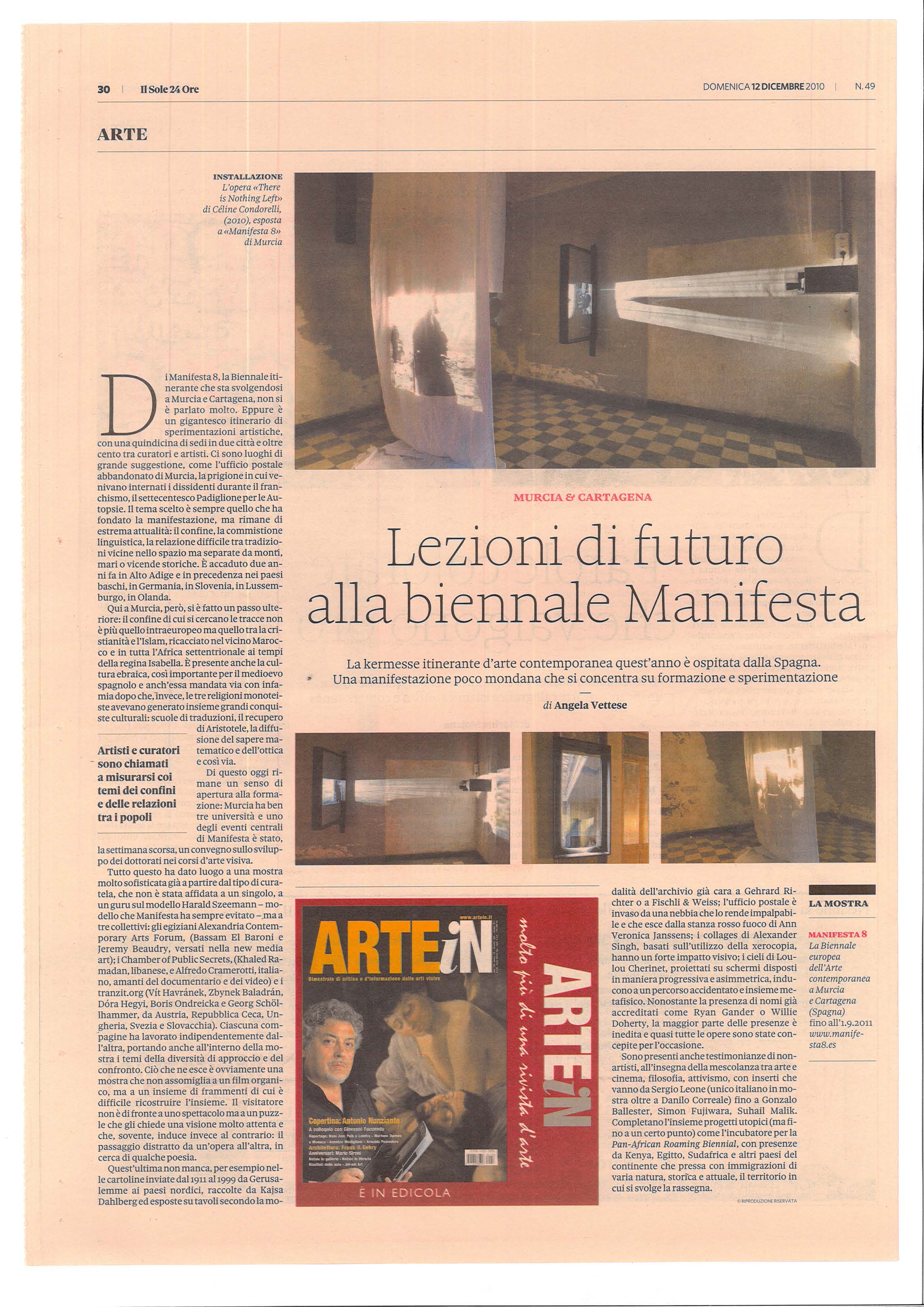
Il Sole 24 Ore: Manifesta 8 review
Lezione di futuro alla biennale Manifesta
by Angela Vettese
12.12.2010
(in Italian)

TVE Metropolis – Manifesta 8: AGM 10 feat. Comrade Alfredo Neri (excerpt)
(Spanish below)
Special Metropolis TV format from TVE Spain about Manifesta 8 / CPS Chamber of Public Secrets / AGM 10 feat. Comrade Alfredo Neri (2006).
A ‘performative documentary’ about Alfredo Neri, the spokesman of the Italian neo-nazi movement Skinheads. The work was presented in Manifesta 8 by AGM 10 which selected a number of archive pieces from CPS archive.
A powerful analysis of the media construction, representation and mediation of facts, identities and historical narratives through the documentary language.
(Spanish)
Una de las piezas más impactantes de la emisión será el fragmento del trabajo de AGM 10: CPS (Italia), titulado: Camarada Alfredo Neri (2006-2010) Un documental de corte ficticio para hacernos reflexionar sobre la construcción de los relatos y del lenguaje documental.
Talk at ARTIUM Vitoria-Gasteiz: The Aesthetics of Journalism
El Correos newspaper, 25 January 2011
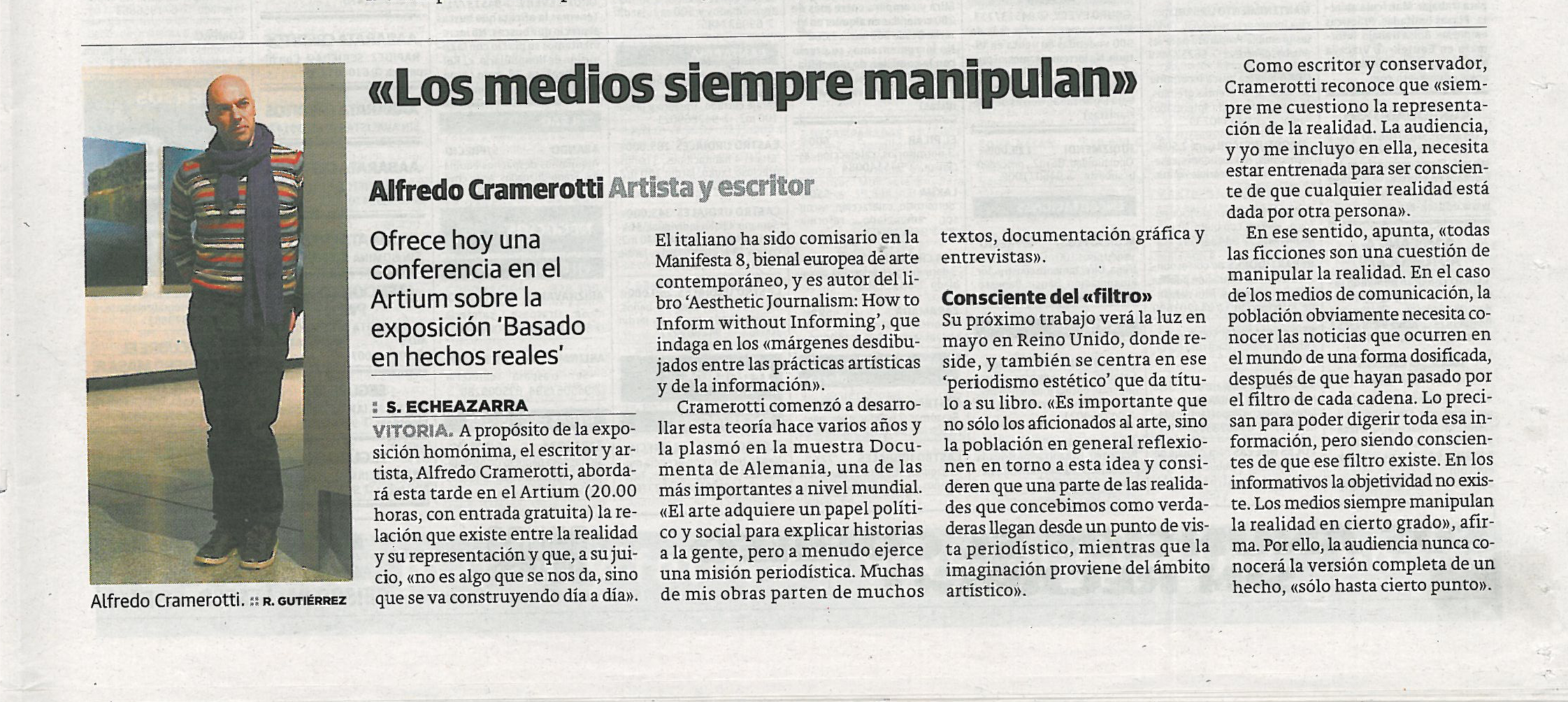
Over the past six years Alfredo Cramerotti has written about the aesthetic merger of contemporary art and the news media. Drawing from his book Aesthetic Journalism: How to inform without informing (2009, Intellect), Cramerotti provocatively advances the idea that art and journalism are not separate forms of communication, but rather two sides of a unique activity , the production and distribution of images and information.
As aesthetic regimes, both journalism and artistic makes claims for the truth, albeit of a different kind. One is a coded system that speaks for the truth (or so it claims), the other a set of activities that questions itself at every step (or so it claims), thus making truth. Whereas journalism provides a view on the world ‘out there,’ as it ‘really’ is, art often presents a view on the view, truth posited as acts of (self)reflection. Cramerotti will examine both as a types of truth production, as systems of information that defines truth in terms of the visible: producing not only what can be seen, but also what can be imagined, and thus imaged. As such, we start to get closer to the core of reality itself when we make our reality not a given, irreversible fact, but a possibility among many others.
The talk generated a principal question: is it possible to work with aesthetics and informatics, to be both reflective and precise? To both employ documentary techniques and journalistic methods while remaining self-reflecting and critical on those means? Ultimately, the artist’s work is not about delivering information but questioning it, reversing the tradition of both fields (art and journalism), to highlight both the aesthetic workings and trappings of reportage and the informational turn within current aesthetic production.


 Curatorview [Alfredo Cramerotti]
leave a comment