SKUG: Manifesta 8 Review
SKUG / artfile
January 2011
by Roland Schöny
(in German)


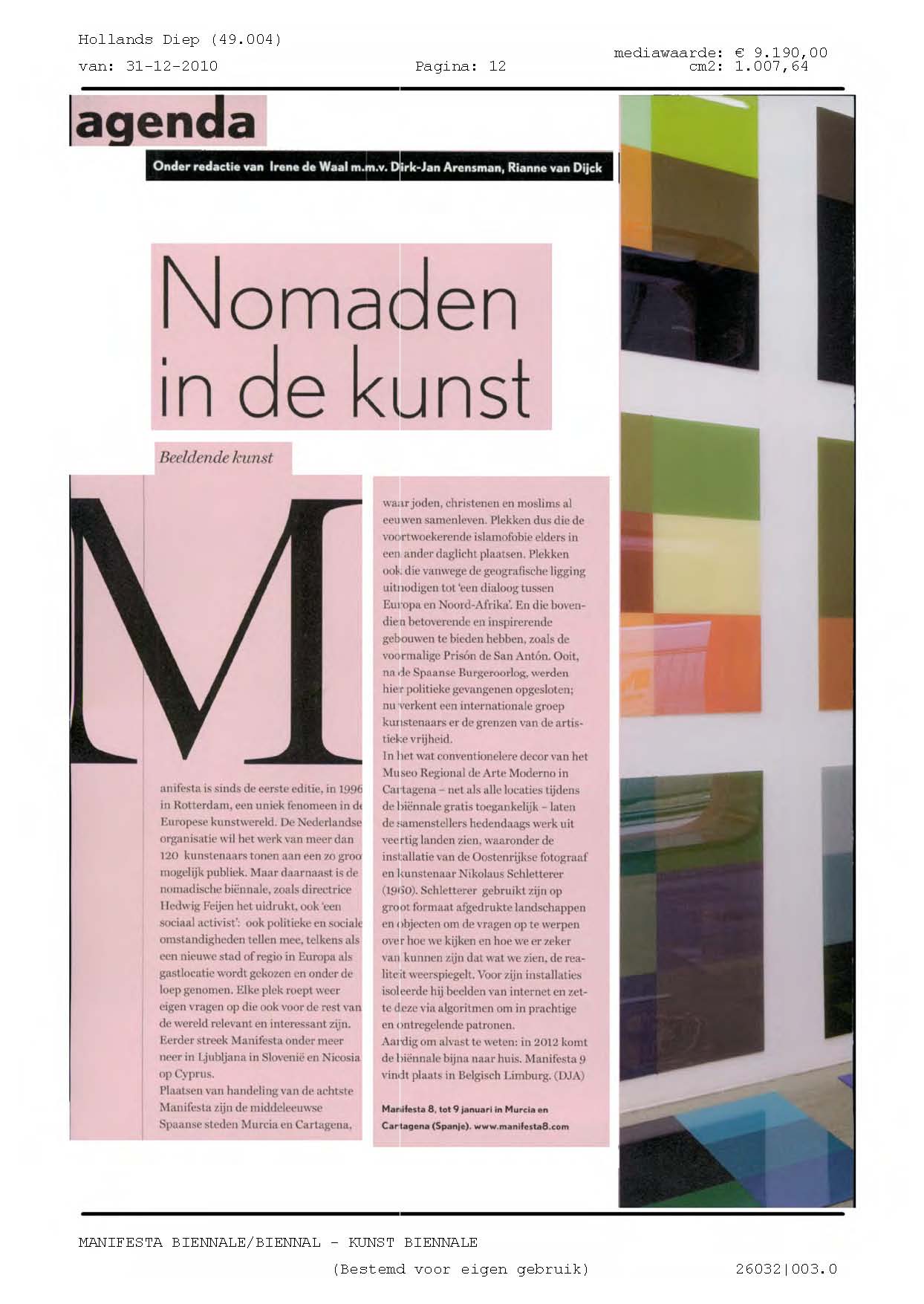
Hollands Diep magazine: Manifesta 8 review
Hollands Diep Magazine
31.12.2010
by Irene de Waal, Dirk-Jan Arensman and Rianne van Dijck
(in Dutch)

artmagazine: Manifesta 8 review
artmagazine.cc – An den Rändern der Festung Europa
17.12.2010
by Roland Schöny
(in German)

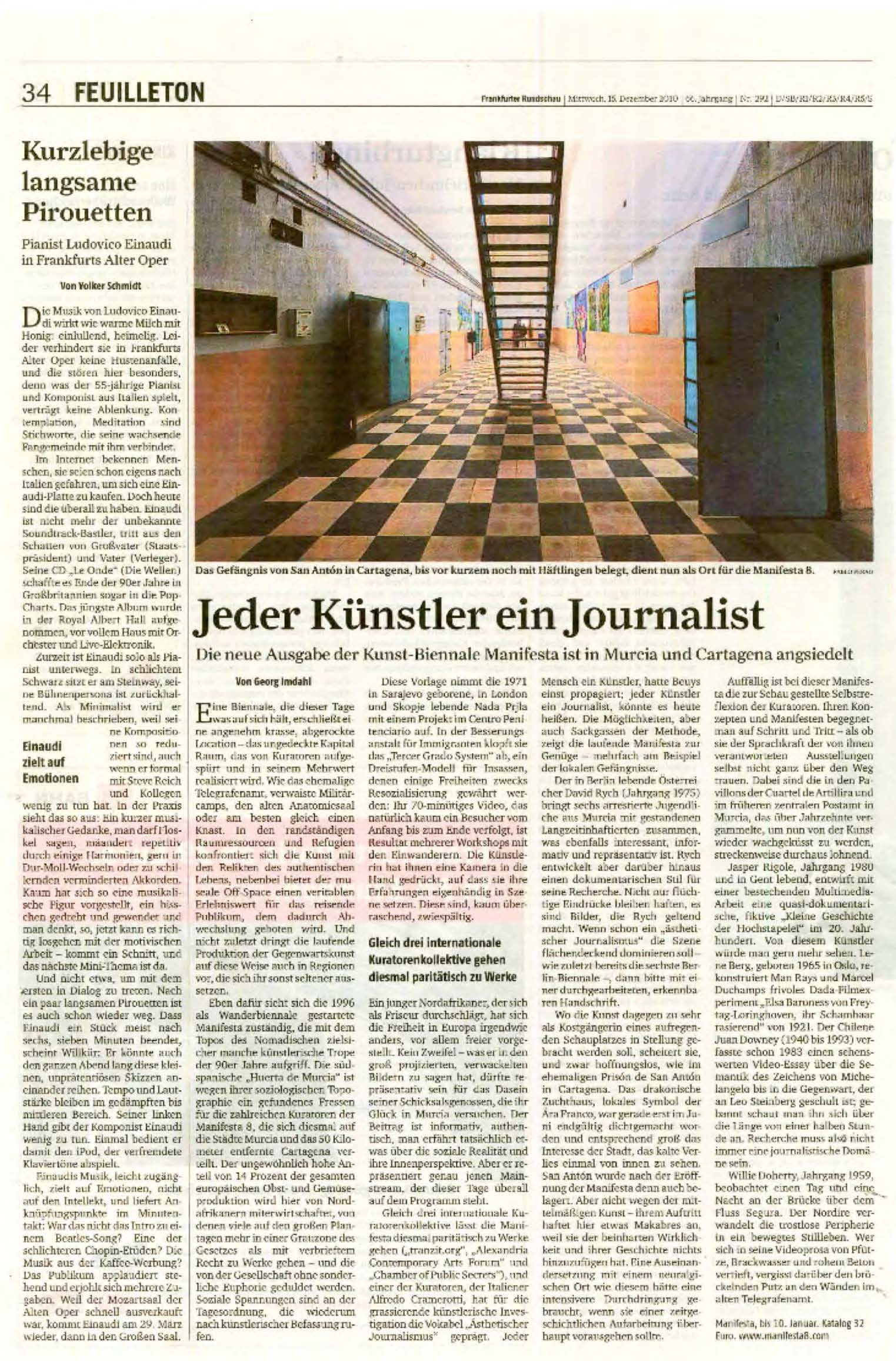
Frankfurter Rundschau: Manifesta 8 review
Frankfurter Rundschau Newspaper
15.12.2010
by Georg Imdahl
(in German)
TVE Metropolis – Manifesta 8: AGM 10 feat. Comrade Alfredo Neri (excerpt)
(Spanish below)
Special Metropolis TV format from TVE Spain about Manifesta 8 / CPS Chamber of Public Secrets / AGM 10 feat. Comrade Alfredo Neri (2006).
A ‘performative documentary’ about Alfredo Neri, the spokesman of the Italian neo-nazi movement Skinheads. The work was presented in Manifesta 8 by AGM 10 which selected a number of archive pieces from CPS archive.
A powerful analysis of the media construction, representation and mediation of facts, identities and historical narratives through the documentary language.
(Spanish)
Una de las piezas más impactantes de la emisión será el fragmento del trabajo de AGM 10: CPS (Italia), titulado: Camarada Alfredo Neri (2006-2010) Un documental de corte ficticio para hacernos reflexionar sobre la construcción de los relatos y del lenguaje documental.
Talk at ARTIUM Vitoria-Gasteiz: The Aesthetics of Journalism
El Correos newspaper, 25 January 2011
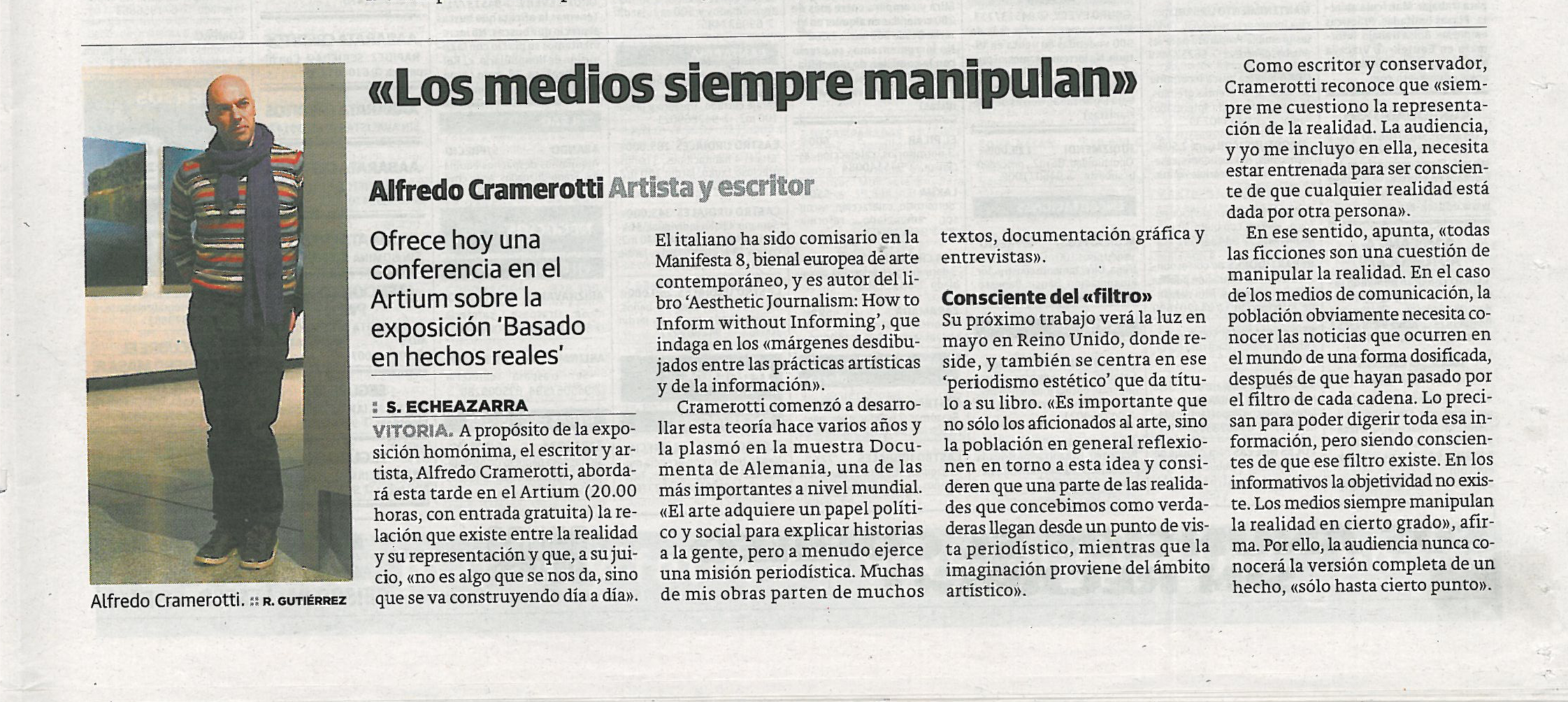
Over the past six years Alfredo Cramerotti has written about the aesthetic merger of contemporary art and the news media. Drawing from his book Aesthetic Journalism: How to inform without informing (2009, Intellect), Cramerotti provocatively advances the idea that art and journalism are not separate forms of communication, but rather two sides of a unique activity , the production and distribution of images and information.
As aesthetic regimes, both journalism and artistic makes claims for the truth, albeit of a different kind. One is a coded system that speaks for the truth (or so it claims), the other a set of activities that questions itself at every step (or so it claims), thus making truth. Whereas journalism provides a view on the world ‘out there,’ as it ‘really’ is, art often presents a view on the view, truth posited as acts of (self)reflection. Cramerotti will examine both as a types of truth production, as systems of information that defines truth in terms of the visible: producing not only what can be seen, but also what can be imagined, and thus imaged. As such, we start to get closer to the core of reality itself when we make our reality not a given, irreversible fact, but a possibility among many others.
The talk generated a principal question: is it possible to work with aesthetics and informatics, to be both reflective and precise? To both employ documentary techniques and journalistic methods while remaining self-reflecting and critical on those means? Ultimately, the artist’s work is not about delivering information but questioning it, reversing the tradition of both fields (art and journalism), to highlight both the aesthetic workings and trappings of reportage and the informational turn within current aesthetic production.
TVE Metropolis – Manifesta 8: Abed Anouti
(Spanish below)
Special Metropolis TV format from TVE Spain about Manifesta 8 / CPS Chamber of Public Secrets / Abed Anouti
También rescatando la historia olvidada de los edificios, y de las gentes que los habitaron, ABED ANOUTI (Líbano) en La sombra de San Antón (2010) realiza una investigación desde distintos ángulos, para cercarnos a la historia y la memoria de la cárcel de Cartagena.
TVE Metropolis – Manifesta 8: Thierry Geoffroy / Colonel
Special Metropolis TV format from TVE Spain about Manifesta 8 / CPS Chamber of Public Secrets / Thierry Geoffroy a.k.a. Colonel
” Empezamos la emisión con un fragmento del video de entrevistas de THIERRY GEOFFROY/COLONEL (Francia), en el que bajo un formato de reportaje televisivo, el personaje del inspector Colombo investiga si realmente existe diálogo entre Europa y el Norte de África, haciendo suyo el tema fundamental de la bienal: averiguar el estado de las relaciones entre ambas culturas. “
Periodismo estético
Periodismo estético
Posted By Pedro Medina on 8 Enero 2011 (18:55) in Publicaciones
Published on http://www.abreelojo.com
[Spanish]

Periodismo, poder, sistema del arte y cómo se transmite la información hoy día son varios de los temas que aborda Alfredo Cramerotti al reflexionar sobre “periodismo estético” en su Aesthetic journalism. How to inform without informing.
La discusión sobre los formatos periodísticos y su papel en la construcción de una imagen del mundo está muy viva, como atestiguan las reflexiones de autores como Pierre Bourdieu, Ulrich Beck o Noam Chomsky, recuperando la noción de periodismo como servicio a una comunidad, al margen de la fáctica creación de poder a través de la influencia ejercida desde los medios de comunicación.
El libro de Alfredo Cramerotti, realizado desde la experiencia artística, sigue esta línea aportando una reflexión interesante ante lo que denomina “periodismo estético”, con la que pretende reivindicar un ámbito específico de las prácticas artísticas «en forma de investigación de la situación política, social y cultural». El análisis se centra pues en la información que se produce, si bien todos (autor y receptor) deberíamos preguntarnos desde dónde estamos considerando cada una de estas prácticas, e incluso conceptos muy cuestionados hoy día como el de “verdad”.
Se deben analizar las dimensiones de poder y autoridad que conllevan las imágenes y textos. Como dice Zizek, lo real se identifica con una forma de contar las cosas, y en esta práctica se reclama una responsabilidad del “artista-investigador” acorde con la autoridad e influencia que se puede ejercer, máxime en un tiempo donde el periodismo de investigación está francamente amenazado.
Lo más destacado es su interés por exponer la interacción entre las prácticas artísticas y periodísticas, labor que se revela especialmente en el estudio de obras del periodismo estético. En definitiva, cabe reconocer una cuidada investigación que nos lleva a pensar de nuevo la sociedad en términos culturales (y también estéticos), con el objetivo no tanto de transformar directamente nuestro entorno, sino los procesos que nos llevan a confeccionar el significado que tenemos del mundo.
Aesthetic journalism
How to inform without informing
Alfredo Cramerotti
Intellect, Bristol, Chicago, 2009, 135 páginas, 35 $
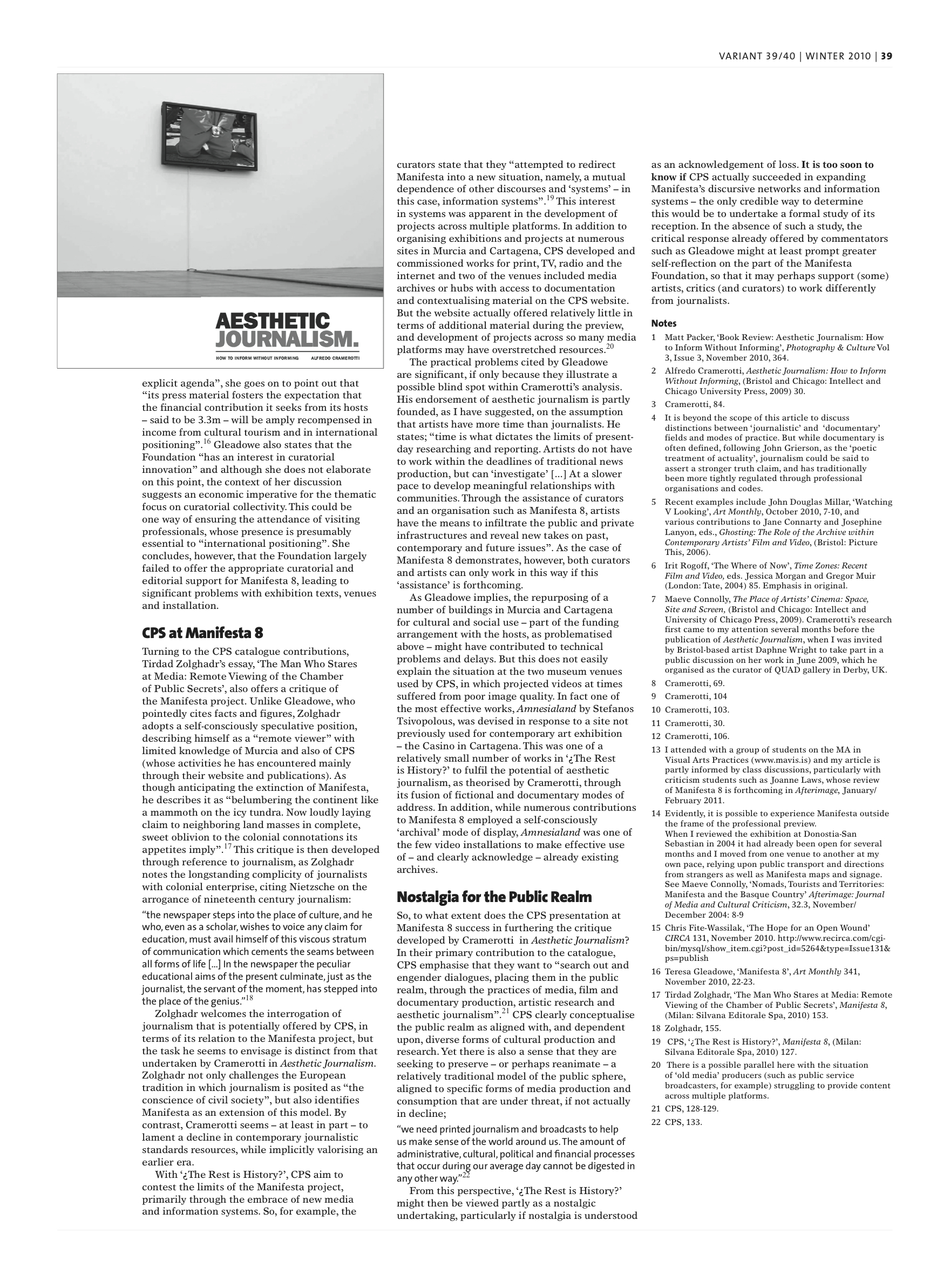
Variant: Manifesta 8 review | Aesthetic Journalism in Practice
Aesthetic Journalism in Practice: Manifesta 8 and the Chamber of Public Secrets
by Maeve Connolly
variant 39/40 | Winter 2010



 Curatorview [Alfredo Cramerotti]
leave a comment