ICOM UK 2022 Working Internationally Conference: Cynefin – Museum Practice for Future Generations
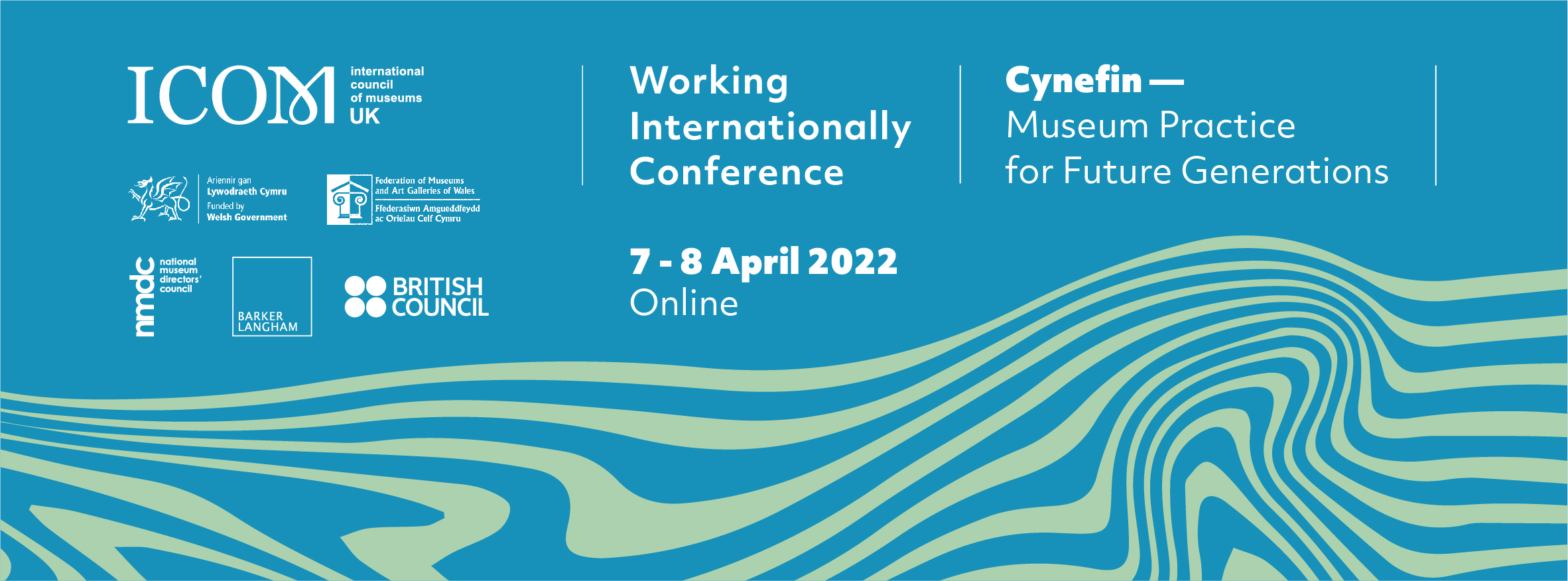
7 – 8 April 2022, 13:00 – 17:00 GMT each day, online
Cynefin (ku-nev-in), the evocative Welsh word, describes our relationship to the environment in which we live. The 2022 Working Internationally Conference connects pioneering museum practice from Wales and across the UK with international museums on the local and global challenges of climate change, ageing and bridging community divides.
Over two afternoons, the online conference explores successful and award-winning museum projects designed to build better for future generations. UK and international museum professionals will discuss how museum practice can lead and contribute to the needs of future generations.
Sessions topics include:
- Climate Change
- Agents of Change
- Bridging Communities
- ICOM UK Grant Programmes
- New thinking around museum programming for people living with dementia
- Career challenges facing Students and Early Career Professionals in 2022
- Word of Mouth: Telling stories of identity in indigenous language
- Museum Practices and Refugees
Click HERE to view the full conference programme and session descriptions.
Booking is now open via Eventbrite. ICOM UK, ICOM, NMDC and Welsh Federation members receive a 50% discount on tickets. Tickets start at £10 and there is an unlimited ticket option for institutional members of ICOM UK, NMDC and the Welsh Federation, which enables an unlimited number of staff to attend the online conference for £100.
The 2022 Working Internationally Conference is organised by ICOM UK in partnership with the National Museum Directors’ Council, the Federation of Museums & Art Galleries of Wales, with support from the British Council and Barker Langham. This conference is part funded by Welsh Government.
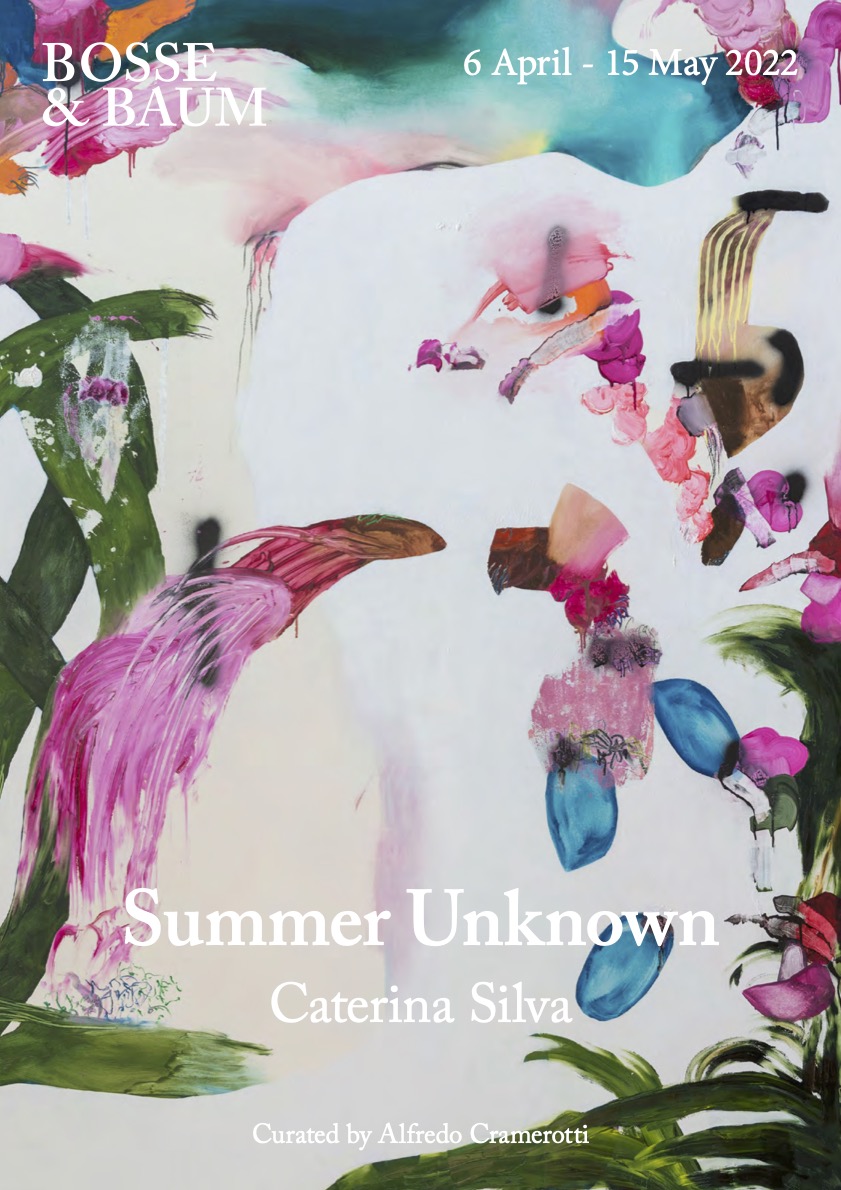
Caterina Silva: Summer Unknown exhibition @ Bosse & Baum, London – curated by Alfredo Cramerotti
Opening 6th April 2022

ARTiculating Regeneration: Art as Agent for Change webinar by PlusTate / IKT / MOSTYN
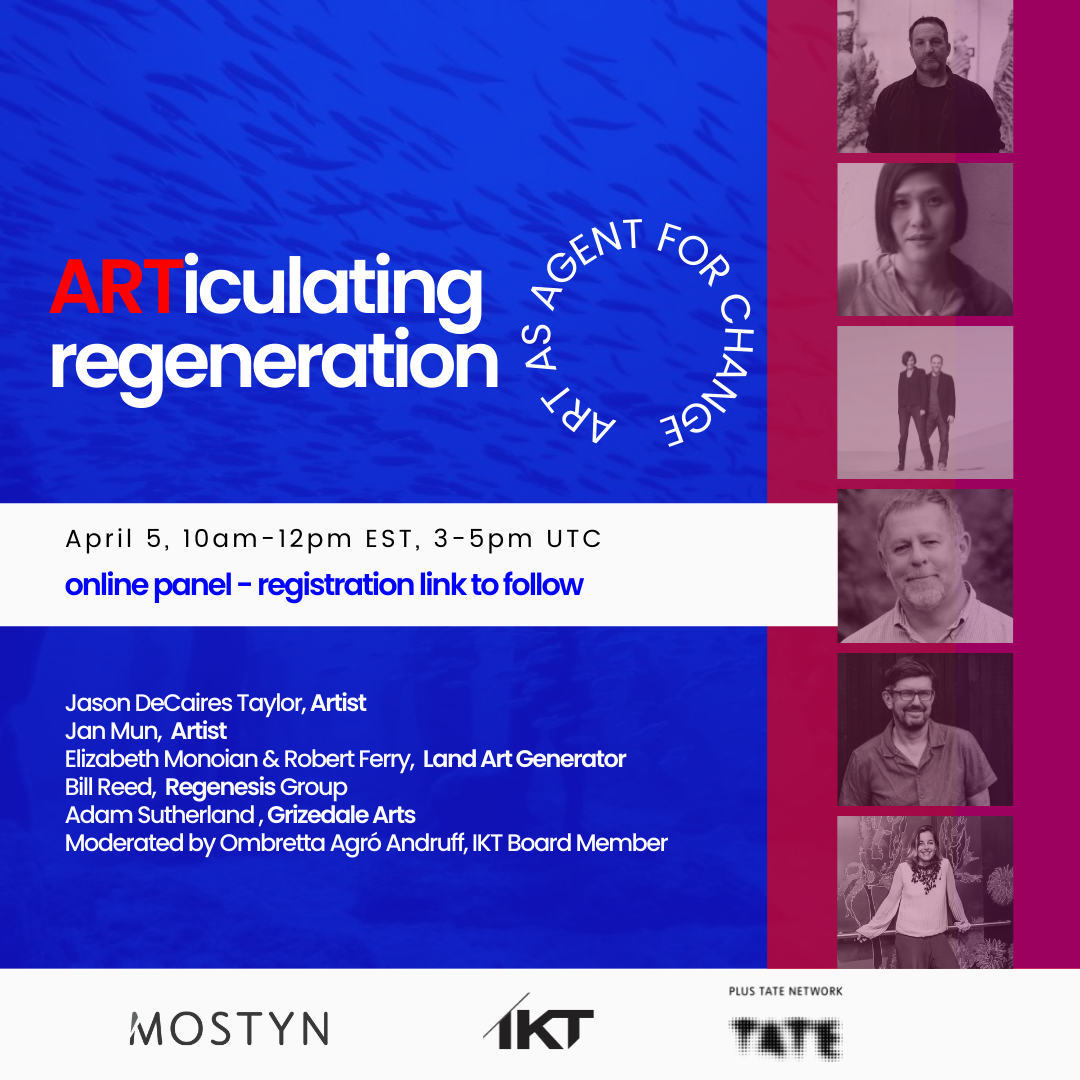
An online panel discussion exploring sustainable & regenerative artistic practices and the impact on their respective landscapes.
About this event
Tuesday 5 April, 15.00 – 17.00 (UK time) / 10.00 – 12.00 (EST)
Plus Tate, MOSTYN and IKT (International Association of Curators of Contemporary Art) join forces once more for a panel discussion exploring regenerative blue/green infrastructure and sustainable artistic practices with hands-on implication and direct impact on the environment and landscapes upon which they are situated.
In October 2021, our organisations connected to present Sustainable Design and Regenerative Architecture in Cultural Spaces. During the session, we explored how art venues can become greener and heard from artists who were embracing sustainability as a pivotal part of their making.
During ARTiculating Regeneration: Art as Agent for Change on Tuesday 5 April 2022, speakers will take these concepts further by sharing their practices and the impacts on the landscapes on which they sit.
Speakers from across the globe will join together virtually to share the great work they are doing in this area. We will hear from:
Jason deCaires Taylor, Underwater Sculpture Artist
Jan Mun, Blade of Grass Artist
Elizabeth Monoian & Robert Ferry, Land Art Generator
Bill Reed, Regenesis Group
Adam Sutherland, Grizedale Arts
The session will be moderated by Ombretta Agró Andruff of IKT & ARTSail
New Spring 2022 programme season at MOSTYN: Angharad Williams: Picture the Others & The Wig exhibitions; McKenzie Wark: The Artist-Publisher podcast series

Exhibition
Angharad Williams: Picture the Others
February 19–June 12, 2022
Picture the Others is the first institutional solo exhibition by Welsh artist and writer Angharad Williams. This new commission will consist of a large-scale installation presented across MOSTYN’s gallery spaces and will include film, painting, sculpture, and text. Williams’s practice reflects on the relationship between the individual and wider societal structures. The exhibition, curated by Juliette Desorgues (Curator of Visual Arts, MOSTYN) will be accompanied by live elements such as a performance and workshops in addition to the project titled The Wig that will include film, writing and publishing by the artist and other contemporary artists.
Angharad Williams is an artist living in Ynys Môn and Berlin. Recent solo exhibitions include High Horse, Kevin Space, Vienna (2021); Without the Scales, Schiefe Zähne, Berlin (2020); Witness, Haus Zur Liebe, Schaffhausen, Switzerland (2019); Island Mentality, Peak, London (2019); and Scarecrows, LISZT, Berlin (2018). Her work has been included in numerous group exhibitions including: Jerwood Arts, London (2021), Stadtgalerie Bern (2021) and Kunstverein Munich (2020). Performances have taken place at KW Institute for Contemporary Art, Berlin (2020); ICA, London (2019); and Radiophrenia, Glasgow (2017).
Supported by Foundation Foundation, Arts Council Wales, The Henry Moore Foundation, The Megan Gwynne-Jones Charitable Trust.
The Wig
19 February – 12 June, 2022
The Wig is an ongoing, accumulative project between Gianmaria Andreetta, Jason Hirata, Megan Plunkett, Richard Sides and Angharad Williams.
The project’s title borrows from the notion of “La Perruque“ (“The Wig“ in English), first introduced by philosopher Michel de Certeau in his groundbreaking book The Practice of Everyday Life. Published in 1984, it looked at the still relevant issues of the value we attach to the objects around us in contrast to the value we perceive in those who make them.
“The Wig“ broadly refers to anything done under the guise of work, but is in fact not work, or not the work one is supposed to be doing. Practicing “The Wig“ can be as simple as writing personal emails during office hours, using the company photocopier to print private invitations, or using someone else’s time for one’s own. For its current form at MOSTYN, the project will feature a collaborative video developed by the participants as well as reading material and resources shared between the artists in their ongoing conversations.
Online programme
McKenzie Wark podcast series: The Artist-Publisher
February 1–5, 2022
In this podcast series, writer McKenzie Wark talks to artists who are also publishers and publishers whose work is a kind of art practice. Zines and books, made cheaply or by the thousands, or web-based journals available for free—these seem antithetical to the unique work of art. And yet the creation of meaning around art practices requires this other kind of practice of publishing written works. Contributors include Jacqueline de Jong and GB Jones amongst others.
McKenzie Wark is the author, among other things, of Philosophy for Spiders: on the low theory of Kathy Acker (Duke University Press 2021) and The Beach Beneath the Street: the Everyday Life and Glorious Times of the Situationist International (Verso 2011). She is professor of culture and media at The New School in New York City.
Atlante Temporaneo. Cartografie del sé nell’arte di oggi @ Gallerie delle Prigioni, Treviso
Curated by Alfredo Cramerotti and organised by Fondazione Imago Mundi / Fondazione Benetton Studi e Ricerche

Temporary Atlas: Cartographies of the Self in the Art of Today
5 February – 29 May 2022
Curated by Alfredo Cramerotti
The exhibition presents an idea of mapping that is alternative to the traditional conception. We know that there are two maps – an objectively-driven mapping and an individually perceived one – after all, not every aspect of our environment or our life has the same value. Equally, there are cartographers-explorers and cartographers-artists.
The fourteen cartographers-artists of Temporary Atlas do not gaze exclusively on the outside but rather focus towards themselves, aiming to investigate their perceptions, identities, emotions, physical and mental sensations. They adopt the traditional approach to mapping (a representation of reality) but expand it along unconventional paths – identity, spirituality, subconscious, feelings or memories that interact upon each of us.
Walking through the exhibition, the visitor realises that however an artwork can engage reality, and reality is understood beyond representation, it is also true that much depends on which criteria we adopt to manifest this relationship. What we read in a representation (cartographic or artistic) depends on what methods and rules we intend to follow in this reading.
Temporary Atlas is an attempt to identify the fleeting border between these two extremes: a reading of the person who, in the midst of a global pandemic yet to be resolved, re-evaluates their own priorities. The exhibition aims thus to describe our emotional, political, aesthetic horizon. It explores, in other words, the visitors’ expectation that art can allow us to reflexively understand our daily reality.
Participating artists: Oliver Laric, Jeremy Deller, Paul Maheke, Matt Mullican, James Lewis, Kiki Smith, Walid Raad, Ibrahim Mahama, Otobong Nkanga, Rochelle Goldberg, Seymour Chwast, Enam Gbewonyo, Sanford Biggers and Sarah Entwistle.
WE ARE NOW RECRUITING: Exhibitions Manager, Facilities Manager, Head of Finance and Commerce
Would you like to work alongside our team at MOSTYN?

- MOSTYN is seeking an Exhibitions Manager to work alongside the team.
The Exhibitions Manager will be responsible for:
- Budgets specific to areas of responsibility.
- Management of the contracted tech services for exhibitions and events.
- Establish and maintain systems for the functioning, installation, de-installation and maintenance of MOSTYN’s exhibitions and presentations, both preventative and reactive, including for off-site events managed by MOSTYN. These systems should be widely communicated to internal functions so that emergencies can be dealt with in the absence of the post holder.
Download the full job description and application process here
–––––––––
2. MOSTYN is seeking a Facilities Manager to work alongside the team.
The Facilities Manager will be responsible for:
- Budgets specific to areas of responsibility.
- Management of the Housekeeper/Cleaner and of the external services for the building and infrastructures’ compliance.
- Establish and maintain systems for the functioning, maintenance, conservation, cleanness and development of MOSTYN’s building, both preventative and reactive. These systems should be widely communicated to internal functions so that emergencies can be dealt with in the absence of the post holder.
- Ensure effective and timely technical and logistic services with contractual partners as well as building on and maintaining a network of external clients for such services, contributing to MOSTYN’s entrepreneurial approach towards sustainability.
Download the full job description and application process here
–––––––
3. MOSTYN is seeking a Head of Finance and Commerce to work alongside the team.
Head of Finance and Commerce will be responsible for:
- Retail Manager & Café Manager (contractor);
- Financial planning, reporting and compliance;
- Admin and Human Resources management and compliance (supported by HR Anchor);
- Commercial planning (Retail and Café) monitoring and compliance.
Download the full job description and application process here
–––––––
For all three positions, the closing date for applications is noon Wednesday 12 January 2022.
Interviews are expected to take place week/c 17 January 2022.
MOSTYN new exhibition season, opening Sat 9 October 2021 – “Jacqueline de Jong: The Ultimate Kiss” and “Anathemata” feat. Antonin Artaud, Martin Bladh, Pierre Guyotat, Paul-Alexandre Islas, David Jones, Sarah Kane, James Richards, Karolina Urbaniak

Jacqueline de Jong: The Ultimate Kiss
Opens 9 October 2021 9 October – 6 February 2022
Jacqueline de Jong is considered one of the crucial artistic figures of the post-war avant-garde. This exhibition is the first institutional solo presentation of her work in the UK. Throughout her career spanning half a century, de Jong has developed a unique painterly practice. Expressive in style, her work exhibits uninhibited eroticism, violence and humour. In parallel to her work as a painter, she was editor of The Situationist Times (1962-1967) and a member of the Situationist International during her early years in Paris in the 1960s.
Jacqueline de Jong was born in 1939 in Hengelo, The Netherlands. She lives and works in Amsterdam, The Netherlands.
The Ultimate Kiss is curated by Juliette Desorgues (Curator of Visual Arts, MOSTYN) and organised in collaboration with WIELS, Brussels where the exhibition was presented by Devrim Bayar (Curator, WIELS) and Xander Karskens (Director, De Ateliers) (May 1 – August 15, 2021). The exhibition will travel to the Kunstmuseum Ravensburg, Germany in 2022.
The exhibition is kindly supported by: The Mondriaan Fund, The Dutch Embassy, London, The Tyrer Charitable Trust, Dürst Britt & Mayhew, Gallery, The Hague and Pippy Houldsworth Gallery, London.
An exhibition catalogue Jacqueline de Jong: The Ultimate Kiss, featuring texts by Devrim Bayar, Juliette Desorgues, Alison Gingeras, Xander Karskens and Niña Weijers, and published by Fonds Mercator, is available to purchase from the MOSTYN Shop or is available to order online.
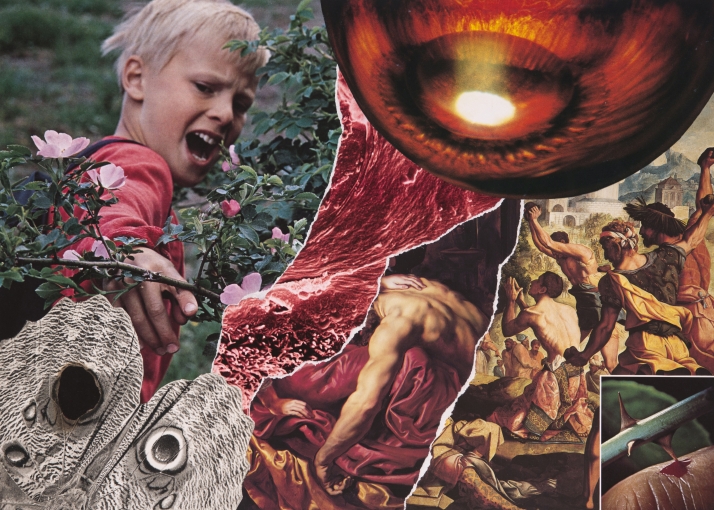
Anathemata
Opens 9 October 2021 9 October – 6 February 2022
Antonin Artaud, Martin Bladh, Pierre Guyotat, Paul-Alexandre Islas, David Jones, Sarah Kane, James Richards, Karolina Urbaniak
Curated by Pierre-Alexandre Mateos and Charles Teyssou
Anathemata is a display that interrogates the tradition of epic poetry within a tetrad of 20th century avant-garde artists; David Jones, Antonin Artaud, Sarah Kane and Pierre Guyotat. These four artists are presented alongside contemporary artists Martin Bladh, Paul-Alexandre Islas, James Richards and Karolina Urbaniak through a display of manuscripts, drawings and videos.
The exhibition title is borrowed from David Jones’s eponymous poem published in 1952. A British poet and artist of Welsh descent, Jones is considered a leading figure within modernist poetry along with James Joyce and T. S. Eliot. His poem, The Anathemata, investigates the importance of mythology within the history of humanity from a modernist perspective. Written in the aftermath of the Second World War and interweaving Welsh and English late medieval sources, it defends the importance of epic narratives, fables and myths against the desacralising effect of modernism. Considered Jones’ seminal work, The Anathemata narrates the thought processes of a cambrophile over the span of roughly seven seconds at an English Catholic Mass. Using Old, Middle and Early-Modern English, Welsh, and Latin, The Anathemata questions the importance of past mythology within human history – from the Iron Age in Cornwall and Tudor London to Penda’s Mercia and the Welsh “Otherworld” – in a highly allusive and nonlinear fashion. In this text, Jones also stresses the importance of the artist as an inventor and bearer of myths.
Antonin Artaud is a French artist considered one of the major figures of early 20th century avant-garde. His texts revolve around transcendence, mysticism, drugs, and extreme corporeal experiment. Like Jones, a large part of Artaud’s writing practice challenged and gathered different languages (French, Latin, Arabic), myths and temporalities (from Ancient Greek to Aztec and Early Christian civilisations). Both were concerned with the idea of the impending apocalypse. In his Letters from Ireland which he wrote while in exile in Dublin, he details an imagined forthcoming apocalypse, and plans his own role within it as « the revealed one ». Also on display are several of his magic spells, intended to curse his enemies and to protect his friends from Paris’ forthcoming incineration and the Antichrist’s appearance at the Deux Magots café, an important meeting point for artists and writers in Paris in the post-war era. Artaud’s depictions of the human body as dismembered, surrounded by flying nails, translated the agonies of his physical as well as psychical life. Indeed, between June 1943 and 1944, Artaud was subjected several times to electroshock therapy in Rodez (France). Cast aside from his community and finishing his life in an asylum, Artaud was in a sense the subject of an anathemata. In Artaud’s work, the body experiences a form of disfiguration, it is “outside the figure of being”. Caught between life and death, the visible and the invisible, it is ultimately traced by the lines of forces drawn from the electromagnetic spectrum.
Pierre Guyotat was a preeminent French artist who died in 2020. Like David Jones, he was a poet interested in the epic format, the fragmentation of words, and the use of heterogeneous languages from various historical periods and geographies. Similarly to Jones, he was a soldier. He was enlisted in the Algerian war, an experience that inspired him to write Tomb for 500,000 Soldiers. Written in 1967, this book was censored and, in a way, anathematised. Composed of seven songs, it can be perceived as a cataclysmic incantation. Moreover, he is maybe one of the last mythical figures of the French literary scene that could be affiliated with poets such as the Marquis de Sade, Arthur Rimbaud or Artaud. Guyotat works with a mutant language, inhabited by bodies, animals and ghosts. He incorporates and carries in each of his works the cursed part of humanity. His visions are dazzling, the body triturated, wounded, exalted, entangled, seen in its convulsive materiality. Words and bodies function as apparitions in constant metamorphosis.
Sarah Kane is a renowned British dramaturge whose radical conception of theater has been compared to Artaud’s Theatre of Cruelty. While her plays examine human atrocities such as cannibalism, sexual violence and war abjections, her mise en scène is devoid of any affectation. Her subjects are stripped to the bone, laid bare like a cadaver. Her first play, Blasted, which opened at the Royal Court Theater Upstairs on 12th January 1995, presents a brutal vision of war-torn society through a series of violent acts. The title could also echo the avant-garde poetry magazine founded by Wyndham Lewis, Blast, which presented ideas about art that are close to those of Sarah Kane: injecting reality directly into people’s heart. Like David Jones, she considered history as a palimpsest of myths and rituals that could be found in one of the most popular epic spectacles of her time, football. She saw in the matches played by Manchester United the representation of a myth in which the Gods fought for possession of the sun.
Martin Bladh and Karolina Urbaniak are artists, photographers, multimedia players and founders of the publishing house Infinity Land Press. Along with Stephen Barber, they have participated in the dissemination of authors such as Antonin Artaud within the British cultural scene through their work as publishers. Established in 2013, Infinity Land Press is self-described as a “realm deeply steeped in pathological obsessions, extreme desires, and private aesthetic visions”. For the exhibition, they will notably present On The New Revelations of Being, a video based on Antonin Artaud’s apocalyptic manifesto from 1937. It envisions the end of the world and the death of God through a series of cataclysmic occurrences of Artaudian cruelty.
Artist James Richards is known for working across moving image, sound and installation. A newly commissioned work, Phrasing, based on precedent research and developed through 80 slides, is exhibited for the first time as part of the display. Cutting and recombining images from various sources such as radiographies, comics, and medieval engraving, he digs into what could be called a modern epic. His use of X-Rays acts as an inner search, an opening of bodies and objects, an effraction of envelopes that deals with the secret of interiority. In that sense, his quest finds echoes in the introspective voices of Jones, Artaud, Guyotat and Kane and becomes a receptacle for the tumults and hubbubs of the world.
Finally, Paul-Alexandre Islas, is an artist, musician and Artaud’s reader who notably questions the violent dimension of art, its personal cost and the legitimacy of the people who allow themselves to practice it. Similarly to Artaud, Islas doesn’t have superstition about the already written poetry. If poetry is already written, let it be destroyed.
From Jones’ lecture of Arthurian legends to Islas’ contemporary incantations, the exhibition Anathemata tries through myths, violence, desire, war, and the superhuman devotions that are found in the works presented, to bring forth a spectacle capable of stirring up the forces that are boiling within them.
Photo: Martin Bladh, After Rembrandt’s The Blinding of Samson, 1636, 2014. Courtesy of the artist.
MOSTYN new exhibition season: Tarek Lakhrissi and Mobile Feminist Library

Tarek Lakhrissi: My Immortal
3 July – 19 September 2021
MOSTYN is thrilled to present the first UK institutional solo exhibition by Tarek Lakhrissi. This new commission consists of existing and new work, and comprises film, sculpture, text and performance – creating a multi-dimensional installation across the gallery spaces. Rooted in poetry, Lakhrissi’s practice seeks to challenge contemporary constructs of language and narratives around minoritised communities. The exhibition takes the poem ‘Paradise Lost’, by 17th-century English poet John Milton, as a starting point to reflect upon the notion of ‘community’. In light of the disintegration of social cohesion brought on by current crises, from the Covid-19 pandemic to the growth of far-right populism, this new body of work reflects on what constitutes a community, particularly a queer community. It considers the notion of community as a complex entity: one that offers both the possibilities of love, empowerment and protection but also nightmares, traumas and fears. Milton’s ‘Paradise Lost’ is the anchor around which such tensions are played out – the possibility of a community that offers paradisiacal solace and yet, through its fragilities, can be easily lost. The central installation becomes a battleground, a metaphor for notions of defence and of self-defence to help queer communities of colour fight back against today’s societal violence and, in so doing, becomes a symbol of love and transformative narratives. So in the midst of despair, I have come to believe that love – the feeling of love, the politics of love, the ethics and ideology and embodiment of love – is the only good option in this time of the apocalypse. Kai Cheng Thom – I Hope We Choose Love: A Trans Girl’s Notes from the End of the World
About the artist
Tarek Lakhrissi (b. 1992, Châtellerault) is a visual artist and a poet based between Paris and Brussels. He currently teaches on the CCC Research Master Program in the Visual Arts Department at HEAD (Geneva School of Art and Design). Lakhrissi has exhibited internationally at galleries and institutions including: Museum of Contemporary Art,Biennale of Sydney (2020); Wiels, Bruxelles (2020); Palais de Tokyo, Paris (2020); Palazzo Re Rebaudengo/Sandretto, Guarene/Torino (2020); Quadriennale di Roma, Palazzo delle Esposizioni, Rome (2020); High Art, Paris (2020); Hayward Gallery, London (2019); Auto Italia South East, London (2019); Grand Palais, FIAC, Paris (2019); Fondation Lafayette Anticipations, Paris (2019); L’Espace Arlaud, Lausanne (2019; Zabriskie, Geneva (2019); Fondation Gulbenkian, Paris (2018); CRAC Alsace, Altkirch, France (2019); Kim?, Riga (2018); Artexte, Montreal (2017); Gaité Lyrique, Paris (2017); SMC/CAC, Vilnius (2017). He is nominated for the 22nd Fondation Pernod Ricard Prize (2020-2021).
Supported by: Fluxus Art Projects.
The Mobile Feminist Library: In Words, In Action, In Connection
3 July – 19 September 2021
In Words, In Action, In Connection is a display of publications and printed materials that explores historical and contemporary intersectional feminist activism in Wales. Brought together by artists Minna Haukka and Kristin Luke, whose collaborative practice stems from their ongoing project, the Mobile Feminist Library, a travelling collection of printed materials that responds to its locality, this display takes the form of an experimental reading room. Haukka and Luke have collaborated with artists, activists, collectives and publishers to develop a collection which is relevant to Wales and contains both historical and contemporary publications and printed materials sourced from Wales-based archives as well as the London-based Feminist Library. In Words, In Action, In Connection considers different activist movements at the intersection of class, disability, ecology, gender, language, neurodivergence, race and sexuality, taking these as inherent considerations of any feminism. The materials are locally relevant to Wales, whilst acknowledging that these movements extend beyond geographical borders. The display examines ways in which publishing and printed materials intersect with and strengthen activist movements, and uses counter-patriarchal methods of archiving and knowledge sharing. The space acts not only as a library, but as a place for gathering and communal learning. Collaborators include: Beau Beakhouse and Sadia Pineda Hameed, Butetown History and Arts Centre, Casey Duijndam and Robyn Dewhurst, Elwy Working Woods, the Feminist Library, Rebecca Jagoe, mwnwgl, Patriarchaeth.Movements and historical figures include: Black Lives Matter, Emma Goldman, Greenham Common Women’s Peace Camp, The Commune Movement, Monica Sjöö, women’s publishing collectives and cooperatives.
Beau W Beakhouse and Sadia Pineda Hameed (LUMIN) Beau W Beakhouse is an artist, filmmaker and curator based in Cardiff. His artistic practice often returns to themes of language, land, the post-colonial, alternate histories and dreams via intersections and convergences. He has upcoming residencies with Tangent Projects and Jerwood UNITe (g39) and a forthcoming solo exhibition with Arcade/Campfa. Sadia Pineda Hameed is an artist based in Cardiff, Wales. She works in film, installation, text and performance to explore collective and inherited trauma; in particular, the latent ways we speak about this through dreaming, telepathic communion and secrets as an anti-colonial strategy inherent to us. She has shown work with The Bluecoat, MOSTYN, HOAX, Peak and others. They also run the small press, radio show and curatorial project LUMIN.
Butetown History and Arts Centre The Heritage and Cultural Exchange (HCE) is a community based organisation which aims to chronicle the cultural diversity of south Cardiff, a legacy of the city’s industrial and maritime past, when it was a global hub of the coal trade, attracting workers from around the world to its docklands. The collection of photographs, archives, and oral histories, originally compiled by the Butetown History and Arts Centre (BHAC), is being catalogued, digitised, and made more widely available by a team of volunteers, helped along with grant funding. BHAC was founded in the late 1980s, based in Cardiff Docklands, and worked to record the history of the local community. It was led by Glen Jordan, an American academic who moved to Wales to complete the theses of his mentor Sinclair Drake. Butetown History & Arts Centre survived until 2016 when its assets passed to HCE.
Casey Duijndam and Robyn Dewhurst contributed to organising and documenting the Black Lives Matter protests across North Wales in 2020. Casey Duijndam is an activist who is half Ugandan, half Dutch and 22 years old. In 2020, during the pandemic, she made history by joining forces with a group of strong women to set up three of the Black Lives Matter protests in North Wales, an experience that was both heartbreaking and empowering. After years of gathering strength, the BLM protests were a pivotal moment in her political life, creating a catalyst for her to start speaking publicly and organising people to stand together and fight against racism in the UK and across the world. Since then she has given numerous interviews about how we can educate ourselves and the people around us, has been the subject of secondary school student essays, and has extended an invitation to North Wales Police to engage in dialogue about their future role in protests. Robyn Dewhurst is a British artist currently based in North Wales. She works with digital photography and exhibition curation to highlight lesser represented subcultures and socio-cultural groups. Her bold and abrasive images focus on people, practices and events that exist beyond the mainstream. She has collaborated in the past with local LGBTQ+ communities to curate the exhibition ‘QUEER IDENTITY’ in the Leeds Corn Exchange – an event showcasing the personal experiences of LGBTQ+ youths through illustration, film, photography, fine art and performance. She also photographs DIY Drag and Burlesque performers, leading her to larger projects, for example working with the Henry Moore Institute for ‘Age of THE : Athenian’. She graduated from BA (Hons) Photography at Leeds Arts University in 2020.
The Commune Movement Wales, particularly Mid Wales, was a major destination in the 60s-80s for people choosing to leave urban centres and establish intentional communities as part of the Commune Movement. These communes engendered a crossover between different forms of activism, including the women’s liberation movement, environmentalism, anarchism, anti-racism and nuclear disarmament . The movement can be traced through varied forms of publications and printed ephemera, from advertisements in Spare Rib for women’s cooperatives, to flyers hand-printed on gestetner duplicators, circulated amongst communes, then used for fuel in wood burning stoves, to manuals on self-sustainability such as The Whole Earth Catalog, a tome printed in California which was widely used on Welsh communes.
Emma Goldman (1869-1940) was an anarchist feminist activist. Deported from the US to the Soviet Union in 1919, in the 1920s she sought refuge in Ammanford, a coal mining community in South Wales, which was her base for lecturing on socialism, communism, and feminism across the South Wales valleys. She also had ties to the ‘White House’, a centre in Ammanford for collective radical political study and a meeting place for young socialists. Her publications and writing centred around anarchist philosophy and women’s rights, particularly suffrage, free love, birth control, homosexuality, and marriage. She founded the radical monthly journal Mother Earth and her role in the history of feminism is encapsulated in a collection of her works titled Anarchy and the Sex Question. Feminist Library The Feminist Library, open since 1975, is a large archive collection of feminist literature, particularly Women’s Liberation Movement materials dating from the late 1960s to the 1990s. They support research, activist and community projects in this field. The Library is also an autonomous feminist community space. The Library is trans-inclusive, welcomes visitors of any gender, does not require registration or membership, and provides an intersectional, non-sectarian space for the exploration of feminism.
Greenham Common Greenham Common Women’s Peace Camp lasted from 1981-2000. It began when Women for Life on Earth, a Welsh campaigning group, decided to march from Cardiff to RAF Greenham Common, and set up a camp protesting the British government’s decision to store nuclear weapons on the airforce station. Women stayed at the camp for nearly 20 years, staging blockades, actions, and interventions to protest the nuclear threat overshadowing their lives.
Minna Haukka is a Finnish artist, based in London since 1999. She works with mixed media, installation, sculpture, textiles, video and drawing. Her practice is socially engaged with an interest in deconstructing and repurposing the everyday. She was artist in residence at the Feminist Library in London from 2018–2020, where she has been volunteering since 2015. She is currently lead co-ordinator of the Library’s Curatorial Group. Since 2018, she has collaborated with Kristin Luke on the Mobile Feminist Library project – a white van converted into a library which was part of the Still I Rise exhibition series at De La Warr Pavilion, Bexhill on Sea and Arnolfini, Bristol in 2019. Minna Haukka has been exhibiting nationally and internationally since 1993 and she has co-curated projects in London at the Showroom, Space Station 65 and The Feminist Library, and at HilbertRaum Gallery in Berlin.
Rebecca Jagoe is an Irish artist based in Wales, whose practice encompasses performance, sculpture, textiles, writing, and drawing. Their work is a material memoir which examines how their own experiences of illness and gender, have been informed by specific Western cultural narratives. In particular, their work explores how within European culture, the Feminine is constructed at the meeting point of medical rhetoric and the aesthetics of mainstream fashion. In 2020, their work has been shown online by Wysing (Cambridge, UK) and La Casa Encendida (Madrid, Spain), and they performed at CCA Goldsmiths (London, UK) before lockdown. They have recently shown work at Jupiter Woods (London, 2019)), South London Gallery (2019), and the Whitechapel Gallery (London, 2018). Their writing has been published by Hotel magazine (forthcoming), the Happy Hypocrite (Issue 11, The Silver Bandage), and Frieze magazine, among others. In 2021 they will produce an online broadcast performance with Site Gallery.
Kristin Luke (born in 1984 in Los Angeles, California, USA and based in Penmachno, Snowdonia, Wales) is an artist who works across film, sculpture and live events. From 2019–2020, Luke was the artist-in-residence for The Wall Is _____, a collaborative project with a North Wales housing estate, addressing regeneration and community self-perception and supported by the Paul Hamlyn Foundation. She has been collaborating with Minna Haukka since 2018 on the Mobile Feminist Library. From 2017–18 she was an editorial group member and contributor to Schooling & Culture, a journal on radical education produced in collaboration with MayDay Rooms and The Showroom Gallery. In 2018, she co-programmed a workshop series and built an installation for D.O.P.E., a youth-led alternative education space, supported by the Showroom Gallery and Westminster Council’s Create Fund. In 2018–19 she was a Creative Practitioner for the Lead Creative Schools programme in Wales. In 2015–16 she was an Open School East Associate. She is a member of the artist group MoreUtopia! Her work and projects have been exhibited at galleries including South London Gallery; Arnolfini, Bristol; Somerset House; Enclave; AND/OR; Bas Fischer Invitational, Miami; Jerwood Arts; and The Agency.
mwnwgl Mae mwnwgl yn gasgleb cyhoeddi a churadu sy’n cynhyrchu sgwennu/celf newydd mewn ieithoedd Cymrae/ig. Cafodd ei rifyn print cyntaf, Anghyfiaith, ei gomisiynu gan oriel g39 a’i ryddhau yng ngwanwyn 2021 gyda gwaith newydd gan Umulkhayr Mohamed, Catrin Menai, Bob Gelsthorpe, Radha Patel, Joanna Wright a Sarah Roberts ar themau o (gam)gyfieithu, tafodau estron a chyfathrebu rhwng a thu hwnt i iaith, ynghyd â gwaith gan Esyllt Lewis, Elin Meredydd a Dylan Huw, sy’n llywio’r prosiect. // mwnwgl is a publishing and curatorial collective committed to producing and circulating new art/writing in and around Welsh languages. Its first print issue, Anghyfiaith, was commissioned by g39 and released in Spring 2021, featuring new work by Umulkhayr Mohamed, Catrin Menai, Bob Gelsthorpe, Radha Patel, Joanna Wright and Sarah Roberts on themes of (mis)translation, alien tongues and language’s in-betweens, as well as by founding members Esyllt Lewis, Elin Meredydd and Dylan Huw.
Patriarchaeth is a small independent feminist collective, run by student artists, activists and writers from Wales. Their work focuses on ensuring that the world of Welsh language literature and publishing is limitless, and that there are spaces upheld for new voices and challenging conversations. This is a radical and collaborative publication, taking on the form of a series of bilingual zines each with its own theme. Practising collective creativity as a mode to re-examine their relationship as young people to print, publishing and the arts is at the heart of the project. Patriarchaeth is interested in exploring themes of gender, sexuality and language from a feminist perspective. The group aims to discuss the role of the Welsh language within meaningful and current political discourse. Their feminist work is in solidarity with and committed to intersectionality, trans-inclusivity, abolitionism and anti-racism through prioritising mutual care and solidarity. Dedicated to liberatory pedagogy, Patriarchaeth’s ethos consists of community, justice and joy.
Monica Sjöö was a visionary artist, eco feminist, writer, grass roots activist and an early pioneer of the Goddess movement. She was a tireless researcher of ancient matriarchal cultures, passionate about recovering what she saw as the suppressed history of women. In addition to her drawings, paintings, and prints, Sjöö was the author and illustrator of three books, a contributor to numerous journals and magazines and was also a prolific letter writer and networker. Images of her work have featured on various book covers, used to illustrate posters and audio tape covers and been included in diaries, magazines, journals and articles all over the world.
With support from Arts Council of Wales National Lottery Fund & Artist Stabilisation Fund, and the Kone Foundation.
Press coverage highlights for MOSTYN’s extended exhibition season November 2020 – June 2021: Hannah Quinlan and Rosie Hastings, Nick Hornby, Richard Wathen + online commissions by Local 37/LUMIN, Queer Is Not a Label, and My Online Bedroom digital exhibition
Art X UK Government Art Collection Release 31 May 2021




Vogue Singapore 4 May 2021



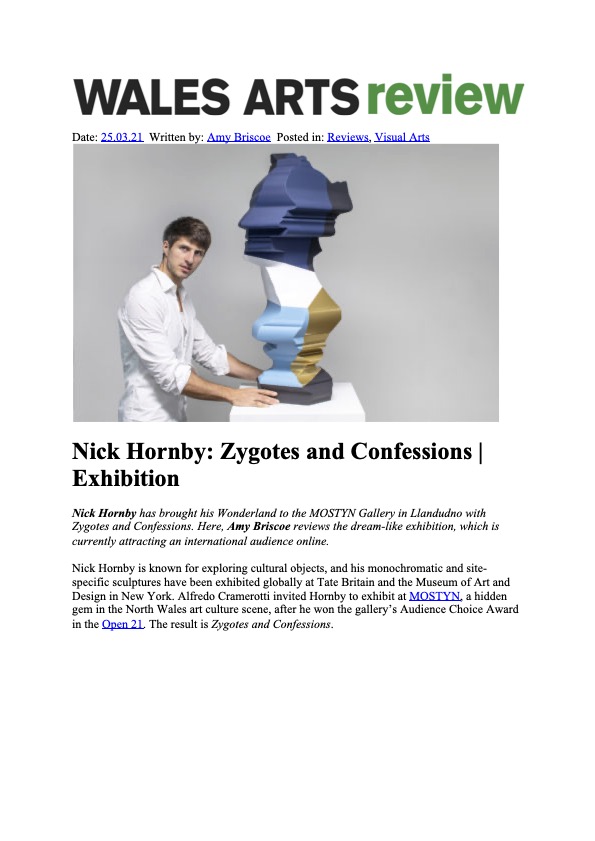
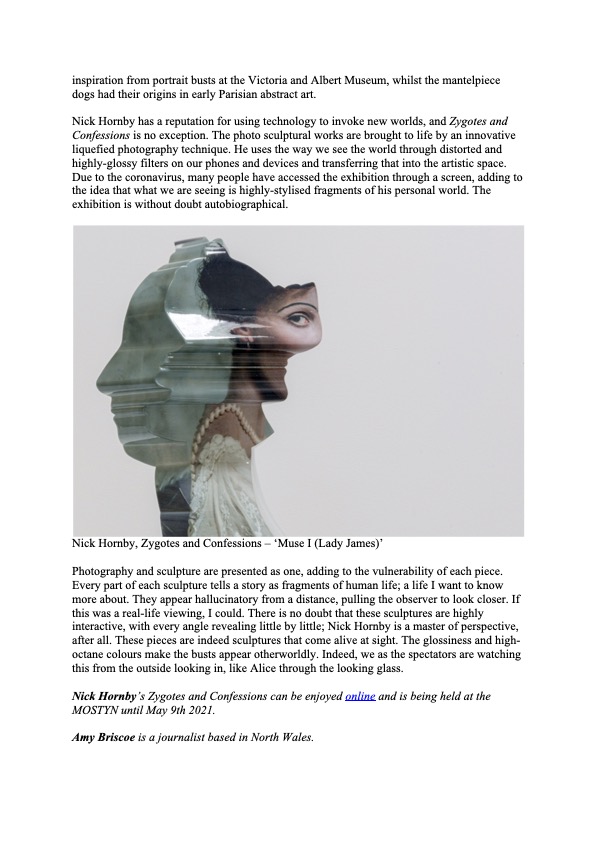
Wales Arts Review 29 March 2021
by Amy Briscoe
https://www.walesartsreview.org/exhibition-nick-hornby-zygotes-and-confessions/

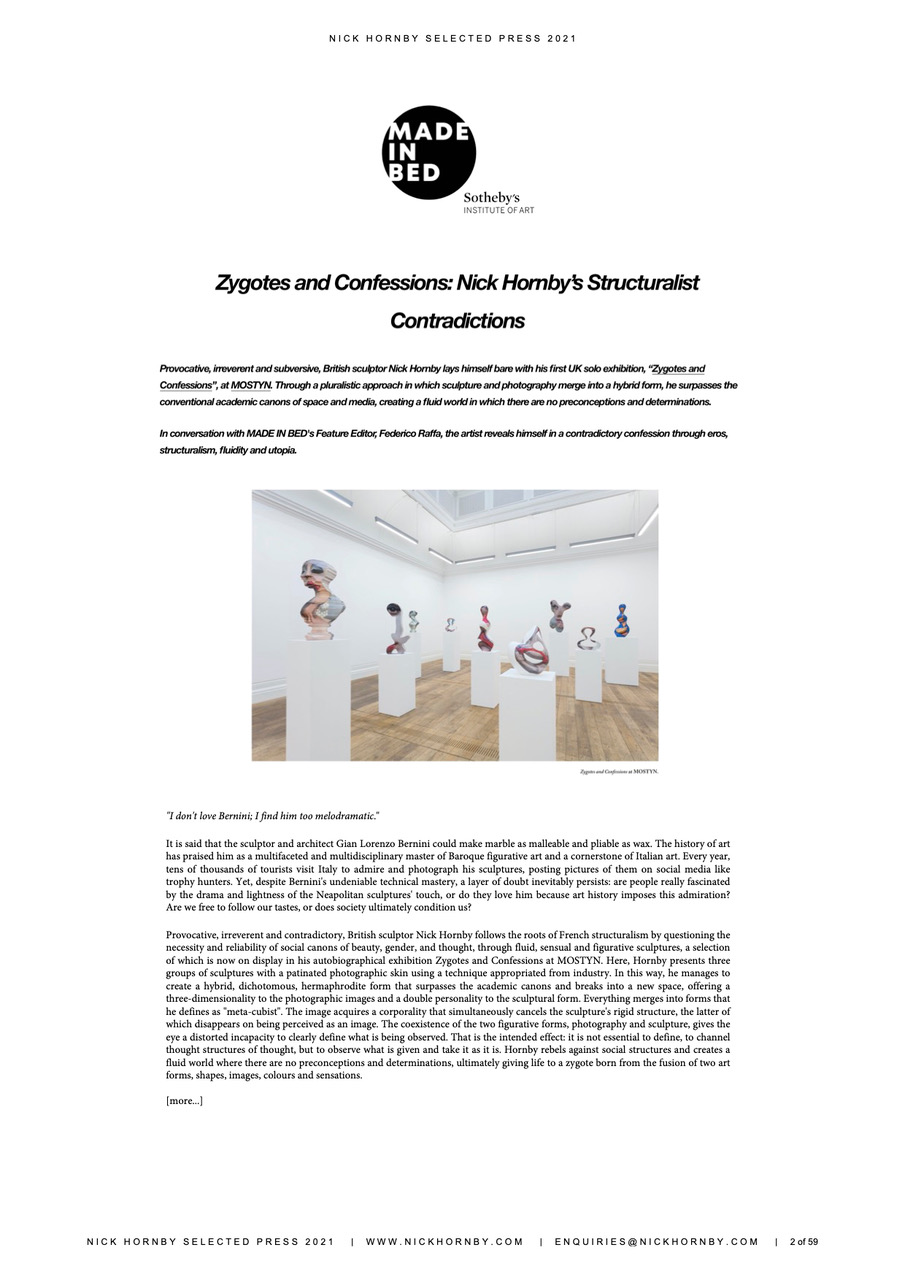
MADE IN BED Magazine 12 March 2021
by Federico Raffa
WhiteWall Magazine 11 March 2021
https://whitewall.art/art/sculptural-distance-nick-hornby-in-conversation-with-alfredo-cramerotti

The Arts Club 18 February 2021
Citizens of Humanity 11 February 2021
https://citizensofhumanity.com/pages/nick-hornby-style-guide
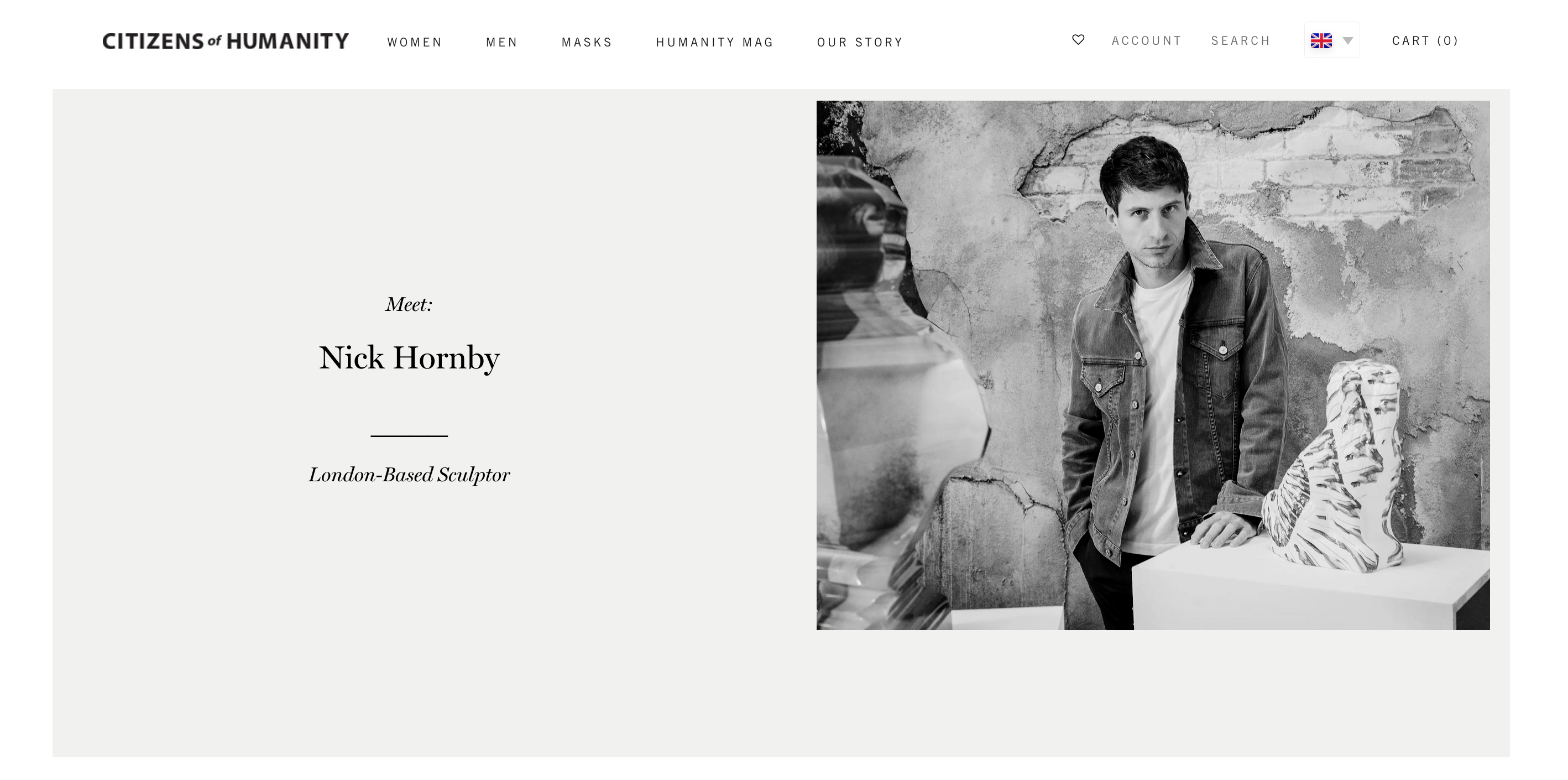

Sculpture Magazine print 10 February 2021


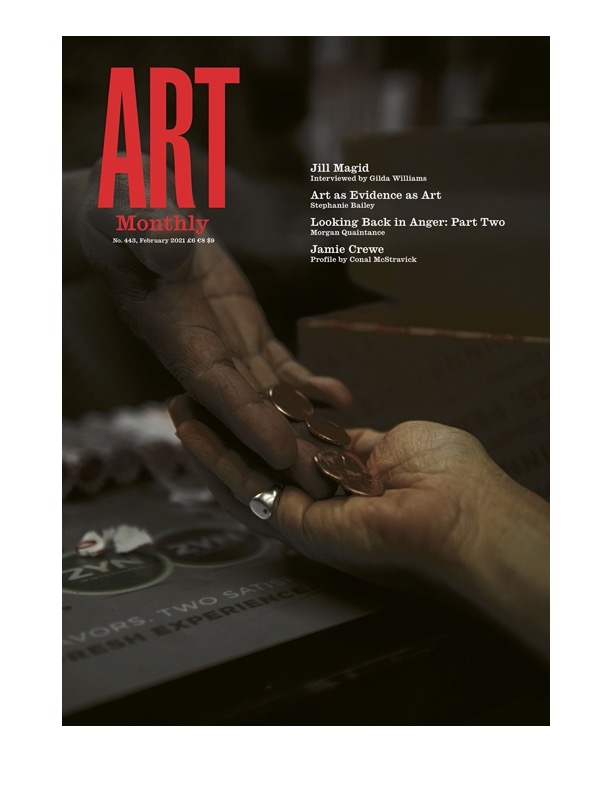
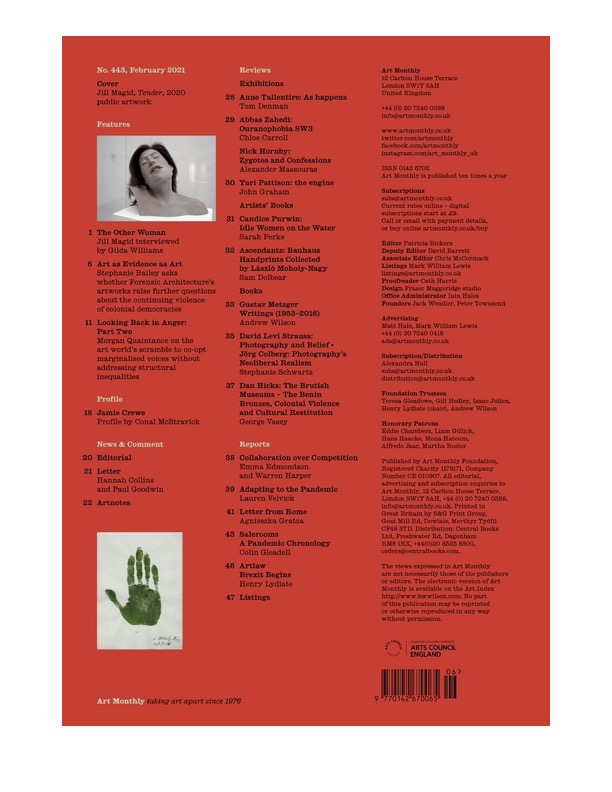
Art Monthly, 1 February 2021
by Alexander Massouras
http://nickhornby.com/assets/uploads/uploaded-images/Hornby_ArtMonthly.pdf

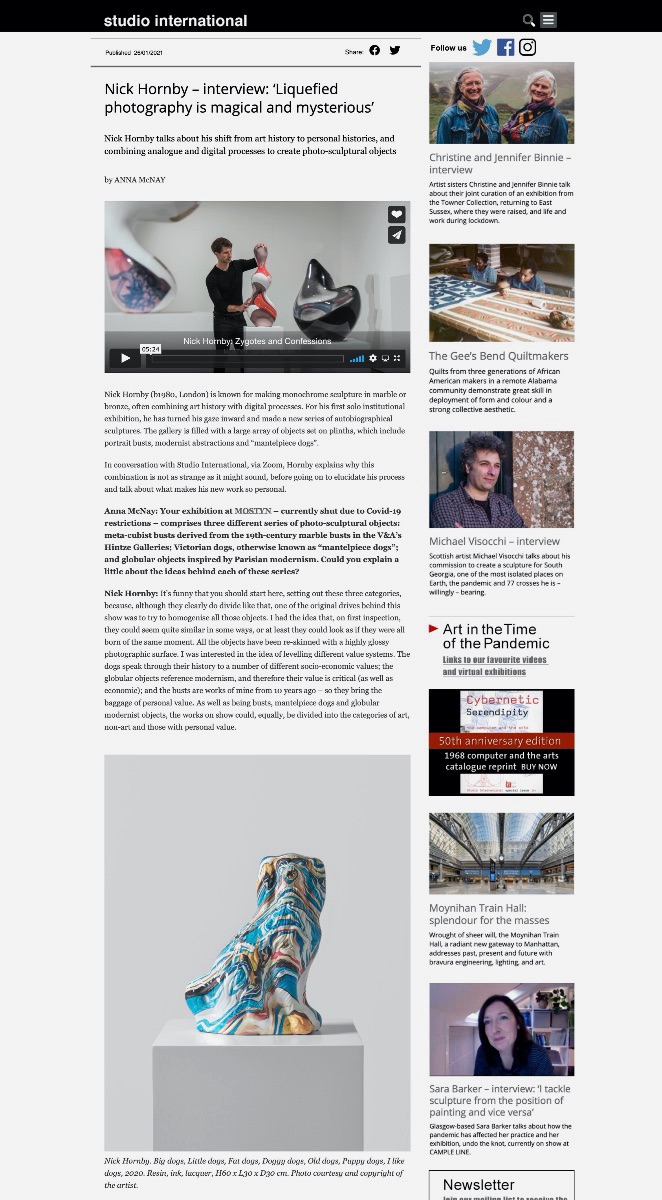
Studio International Magazine 26 January 2021
by Anna McNay
Sculpture Magazine online 19 January 2021
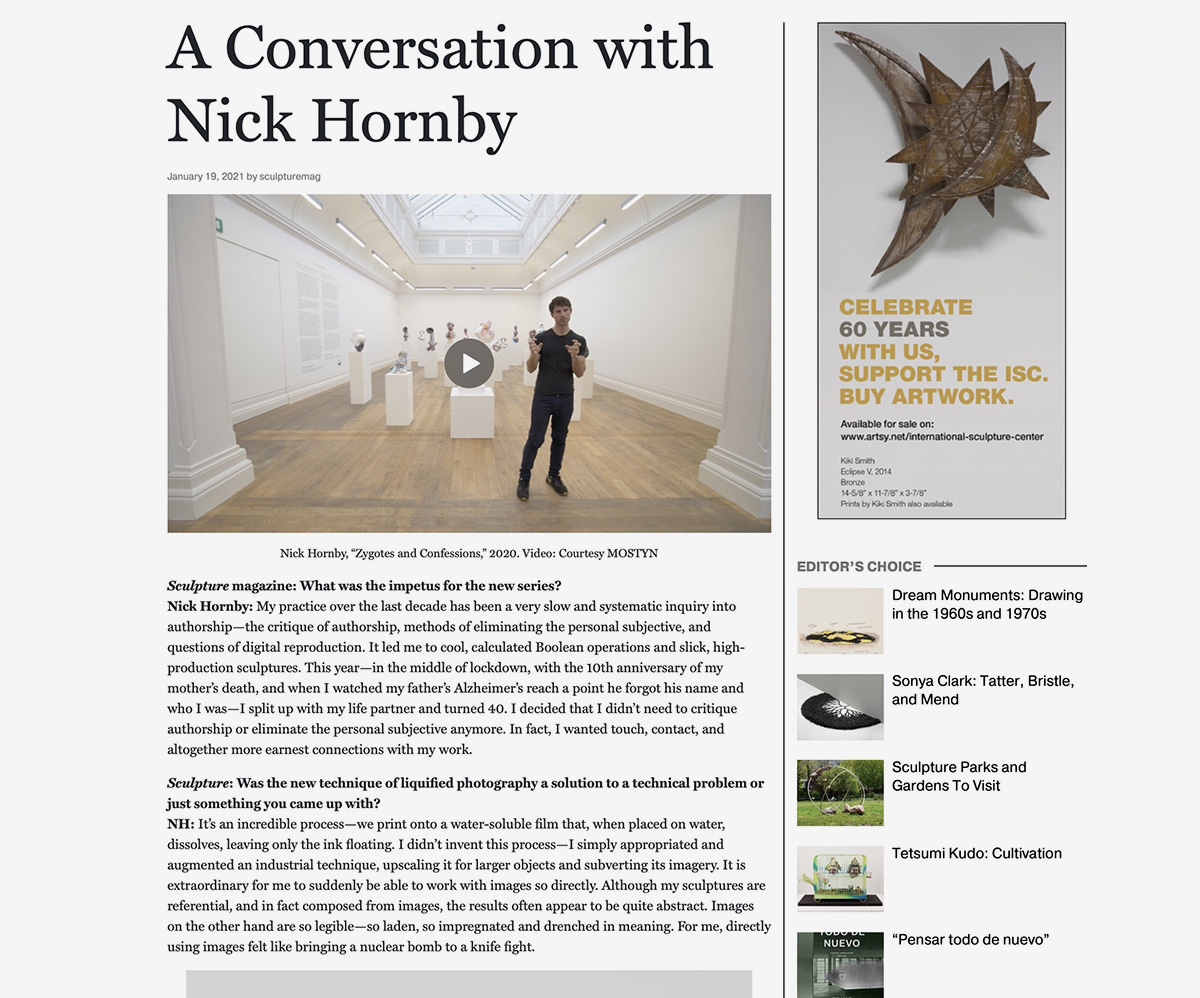
SOHO House Magazine 28 December 2020
by Osman Can Yerebakan

Designed by Woulfe 14 December 2020
https://www.designedbywoulfe.com/interviews/conversation-british-artist-nick-hornby/

Something Curated 9 December 2020
by Keshav Anand

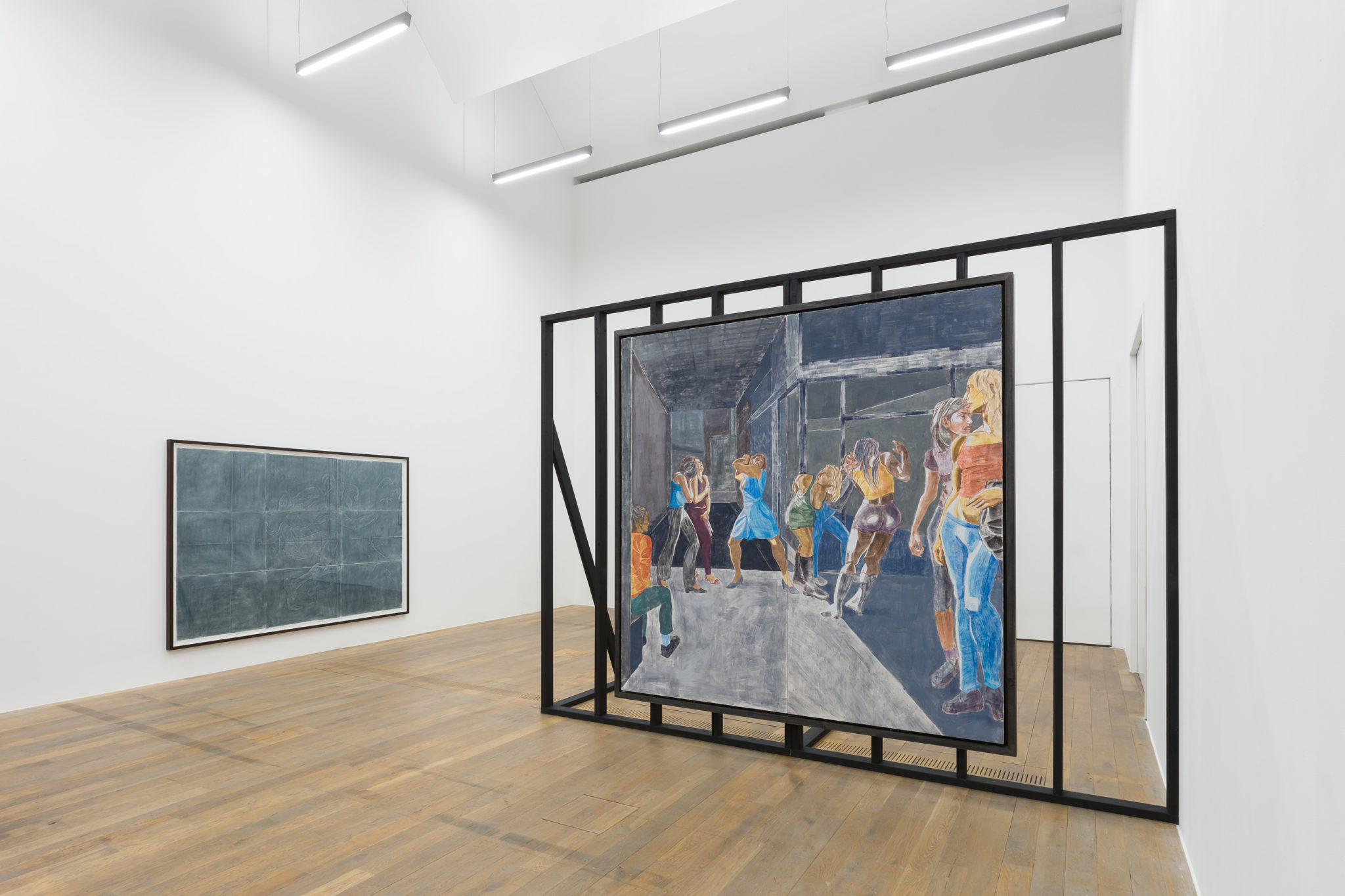
Country and Town House Magazine 1 December 2020
LAMPOON Magazine 27 November 2020
by Glesni Trefor Williams
https://lampoonmagazine.com/mostyn-gallery-north-wales-art/


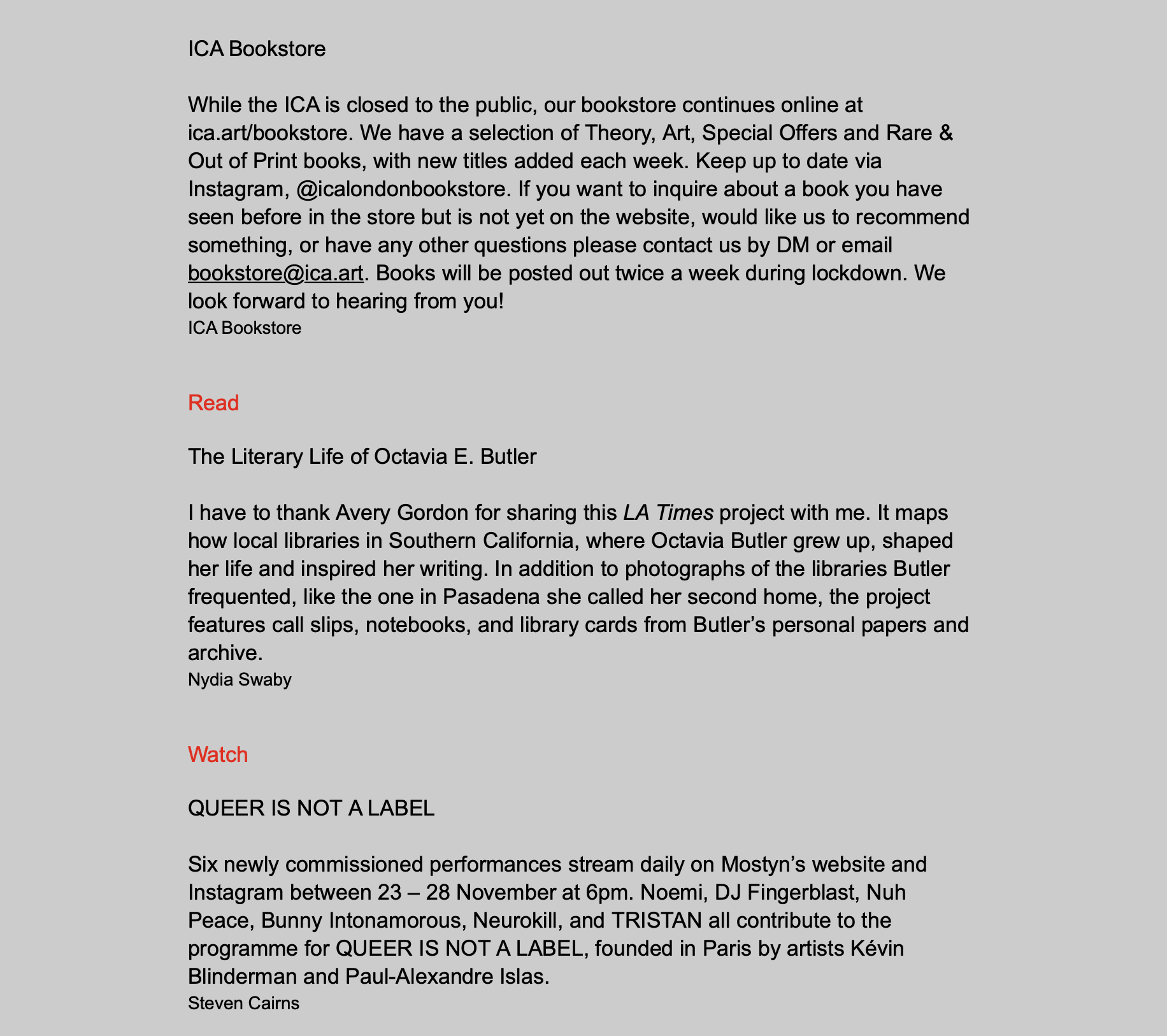
ICA Daily 24 November 2020
by Steven Cairns
FAD Magazine 10 November 2020
by Mark Westall
Slimi Magazine 10 November 2020
https://slimimagazine.com/art/nick-hornby
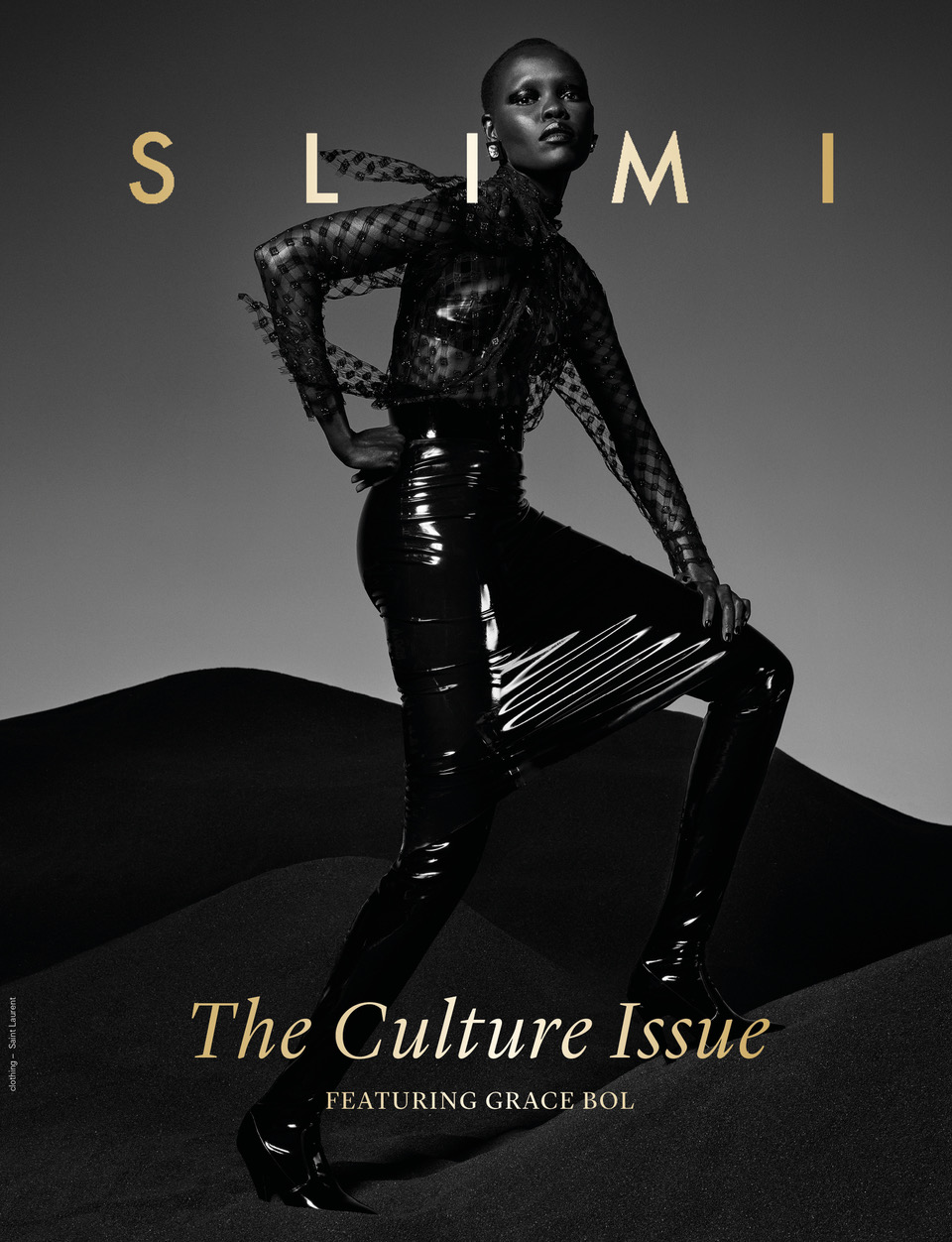

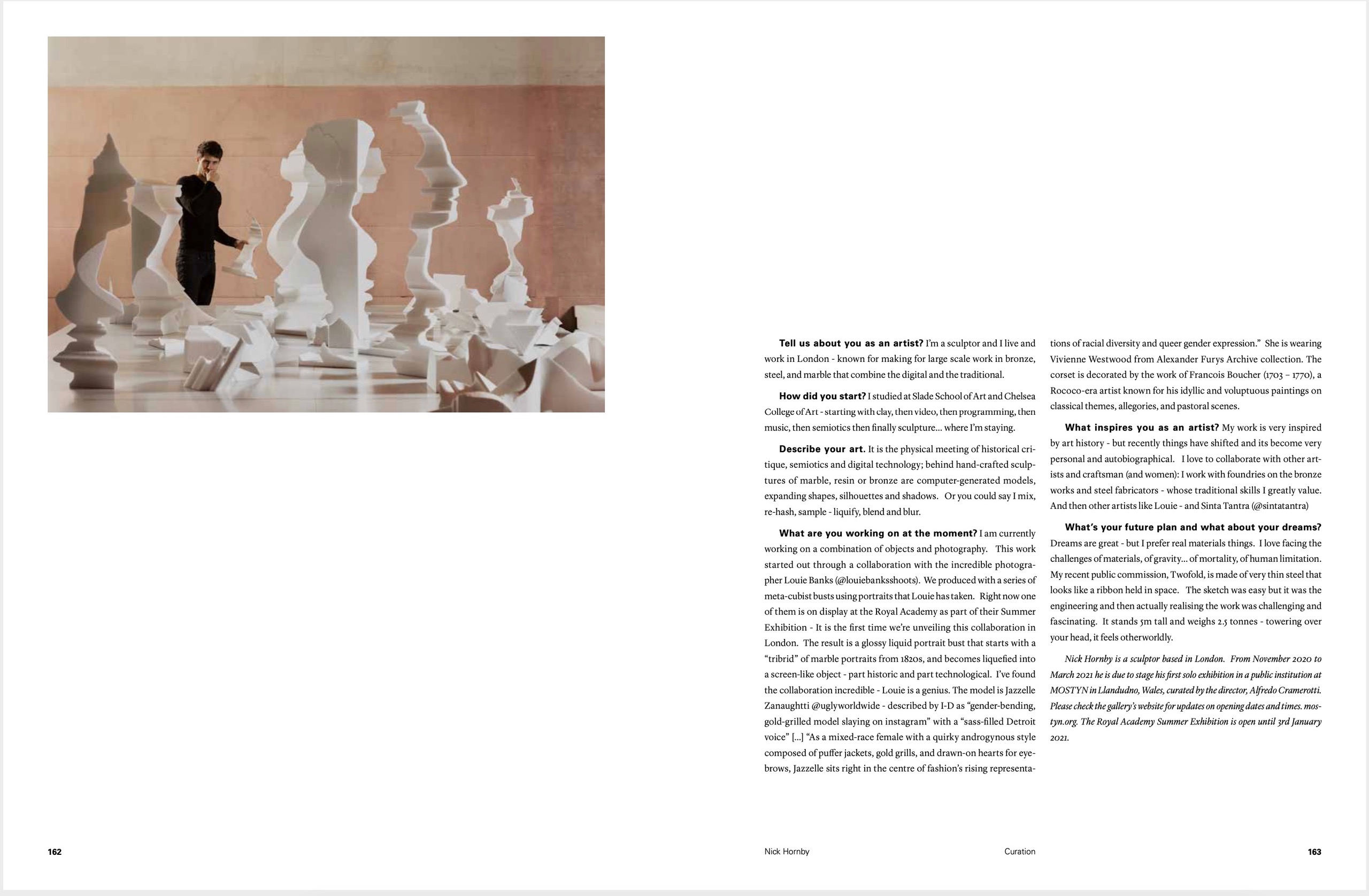
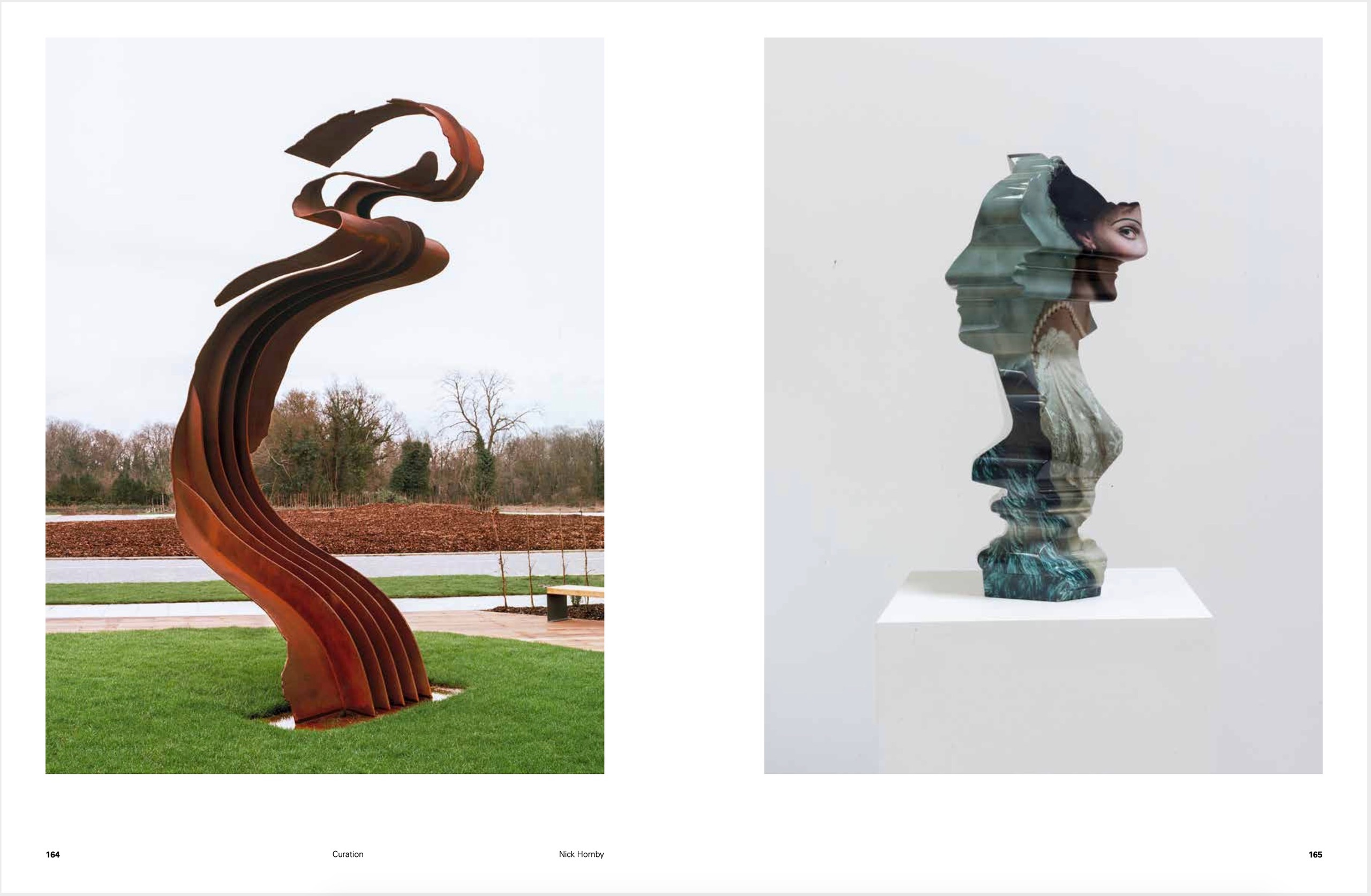
BBC Radio London 10 November 2020
http://nickhornby.com/private/bbc-radio-london-interview-with-salma-el-wardany-and-lionheart

Seeing Through the Affects of Violence. Part 2 @ Künstlerhaus Büchsenhausen
(hybrid event: on-site & streaming on Zoom and on Facebook [register via Eventbrite]
Seeing Through the Affects of Violence. Part 2
Alfredo CRAMEROTTI (curator), Natalia GUMENYUK (journalist), Mykola RIDNYI (fellow)
Using various media such as photography, film, installation and text, Mykola RIDNYI’s artistic practice employs historical research methods and the investigation of current political events. Ridnyi counters the sensational visualization and aestheticization of brutality with a distanced critical approach by addressing the representation of violence without its reproduction. In the post-truth era, facts have to be constantly checked, but the traditional way of presenting information needs to be questioned as well. Is there still a space for trust in both critical journalism and socially engaged art? In the second edition of a discussion series in the context of his Fellowship in Künstlerhaus Büchsenhausen, the artist talks with Natalia GUMENYUK, Ukrainian journalist, author, and founder of the Public Interest Journalism Lab, and Alfredo CRAMEROTTI, author, curator, and director of MOSTYN Contemporary Art Centre in Wales about the contradictions and similarities in the visual approaches of artists and journalists.
The broadcasting of violent images has always been at the core of the news business, the media’s modus operandi. However, with the invention of 24/7 TV cable news in the 1990s, and the later appearance of social media and live-streaming, the global audience is constantly exposed to a multitude of images of violence of both domestic and international conflicts. While the commercialization of news forces journalists to edit news videos in a way that resemble action movies, the normality of human existence is cut out to keep the audience hooked by better selling visuals. In her talk, Natalia GUMENYUK will address the following questions: is it at all possible to ‘un-edit’ the world we see in order to put violence in its place? Are we ready to sacrifice the aesthetics of violent and emotional imagery to bring back a raw version of reality at the risk of being boring?
In his book Aesthetic Journalism, Alfredo CRAMEROTTI describes different strategies of the interaction of aesthetics and information, such as witnessing, interactivity, hijacking and disclosing. He claims that ’aesthetic journalism works by combining documents and imagination: the necessity of the former and the desire of the latter [sic], since desirability is almost an antidote to the often senseless accumulation of information’. In his talk, Cramerotti will explore how the artist can find ways to ’import’ journalism into art and reintroduce an artistic approach to the information industry. The talk will posit a reflection on the concept of public opinion – does it work as an aggregate, and is it open to critical understanding?
PLEASE NOTE: This is a hybrid event. Up to 17 people can participate in the event in Künstlerhaus Büchsenhausen. Participating in the event on site is possible only in accordance with the current legal COVID-19 regulations. In addition, the event will be streamed. If you would like to directly participate in the discussion, please register via Eventbrite. You will receive the Zoom link automatically. Otherwise, you will be able to follow the event on Facebook.
Current information on events taking place at Künstlerhaus Büchsenhausen in the context of the exhibition Transgressions of the Real can be found on our website.
Participants:
Mykola RIDNYI is an artist, filmmaker and essayist based in Kyiv, Ukraine. He works across media, ranging from early political actions in public space to the fusion of site-specific installations, photography and the moving image which constitute the current focus of his practice. In recent films he experiments with nonlinear montage, and a collage of documentary and fiction. His way of reflecting social and political reality draws on the contrast between fragility and resilience of individual stories and collective histories. A connection with alternative times and phenomena, the influence of the past to the present and future, and the pressing polemic of manipulating historical memory born out of contemporary political agendas are among the main issues revealed in his engagements, initiatives, and projects.
Ridnyi has been a founding member of the SOSka group – an art collective originated from Kharkiv, Ukraine. He is a contributing editor of Prostory, an online magazine about art and society. His works has been exhibited in Venice biennale for contemporary art, The School of Kyiv – Kyiv biennale, Pinakothek der Moderne in Munich, daad galerie in Berlin, Transmediale in Berlin, Zentrum fur Kunst und Media in Karlsruhe, Galerie fur Zeitgenossische Kunst in Leipzig, Museum of Modern Art in Warsaw, Bonniers konsthall in Stockholm and others. He has been a scholar of Akademie der Kunst in Berlin, Iaspis in Stockholm, Gaude Polonia in Krakow and others.
http://www.mykolaridnyi.com/
Natalia GUMENYUK is a Ukrainian author, documentary filmmaker, and journalist specialized in conflict reporting, human rights and foreign affairs. She is a founder and runs the Public Interest Journalism Lab to popularize public spirit journalism and overcome polarization. Its method combines social research and visual storytelling. Since the Revolution of Dignity and the beginning of the war in Ukraine, she has been reporting on events in the Donbas and on a few journalists regularly traveling to occupied Crimea. In 2020 Gumenyuk published a book consisting of reportages, The Lost Island. Tales from Occupied Crimea based on six years of her reporting. The book has been published in German.
She has worked as a reporter in more than 60 countries and is the author of the book Maidan Tahrir. In Search of a Lost Revolution (2015), based on her reporting in the Arab Spring. Gumenyuk is co-founder of Hromadske TV and was from 2013 – 2020 a special correspondent for this TV station. She is German Marshall Memorial Fund Fellow 2017 and Draper Hill Fellow at Stanford University (2018).
Alfredo CRAMEROTTI is an author, curator, and director of MOSTYN, Wales UK and Adviser to the British Council Visual Arts Acquisition Committee and the Art Institutions of the 21st Century Foundation. He curated radio and television formats in Germany and Denmark, three national pavilions at the Venice Biennale, EXPO Film & Video in Chicago, and the biennials Sequences VII in Reykjavik, Iceland and Manifesta 8, Region of Murcia, Spain. He serves as Vice-President of AICA (International Association Art Critics), President Cand. of IKT (International Association Curators Contemporary Art), Co-Chair of VAGW (Visual Arts Group Wales), Executive Committee Member of ICOM UK (International Council of Museums), and is a member of CIMAM (International Committee for Museums and Collections of Modern Art). He holds a PhD in Communication Design and Photography and has had over 200 texts published on art, media and curatorial practice, contributing to a large number of books, catalogs, monographs and online journals. Alfredo is Editor-in-Chief of the Critical Photography book series (Intellect Books), and his own publications include Curating the Image: Notebook for a Visual Journey (2020); Forewords: Hyperimages and Hyperimaging (2018); Unmapping the City: Perspectives of Flatness (2010); and Aesthetic Journalism: How to Inform without Informing (2009, published in the Büchs’n’Books series). In 2007-08, Alfredo Cramerotti was Fellow in Künstlerhaus Büchsenhausen, where he worked on the book Aesthetic Journalism.


 Curatorview [Alfredo Cramerotti]
leave a comment