Introduzione al Fallimento su Artribune.com [Italian translation]
[Italian]
Pubblicato su Artribune.com
Scritto da Alfredo Cramerotti
sabato, 17 dicembre 2011
Viviamo in una società che stigmatizza il fallimento. Che non vede in esso niente più che umiliazione e incapacità. Mentre fallire a volte significa darsi un’occasione per imparare. E per uscire dal seminato. Una riflessione di Alfredo Cramerotti.

Il fallimento è difficile da digerire. Il fallimento non trova spazio tra i nostri contemporanei. Nessun luogo in cui svilupparsi. Nessun luogo per manifestarsi. Il fallimento, in altre parole, non dovrebbe esistere, secondo la società attuale. Se fallisco qui (e ora), pregiudicherei la mia credibilità futura. È quasi impossibile parlare del fallimento in senso positivo, così come lo è sviluppare una nozione di fallimento, senza sospetto. Ho sempre grandi aspettative, e non considero mai l’eventualità che non possa raggiungerle. Ecco perché l’importante è fare a meno di quella fobia per l’errore che ci spinge ai limiti di una perenne foschia. Non solo ho paura di fallire, in termini fisici e mentali, ma a volte costruisco dei meccanismi di autocensura. Non permetto nemmeno a me stesso di pensare che potrei fallire e che le cose potrebbero andare male. Ma cosa significa esattamente “le cose possono andare male”? Quando mi vengono delle idee, le pianifico, le metto in atto e poi mi godo il risultato. La possibilità di fallire in realtà non intacca nulla. Il fallimento è uno spazio prezioso nel quale posso allargare i confini e sperimentare altre dimensioni di vita e lavoro. A questo punto, ci si potrebbe chiedere: perché dovrei fallire? Non che fallire sia necessario per vivere meglio. Piuttosto, è un modo per permettere a me stesso di trovare spazio, la dimensione mentale del fallimento. La cultura dominante dell’epoca in cui vivo è contrassegnata dal culto della vittoria a tutti i costi, che vieta di incorrere in errore. Per esempio, non sopporto il pensiero di perdere il mio tempo dietro qualcuno o qualcosa che alla fine sparisce e mi abbandona. Ciò può accadere in amore come nel lavoro.
Nelle mie azioni investo sentimenti, tempo, soldi e così, proprio perché si tratta di un investimento, mi aspetto qualcosa in cambio. Un ritorno, qualche risultato. Non concepisco un’azione libera da effetti attesi, libera dall’obbligo di evitare di fare errori. Mi addolora vedere e pensare a me stesso sconfitto. Posso sopportare solo il fallimento di qualcun altro. E non voglio certo essere io quel qualcun altro. Esiste una scuola di pensiero che afferma che non c’è un diritto a fallire, ma un dovere a sperimentare. Bene. Significa che un esperimento non può fallire? Perché non prendere in considerazione la parola “fallire”? Fallisco negli studi, nel lavoro, in amore. A volte in modo permanente, altre volte no. Scrivendo queste righe, probabilmente sto fallendo, del tutto o in parte, nel tentativo di comunicarvi esattamente i miei pensieri. E in alcune occasioni sono riuscito a portare a termine con successo qualcosa di completamente diverso rispetto a quello che avevo iniziato. E questo è un fallimento? Forse solo fallendo potrei arrivare a raggiungere la verità, lasciando intatta la molteplicità della mente umana, continuando a prendere in considerazione le sue infinite possibilità. Forse l’unica cosa che è rimasta da fare è continuare a dire al mondo il mio sogno, lasciando agli altri l’onore di dare un senso ai frammenti della vita. Il mio fallimento sarebbe in questi tentativi, in questi frammenti di una storia incerta, nata non per essere finita ma per essere vera in senso etico ed emotivo, non per forza realistico.
*Originariamente pubblicato come “Take your protein pills and put your helmet on: an Introduction to Failure” in inglese/italiano su Digimag 69, novembre 2011. Traduzione di Marco Mancuso
—
Qualche commento da Artribune:
Matteo P scrive, 17 dicembre 2011 alle 14:59: Articolo molto interessante. Da leggere sul tema anche Lisa Le Feuvre “Failure” si trova un assaggio qui: http://www.tate.org.uk/tateetc/issue18/failure.htm
Christian Caliandro scrive, 17 dicembre 2011 alle 16:07: Un ragionamento esemplarmente condotto ed estremamente interessante. Questi sono i temi davvero importanti. Complimenti Alfredo
Giusepe Parisi scrive, 18 dicembre 2011 alle 07:46: OTTIMO, è necessario un dibattito aperto, che utilizzi la stessa semplicità di esposizione. Gli errori sono naturali nelle sviluppo sperimentale…li compie anche la natura…eppoi si trasformano, spesso, in un cambiamento migliorativo e positivo. Viva il cambiamento ciao Giuseppe Parisi
The Stylist scrive, 18 dicembre 2011 alle 18:52: Articolo molto, molto bello. Forse l’unica speranza potrebbe essere quella di insegnare il fallimento già nelle scuole elementari, a protezione del delicato sviluppo psico-fisico dei futuri adulti.
Stefano Gori scrive, 18 dicembre 2011 alle 20:03: Una bella riflessione; semplice, umana, vera. Mentre la leggi ti senti toccare al cuore come succede quando si ascoltano cose vere. Speriamo che dopo decenni di materialismo possa riaffiorare la cultura dell’attenzione, dell’ascolto, del rispetto, della bellezza e perchè no, dell’errore, dell’insuccesso e del fallimento.
Nicoletta Daldanise scrive, 18 dicembre 2011 alle 22:28: Concordo, il fallimento non inficia il processo…
Silvia Scaravaggi scrive, 19 dicembre 2011 alle 11:05: Ottimo testo Alfredo, mi interessa molto il ragionamento e offre molti altri spunti davvero cruciali. Posto dalla “carta dei diritti personali” tre dei diritti a mio avviso centrali:
4 – Tu hai il diritto di cambiare la tua opinione.
5 – Tu hai il diritto di sbagliare e di assumertene la responsabilità.
6 – Tu hai il diritto di dire: “Non so!”.
Silvia
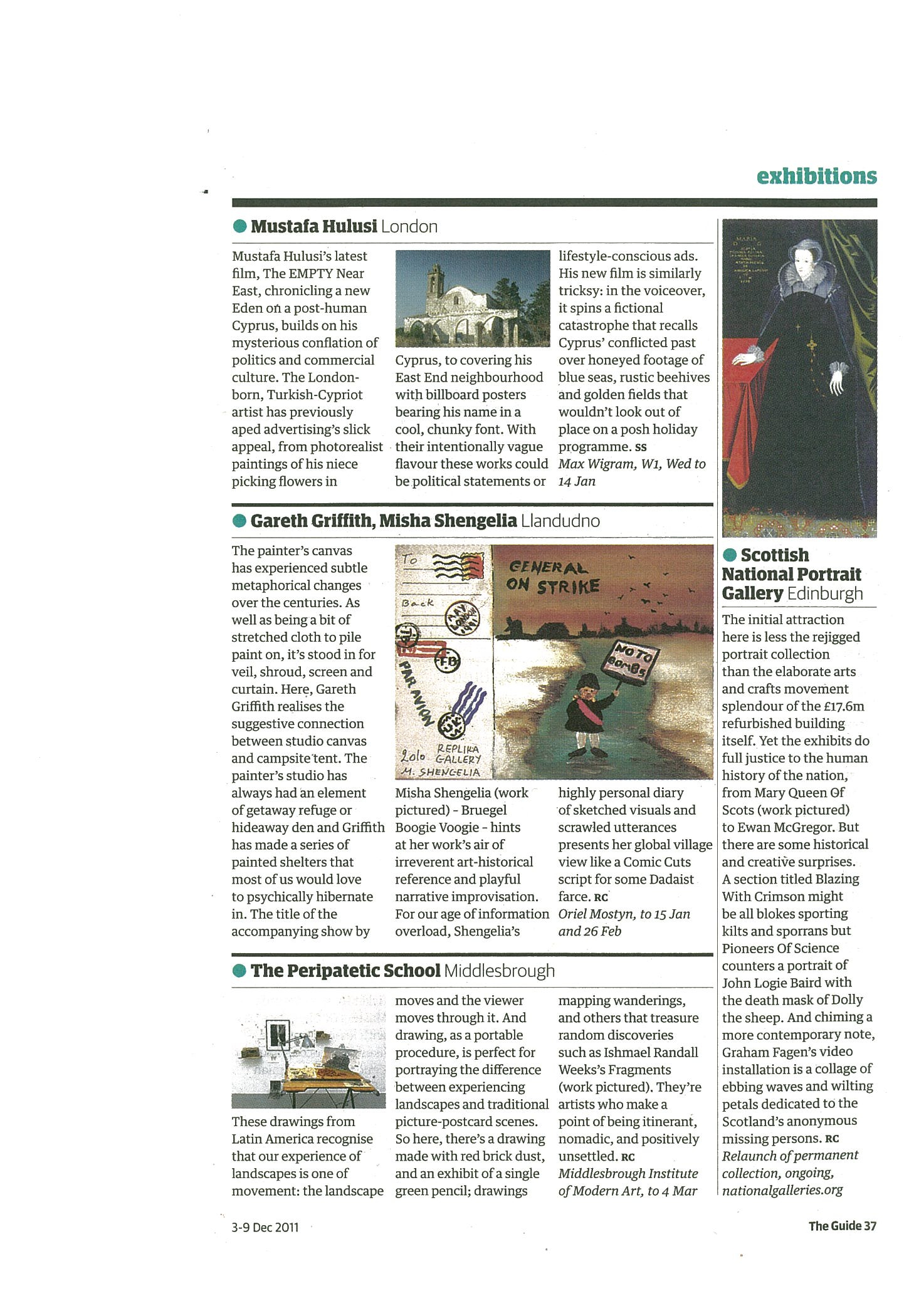
Misha Shengelia and Gareth Griffith’s exhibitions in MOSTYN – The Guardian Guide
The Guardian Guide
by Robert Clark
3 December 2011
BBC Wales Arts: December exhibitions at Mostyn
Wednesday, 30 November 2011
Mostyn in Llandudno will open three new exhibitions on Saturday, in addition to the two current exhibitions already running at the gallery.
The work of Anselm Kiefer, one of Germany’s most significant post-war artists, will go on show at Mostyn from Saturday 3 December. The exhibition is part of ARTIST ROOMS, a new collection of international contemporary art that tours the UK with the aid of the Art Fund. It will be the first time that Kiefer’s work has been shown in Wales.
Works on display by Kiefer date from 1969, together with more recent works by the artists from 2006-2010.
The exhibition gives the chance to explore Kiefer’s work and in particular the way in which his work resonates with Welsh culture, for example in relation to the nature of mythology and its link with landscape.
 Detail from Anselm Kiefer’s 1969 photograph Heroische Sinnbilder (Heroic Symbols). Image: ARTIST ROOMS, Tate and National Galleries of Scotland. Acquired jointly through The d’Offay Donation with assistance from the National Heritage Memorial Fund and the Art
Mostyn has previously hosted the work of American artist Alex Katz as part of the ARTIST ROOMS touring collection, while the National Museum Wales in Cardiff currently has work on show by another influential German artist Joseph Beuys, also as part of ARTIST ROOMS.
Meanwhile, Ha Ha Road also opens on Saturday at Mostyn. The exhibition has been curated by two Berlin-based artists Sophie Springer and Dave Ball, the latter is originally from Swansea.
Ha Ha Road is a group show of work by 25 artists and takes a look at the use of humour in contemporary art. Some of the artists involved include Pipilotti Rist, Ceal Floyer, Erwin Wurm and Welsh artist Bedwyr Williams, who won the gold medal for fine art at this year’s National Eisteddfod.
Curator Dave Ball will be at Mostyn to discuss the exhibition in a free talk at 2pm on Saturday afternoon. The exhibition will occupy gallery one and two at Mostyn until 11 March 2012.
 Detail from Prank by Dan Witz, 2005
The other new exhibition at the Llandudno gallery is Shelter by Gareth Griffith. Shelter is a multi-dimensional exhibition that has evolved from a body of paintings by Griffiths that featured one of the most basics forms of shelter, a tent, that was used on his past family holidays.
Griffith began to build small constructions of tents and shelters, originally to be used as maquettes for paintings. Yet after constructing around 20 or so small examples of these structures Griffith invited his three sons, all of whom are artists themselves, to add their own constructions to the collection and this began a wider collaborative process with other artists.
Contributions from 60 artists from Wales and further afield, such as Peter Finnemore, Heather and Ivan Morison, Ivor Richards and Paul Granjon, who have each produced their own ‘shelters’ will form part of the exhibition at Mostyn, together with some of Griffith’s background research for the project.
 Gareth Griffith’s Shelter exhibition at Mostyn. Image courtesy of the artist and Mostyn
Current displays at the gallery include The Colour of Words, an exhibition of work by local school children made in response to the recent David Nash exhibition at the gallery, plus Bruegel Boogie Woogie, an exhibition of small paintings – each measuring 18x24cm – by Georgian artist Misha Shengelia.
Visit www.mostyn.org for more details on the current and future exhibitions at the gallery.
Six Memos presents “Species of Space 2” Curatorial Seminar at Limerick City Gallery of Art, Ireland
Six Memos presents Species of Space 2
Friday 25 November 2011, 10.30am – 5.30pm
Limerick City Gallery of Art, The Carnegie Building, Pery Square, Limerick
Saturday 26 November 2011, 12-3pm
Ormston House, 9-10 Patrick Street, Limerick
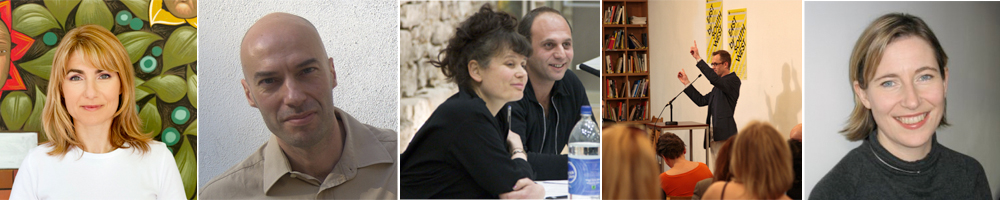
In partnership with LCGA and eva International, Six Memos is pleased to announce the curatorial seminar, Species of Space 2 on Friday 25 November, 10.30am-5.30pm and Fugitive Dialogues on Saturday 26 November, 12-3pm. This two-day event marks the return of LCGA and eva International to the newly redeveloped Carnegie Building and the launch of Ormston House on Patrick Street under the Creative Limerick initiative.
Species of Space 2 will take place at the Carnegie Building with a panel of distinguished curators presenting case studies on their experiences of negotiating space: Katerina Gregos on The Danish Pavilion at the 54th Venice Biennale – Challenging curatorial orthodoxy in the Biennial Context; Alfredo Cramerotti On Translating, Expanding, Compressing and Misusing Space; Vaari Claffey on Gracelands – Substance Abuse; Simon Rees on EAST by SOUTHWEST; And Annie Fletcher on Be(com)ing Dutch.
The following day, Fugitive Dialogues will take place at Ormston House with James Merrigan and Michaële Cutaya from 12-2pm. Fugitive Papers/Dialogues is an artistic research project to explore ideas about art, writing, criticality and public(s) in Ireland at this time. The project is determinedly experimental and involves opening a temporary critical space within which to organise opinion and reflection on art and art-writing, as a public activity. Discussion is followed by afternoon tea with the artists of the current exhibition, Monkey Wrench, at Ormston House: Sonia Shiel, Kevin Cosgrove and Keef Winter.
The seminar is organised and facilitated by Mary Conlon (Shinnors Scholar, LCGA, 2009-2011; Curator of the Six Memos project; Director of Ormston House; Member of the Board of Directors of eva International; PhD candidate at Limerick School of Art and Design).
Admission is free. Booking is recommended mary@ormstonhouse.com or artgalleryeducation@limerickcity.ie.
Kindly supported by Culture Ireland.
About the speakers:
Vaari Claffey is an Independent curator based in Dublin. She is the founding Director and Curator of Gracelands. This project is a series of live outdoor visual arts events, which take place over the course of one day and night and encompasses commissioned sculpture, performance and film. Gracelands has run annually in Dromahair, Leitrim since 2008 and a Dublin iteration is planned for 2012.
In 2010, Claffey curated Temporarily Shelved with Rana Ozturk under the aegis of Sinopale, the International Sinop Beinnale. Future curatorial projects include an exhibition at Project Arts Centre Gallery, Dublin in April 2012. Vaari Claffey is also curator/producer of the exhibition/filmwork: This is going to take more than one night, for which she invited four artists: Isabel Nolan, Bea McMahon, Alice Rekab and Sarah Pierce to produce new work for an innovative context. Funded by the Arts Council’s New Work Award, the film was directed by Neasa Hardiman. She is now developing another film project, Some Structures, with architects Dominic Stevens and Tom de Paor, and artist Ronan McCrea. This latest work, funded by an Arts Council Touring Award, Some Structures will tour throughout Ireland and internationally in 2011-2012. Vaari Claffey teaches at NCAD and IADT, Dublin and is an associate researcher at GradCAM. She is currently organising a seminar on alternative exhibition practices and venues within Ireland with Francis Halsall (NCAD). This emerges from a recent seminar titled What Do You Stand For? held in March 2011. The next presentation will take place in early 2012.
Title of case study: Gracelands – Substance Abuse
Gracelands is a visual arts exhibition/event that has taken place on a single day every year since 2008. Situated outdoors, it incorporates film/video, performance and sculpture. Mimicking a music or literary Festival, it presents a sequence of works which unfold both over time, and across the site. The event has had four iterations, The Mimetic (2008), Folly (2009), I’m Spartacus (2010) and Substance Abuse (2011).
Artists are invited and supported to realise new sculptural works for the specific conditions of Gracelands. The works, occasionally very large, are often very temporary and many of them operate quite differently as day turns into night. Some of these have had ‘functional’ relationships to the event and have included the construction of lighting for the pathway leading to the main site as well as ‘hospitable’ elements involving food and drink. A number of artists have had long-term and repeated engagements, in various forms, with the Gracelands project.
Gracelands is produced in association with The Model, Sligo. It is supported by The Arts Council/An Comhairle Ealionn, Leitrim County Council and The Goethe Institut. Gracelands is located at the Mimetic House, Dromahair Co. Leitrim and takes place with the support of Grace Weir and Joe Walker, who live and work there.
http://www.gracelands.eu
Alfredo Cramerotti is a writer, curator and artist based in the UK. His cultural practice explores the relationship between reality and representation across a variety of media and collaborations such as TV, radio, publishing, internet, media festivals, writing and exhibition curating. Cramerotti has recently taken up the post of Director at Mostyn, the largest publicly funded contemporary art gallery in Wales. Prior to this he was co-curator of Manifesta 8, European Biennial of Contemporary Art (2009-2011) and Senior Curator, QUAD Derby (2008-2011). Cramerotti is Editor of the Critical Photography book series by Intellect Books, and his own recent publications include the book Aesthetic Journalism: How to inform without informing (2009) and Unmapping the City: Perspectives of Flatness (2010).
Title of case study: On Translating, Expanding, Compressing and Misusing Space
Species of Space 2 reminds me of the work I have done to integrate media space as venues for Manifesta 8, the European Biennial of Contemporary Art in the Region of Murcia, in 2010. And it reminds me that this sort of discussion is part of the integral, expanded idea about Aesthetic Journalism, a body of research I’m developing since 2003, and that recently has expanded to include Critical Photography, Hyperimage, Fictocriticism, Expanded Symposia etc.; all approaches (whatever you want to call them) that are manifesting themselves in the cultural field.
I will present a couple of cases in relation to these approaches, and then open up for discussion about risks and benefits involved in opening up such spaces as agents of translation rather than representation.
Annie Fletcher is Curator of Exhibitions at the Van Abbemuseum, Eindhoven. Recent exhibitions include solo presentations and projects with Jo Baer, Jutta Koether, Cerith Wynn Evans, Deimantas Narkevicius, Minerva Cuevas and the long term project, ‘Be(com)ing Dutch’ with Charles Esche during 2006 – 2009. She is a tutor at De Appel in Amsterdam. From 2005 – 2010 she was the co-founder and a Director with Frederique Bergholtz of the rolling platform ‘If I Can’t Dance, I Don’t Want To Be Part Of Your Revolution’ (www.ificantdance.org) which initiated investigative programmes of performances, art projects and an extensive discursive programme realized in collaboration with various partner institutions in the Netherlands and internationally. As a writer she has most recently contributed to various magazines including ‘Afterall’ and ‘Metropolis M’’. She is on the editorial board of ‘A Prior’ magazine.
Title of case study: Be(com)ing Dutch
Be(com)ing Dutch was a large scale project that was developed by Charles Esche (Director of the Van Abbemuseum) and Annie Fletcher (Curator of the Van Abbemuseum) and took place over a period of a couple of years. Be(com)ing Dutch has attempted to look at the meaning of and context for a global visual culture in Eindhoven in the twenty-first century. It did this through the eyes of artists and production of artwork, but also through an extended preparation of potential viewers through discussions, workshops and a large-scale meeting called ‘Eindhoven Caucus’. The main goal of Be(com)ing Dutch was to put the question of national identity up for question, since the twenty first century appears to have been and still is a battle between globalism and localism. Questions like ‘Can we become a nationality or is it imposed by birth?’, ‘How do visual signifiers acknowledge our belonging’ and ‘As a global medium, what picture do artists offer of the nation states and what critiques or alternatives do they suggest?’ were discussed by artists, experts and museum visitors during debates, symposiums and art projects. The overall concept behind Be(com)ing Dutch was to move the agenda of multiculturalism on from notions of toleration and difference towards building a shared but agonistic democracy on the cultural level through the use of one of the few remaining public sphere institutions left to us: the museum.
Katerina Gregos (born in Athens, Greece, living and working in Brussels, Belgium) is an art historian, curator and writer. She is currently curator of the Danish Pavilion for the 54th Venice Biennial (2011) and on the curatorial team of Manifesta 9 (2012). This year she also curated the 4. Fotofestival Mannheim Ludwigshafen (Germany) together with Solvej Ovesen. She has also curated several international large-scale biennials and exhibitions including Contour 2009 – The 4th Biennial for Moving Image, Mechelen, Belgium (2009) and E V+A, Limerick (2006). From 1997 to 2002 she was director and curator of the Deste Foundation, Athens, and during 2006 and 2007 she was the artistic director of Argos – Centre for Art & Media in Brussels. In 2012 she will be curating “Newtopia: The State of Human Rights”, timed to coincide with the opening of the Kazerne Dossin Museum and Documentation Centre of the Holocaust and of Human Rights, Mechelen, Belgium
Title of case study: The Danish Pavilion at the 54th Venice Biennale: Challenging curatorial orthodoxy in the Biennial Context
Freedom of speech is one of the key issues in the current public debate and one that is becoming increasingly contested, given the steady erosion of civil liberties in many countries today. Denmark has always been at the forefront of the public debate on issues in relation to freedom of speech, but it has also suffered the so-called “trauma of free speech”. This makes the Danish Pavilion an appropriate vehicle from which to visualise and discuss these issues. Freedom of speech is highly relevant in relation to much of what is happening in the world politically today; from press intimidation and censorship, to restrictions on the internet, as well as debates on the limits of freedom of speech, increased surveillance and forms of control. The issue of freedom of speech is highly complex, often subjective – even relative – and invariably debatable. The boundaries surrounding it cannot easily be delineated. The exhibition Speech Matters aims to provoke a considered debate and to complicate the issue of freedom of speech, highlighting the intricacies, ambiguities and grey areas inherent to the subject, and emphasizing the fact that freedom of speech cannot be exercised or applied in any programmatic or strictly proscribed manner. Finally, the exhibition also touches on the essence of visual artistic practice, which fundamentally entails conditions of freedom of expression. Eighteen artists from ten countries were been invited to participate. The majority produced new work for the exhibition.
Simon Rees is currently preparing ENVISIONING BUILDINGS: reflecting architecture in contemporary art photography for the Museum Angewandte Kunst (MAK), Vienna, which opens on December 6. In spring-2011 he lead the third instalment of the project “curatedby_” deployed at 21 galleries throughout Vienna. Titled EAST by SOUTHWEST and that explored new notions of what constitutes ‘Eastern European’ cultural space. And at the start of the year he was the lead curator of the 15th Tallinn Triennial: FOR LOVE NOT MONEY that opened the visual arts programme of “Tallinn – Culture Capital of Europe 2011”.
From 2005–2010 Rees was chief curator and editor at the Contemporary Art Centre (CAC), Vilnius in Lithuania. In his role he was convener of the CAC CAFE TALKS the celebrated monthly international lecture series, which brought major figures from culture to Vilnius and the co-editor of the quarterly bi-lingual (Lithuanian/English) magazine CAC INTERVIU. In that period he curated the opening exhibition of the national programme of “Vilnius – Culture Capital of Europe 2009” titled CODE SHARE: 5 continents, 10 biennales, 20 artists; produced the seven city touring exhibition of French and Lithuanian art You are my mirror (2008); and commissioned the jury-prize winning Lithuanian Pavilion with artists Nomeda & Gediminas Urbonas at the Venice Biennale (2007).
Rees lives and works in Vienna, Austria.
Title of case study: EAST by SOUTHWEST
The title of curated by_vienna 2011 describes a geographical conundrum — to be solved using the compass of contemporary art. This geographical aspect reflects Vienna’s status, at different moments in European history, as an advocate for culture and contemporary art from an expanded Eastern European space. The project hones on regional geography at a time, and in a world, largely governed by global mechanisms and ways of thinking.
The project’s intention was to investigate a wider understanding of Europe and its transformations since the countries formerly behind the Iron Curtain have returned to the heart of continental cultural and political life and since Turkey has been engaged in multilateral discourse.
—
Limerick City Gallery of Art is part of Limerick City Council, funded by the Arts Council and supported by Fás, Fáilte Ireland, Shannon Development and the Heritage Council.
T +353 (0)61-310633 / E artgallery@limerickcity.ie / W http://www.gallery.limerick.ie / Twitter @limerickgallery
Memory / Sound / Image: Half-Day Symposium at Modern Art Oxford
19.11.2011 at 3:00 PM – 6:00 PM

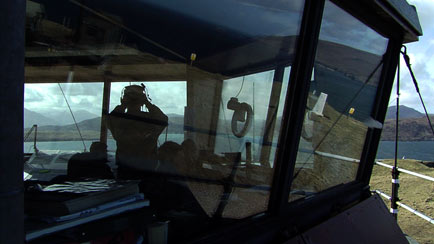
Artist Shona Illingworth will be joined by cognitive neuro-psychologist Professor Martin A. Conway, a leading expert on human memory, writer and curator Caterina Albano, and writer, curator and artist Alfredo Cramerotti for an afternoon of screenings and discussions at Modern Art Oxford that explore notions of memory in relation to scientific insight and the politics of location and conflict. This half-day symposium, Memory / Sound / Image, has been organised by the Gallery to complement the current exhibition Kerry Tribe: Dead Star Light, which explores themes of memory, ambiguity and doubt.
Topics of discussion will include how geopolitical strategies of control and the evolving legacies of conflict intersect with deeper processes of memory and emotion that form our perception and construction of the world, and how these new scientific discoveries and insights can inform and inspire work in this area by artists working with moving image and sound.
nofound_ photoreviews during the week of photography in Paris
DATE: Saturday 12th & Sunday 13th November 2011
TIME: from 9.30 AM to 1.00 PM
photo-festivals_programmes_at_nofound_photofair
—
Photo-Festivals partnered with nofound_ photofair, the newly launched photo fair happening during the week of photography in Paris, to organise nofound_ photoreviews during the fair. For its first edition, nofound_ photoreviews celebrate the very dynamic British photography scene and introduce some of its key figures.
Photo-festivals selected reviewers according to their expertise, experience and broad knowledge in the field of Photography and Contemporary Art. We also acknowledge their innovative approaches and their commitment
to developing and advancing the work and practice of emerging and mid-career artists.
—
Alfredo Cramerotti (Intellect Books + Mostyn Gallery, UK), Anne Bourgeois-Vignon (Institute, USA), Bill Kouwenhoven (HotShoe Magazine, UK/Germany), Bjarne Bare & Behzad Farazollahi (MELK Gallery, Norway), Bridget Coacker (Troika Editions & Gallery, UK), Caroline Hancock (Independent Curator, France), Cristianne Rodrigues (FotoRio Photography Festival, Brazil), Grace Pattison (London Street Photo Festival + Shoot Experience, UK), Joni Karanka (Third Floor Gallery, UK), Laura Noble (Diemar/Noble Photography gallery, UK),
Louise Clements (Format International PhotoFestival + Quad, UK), Marc Feustel (eyecurious + Studio Equis, France), Michael Itkoff (Daylight Magazine, USA), Michele Vitucci (Micheko Gallery, Germany), Moritz Neumüller (PhotoIreland Festival of Photography, Spain/Ireland), Nathalie Hershdorfer (Alt.+ 1000 Festival de Photographie de Montagne, Switzerland), Oscar Poulsen (Independent Curator, Sweden), Philippe Jarrigeon & Sylvain Menétrey (Dorade Magazine, Switzerland), Ramón Reverté (Editorial RM, Mexico), Rui Prata (Encontros da Imagem + Museu da Imagem, Portugal), Sebastián Muñoa (Rea One Day Gallery, Argentina), Shauba Chang (Waterfall Magazine, UK/Taiwan), Sheyi Bankale (Next Level Magazine/Projects, UK), Stefano Bianchi (Crowdbooks, France), Tom Saunderson & Guy Robertson (Son Gallery, UK), Yasmina Reggad (Photo-Festivals + Paraty em Foco International Photography Festival, UK/Brazil)
For The Record: Fictional images on the frontline between photojournalism and contemporary art
by Ossian Ward
THE ART NEWSPAPER for FRIEZE ART FAIR
Thursday 13 October 2011

David Nash’s exhibition in MOSTYN – The Guardian Guide
The Guardian Guide
by Robert Clark
8 October 2011

Dublin Contemporary 2011: Panel discussion
Panel Discussion
29 October 2011, at 5:30pm
Lecture Theatre 2, Dublin Contemporary, Earlsfort Terrace, Dublin 2

Jeffrey Swartz (Art Critic) will chair a panel discussion with Alfredo Cramerotti (Director, Mostyn), Jose Falconi (Curator, Latin American Art Forum), Oxana Maleeva (Curator, Art Apart), William Morrow (Director, 21C Museum), Kathy Noble (Curator, Tate Modern), Steve Picolo (Artist) on Saturday the 29th of October at 5.30 pm in Lecture Theatre 2.
The talk will be titled: ‘Occupy Curating? Politics, Protests and the Future of Curatorial Practice’ and will ask the question whether curatorial content can be artist generated, or even viewer-generated, in the same way that democracy could be generated by the creative individuals, or just regular individuals, who happen to live in it.
Private Investigations: talks and book presentations 8th & 9th November, 2011
Private Investigations is a compilation of texts and image-based contributions by former Büchsenhausen Fellows, addressing their own research-based art practice and discussing the same in contributions specifically created for this publication. The focus of the book is on artistic strategies which attempt to infiltrate the hegemonic discourses of knowledge, which are currently emerging also in the art context, while at the same time proposing own ways of appropriating and processing knowledge. Private Investigations includes contributions by Alfredo CRAMEROTTI, Judith FISCHER, Geoffrey GARRISON, Alison GERBER, Ana HOFFNER, Brigitta KUSTER, Ralo MAYER, Andrei SICLODI and Alexander VAINDORF.
Venues and dates:
Private Investigations
Alfredo CRAMEROTTI, Andrei SICLODI, and others: Book launch and discussion
Tue 08.11.2011, 19.00, Künstlerhaus Büchsenhausen Innsbruck
Private Investigations
Alfredo CRAMEROTTI, Ana HOFFNER, Andrei SICLODI, and others: Book launch and discussion
Wed 09.11.2011, 19.00, SECESSION VIENNA
About the book:
Private Investigations
with contributions by Andrei Siclodi (Ed.), Alfredo Cramerotti, Judith Fischer, Geoffrey Garrison, Alison Gerber, Ana Hoffner, Brigitta Kuster, Ralo Mayer, and Alexander Vaindorf.
Published by Künstlerhaus Büchsenhausen
English language / 144 pages / 2011 / EUR 15,00
Büchs’n’Books, Volume 3
ISBN 978-3-9502583-1-8


 Curatorview [Alfredo Cramerotti]
leave a comment