Bedwyr Williams in Venice: Interview on The Times
The Times [Saturday Review]
25 May 2013
by Fiona Wilson


In the Studio: Bedwyr Williams, Painter
The Independent [Radar]
by Karen Wright
4 May 2013


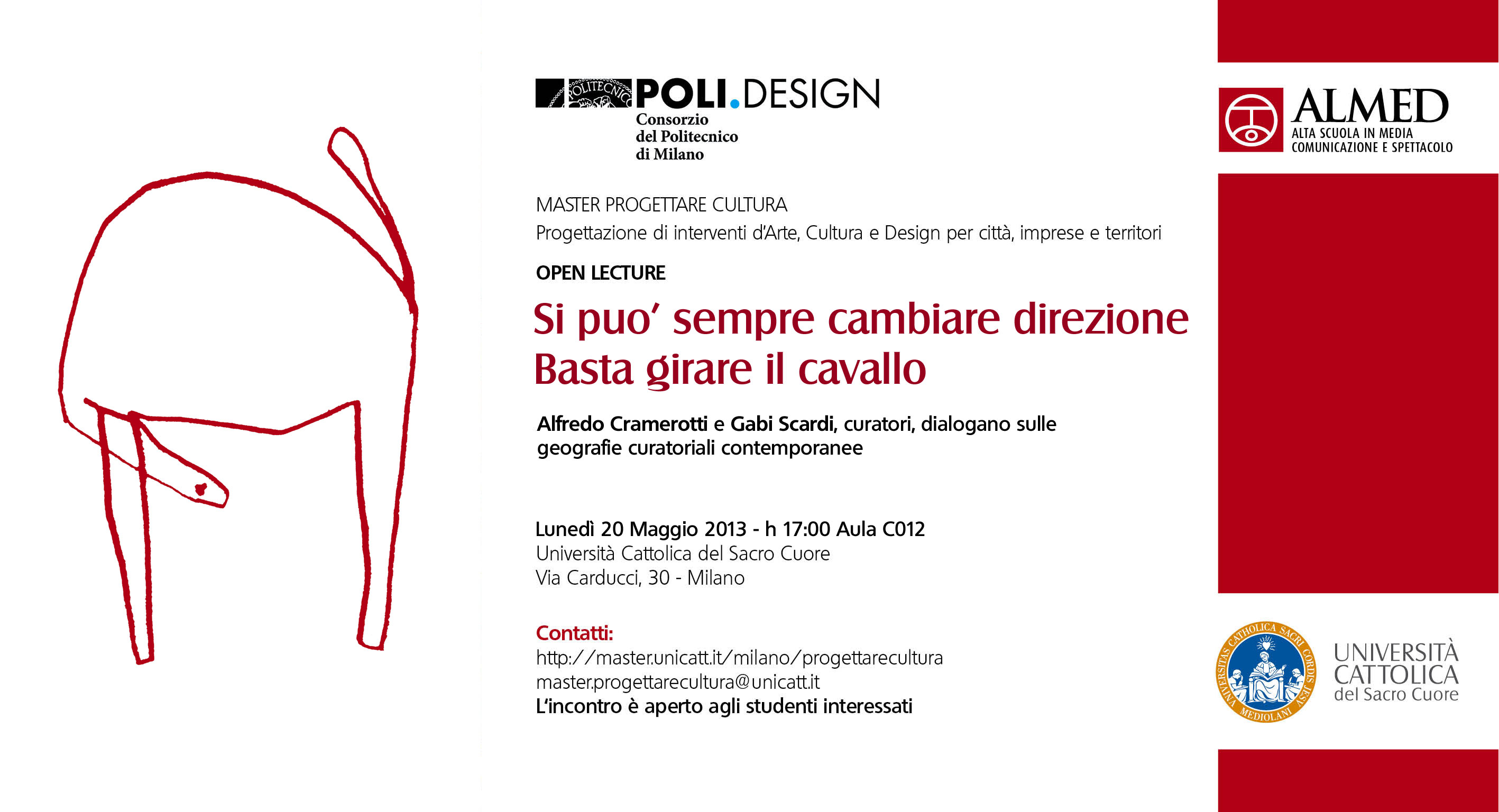
Keith Arnatt, Alek O. and Y O U exhibitions on Guardian Guide
Guardian Guide
Friday 3 May 2013
Robert Clark find out what’s happening in art around the country


Island Nations Seize the Venice Biennale Spotlight to Decry Climate Change
Blouin Artinfo
06.12.2013
by Kate Deimling


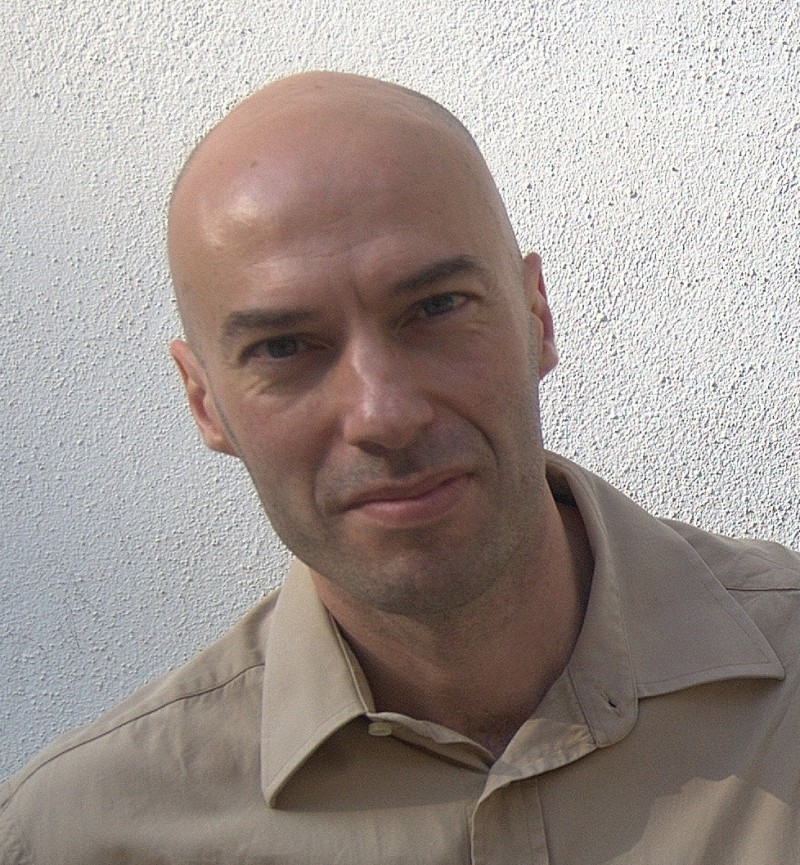
Interview with APT Curator Alfredo Cramerotti
> Question:
What’s the most exciting part of curating at the Venice Biennale? What are your biggest challenges?
> Answer:
“In Venice everything is quite complicated, as you can imagine. So you need either to have the direct contacts or create a structure that supports you before and throughout the exhibition. This goes for planning and construction permissions, transportation, building contractors, installation of works, marketing, and even for such straightforward tasks such as hosting a party.
“Speaking Italian surely helps, in my case. On the other hand, the rewards are equally exceptional. Working in Venice is an incredibly challenging task for both artists and curators, but a feat that goes a long way. There is a lot of preparation to do, and key aspects to prioritize i.e. considering the mediation of the content, the use of the space, the circulation of the visitors, and the ways one wants the points of the artist’s project to ‘get through’.”
“All these aspects are heightened in an environment like the Venice Biennale, for both its prestige and the expectations that international attention puts on the artist.
“In 2013 I’m co-curating not only Wales but also the Maldives Pavilion (as CPS Chamber of Public Secrets), two very different set ups and frameworks; and here the fun begins. My first project in Venice goes back to 2003, when I worked for the Singapore Pavilion.”
Q:
How did you envision your role as a curator when you first started?
A:
“Fundamentally, I work to facilitate artists’ visions, and to provide them the means to realize significant and meaningful projects that can affect (and effect) people’s lives. I do believe that contemporary art it is about contemporary life, nothing less, nothing more. Artists are crucial to help understand better the life we had, we have, we will have.
“To engage our senses in ‘filtering’ the meaning of life through an artistic approach is what differentiate humans from other animals. Art can be frightening, exciting, thoughtful and miserable all at once. Making art, sharing it through relevant and specific displays, interpreting and re-opening debates on many issues via those display and reinterpretation is our business. As a curator, I take care of the last two thirds of the process.”
Q:
What do you consider to be your biggest career achievement, and why?
A:
“I am very proud of my co-curation of Manifesta 8 in Spain in 2010. And of course my directorship of MOSTYN, the leading and largest contemporary art space in Wales, UK. It is a fantastic space offering a truly international program yet retaining a strong local purpose. I am also a real enthusiast of the AGM Culture “expanded” symposium that every year happens in a different location, with a different format: exhibition, performance, debate, screening series, etc. It is helping many hosting organizations to understand better what they do and how they do it, acting as a sort of “critical friend” through the work of the artists we invite.
Q:
APT brings together some of the most talented up-and-coming artists in the art world today. Which emerging artists do you follow?
A:
I follow the work of a number of artists, some of them known already, some not yet on the main circuit of biennials, museums and auction houses. Among others: Laurent Grasso, based in Paris. Marinella Senatore, based in Berlin. Diango Hernandez, based in Frankfurt. Rossella Biscotti, based in Amsterdam. Erick Beltran, based in Barcelona. Haris Epaminonda, based in Berlin. Bedwyr Williams, based in Caernarfon. David Jablonowski, based in Amsterdam. Francesco Arena, based in Cassano delle Murge. Stefano Tsivopolous, based in Amsterdam. Uriel Orlow, based in London. Shannon Ebner, based in New York. Hiwa K., based in Berlin. Julieta Aranda, based in Berlin. Anibal Lopez, based in Guatemala City. Rabih Mroure, based in Beirut. Flavio Favelli, based in Bologna. Sean Edwards, based in Abergavenny. Rosa Barba, based in Berlin. Asier Mendizabal, based in Bilbao. Rä di Martino, based in London. Broomberg & Chanarin, based in London.
Q:
Why did you join APT and why is your role important to the artistic community?
A:
“I joined APT to facilitate and help the work of artists, and also to support them as much as I can throughout their life.
“I invite artists whom I trust, I trust their work, and I am confident they will have a major impact in the art sphere of the decades to come. It’s an exciting perspective, and a rare chance to make a difference in the society one lives. So I am quite accustomed to having a long-term view on things and scenarios. If I can offer this expertise and insights to a number of artists, that makes me happy. And I can make them happy too.”
Q:
What’s your typical day like? What do you like doing outside of work?
A:
“What do you mean outside work?! Every day is long, and so far, still fun. I embrace what a famous American female CEO recently stated: forget the balance; this is the merge. ‘The merge’ is when work and life mesh up and intersperse each other throughout the day. I get up at 7.00am and go to bed at 10.00pm, and in between everything and anything can happen.
“It could be cuddling and feeding my daughter, preparing my older boy for school, coordinating a meeting on email, reading an essay for a presentation, writing a foreword or browsing the portfolio of an artist for the emergent artists program in MOSTYN.
“And we do have family meals daily. At home I might be discussing my wife’s next textile design brief for her looming deadline, playing ‘explorers’ with my son in the living room, babysitting the little one while my wife is replying to her emails – she also merges a lot of things, many more than me.
“Before the evening is over I may have an update on the photo book series I’m editing with a few emails or calls to the various authors and the publisher’s headquarters. Finally, going to bed only to be woken up by my girl after two hours. She’s only two months old. It can only get better.
“Really, there is no ‘outside work’, as there is no ‘outside life’. There is family, private life, public life, curating, writing, management, researching, coaching and creativity all at once.”
Q:
What’s the most interesting upcoming exhibition at MOSTYN?
A:
“The vision of MOSTYN is to open up debates about contemporary life through contemporary art. We have characterized the program by two strands:
“The first looks at the history of the MOSTYN building and its situation in the Victorian town of Llandudno, North Wales. With the Visual Arts Programme Curator Adam Carr we have developed an idea for a sequence of four exhibitions based on the former use of the building and the principles on which it was founded.
“Women’s Art Society looks at the period when MOSTYN was an important place for women to exhibit their art. Women were often denied membership of local art societies on the basis of their gender.
“WAR I & II focuses on the use of the building during the two World Wars; as a drill hall in World War I and in World War II it was occupied by the Inland Revenue as their temporary headquarters.
“MAIL investigates the building’s expansion into the former Royal Mail Sorting Office, and Wagstaff explores the use of the building as a shop / store for pianos.”
“The second strand is concerned with re-evaluating models and approaches of exhibition making and the understanding of classic art genres. The program will comprise solo exhibitions accompanied by related group exhibitions and vice versa. As an example, Y O U that brings together the work of five international artists (Felix Gonzalez-Torres, Aurélien Froment, Jeppe Hein, Július Koller and Rivane Neuenschwander) including pieces that directly request and require you, the viewer, and your involvement.
“Dear Portrait will look at the seemingly faded relevance of portraiture, aiming to update and renew its status. All of the artworks included, by a group of international artists, will be accompanied by texts written by the people depicted in the works.
“Return Journey is an exhibition that aims to enable audiences to open out their view of United Kingdom in connection with the visual arts. It asks instead, and hopes to provide an answer for; what is it to live and work in the United Kingdom, what delineates its land, and in what ways can it be used to form the basis for a work of art?
“There are also a number of solo exhibitions. Among others, Keith Arnatt (Spring 2013), Franco Vaccari (Summer 2013), Nina Beier (Autumn 2013), Tom Wood (Winter 2013), and solo shows for the ‘Uprisings’ program of emergent artists in a dedicated gallery at the first floor: we kick off with Alek O, followed by Becca Volecker.”
original interview here
Economic impact of arts investment
Arts investment brings in up to £4 for every £1 spent
Arts investment contributes up to £4 to the local economy for every £1 spent, according to a new report published by the Local Government Association (LGA).
The report, entitled Driving growth through local government investment in the arts, showed that the arts sector provides nearly one million jobs and the UK’s 67,000 cultural businesses contribute £28 billion to the UK economy every year.
The report found that councils currently invest around £800 million every year in the arts and museums infrastructure.
In one case study, the report showed how York Museums Trust, which was losing around 37,000 visits a year before it formed a partnership agreement with the council in 2002, now attracts around 600,000 visitors and brings in £6.4m a year, offering a return on investment of around £10 of impact for every £1 spent by the council.
In a statement, the LGA said: “Despite government cutting council funding by 33%, many are – for now – actively protecting their arts budgets. This research shows how short-sighted it would be for the Treasury to make further cuts to local government grants.”
Recent figures released by the Department for Communities and Local Government showed that arts funding has proved a soft target for many councils however, with cultural spend by local authorities in England dropping by 7.8% in 2011-12.
In another case, Newcastle City Council was forced to row back on plans to axe its entire culture budget after a public outcry.
Flick Rea, chair of the LGA’s Culture, Tourism and Sport Board, said: “A theatre, museum or festival draws visitors who do not simply spend money on their ticket or entrance fee, but also buy meals in local restaurants, go to local shops, or perhaps stay in hotels as part of their visit.
“These people might never have visited that location without the pull of its cultural attractions.”
The LGA and Arts Council England recently signed a practical statement of purpose committing themselves to jointly supporting councils that want to boost growth through the arts.
Comments

MA Member

—
read article on Museums Association website here:
Arts investment brings in up to £4 for every £1 spent | Museums Association.


 Curatorview [Alfredo Cramerotti]
leave a comment