Exhibition review of ‘Y O U’ at MOSTYN on This Is Tomorrow
this is tomorrow
Contemporary Art Magazine
by Ciara Healy
7 June 2013

‘Y O U’ at MOSTYN
12 Vaughan Street, Llandudno, LL30 1AB, Wales
27 April – 7 July 2013
Arthur Koestler began his seminal ‘Yogi and the Commissar,’ by describing a machine he imagined to be capable of splitting up the spectra of society as the physicist splits the rays of a beam. The separation Koestler imagined is now arguably a reality, in as much as we have become more accustomed to regarding a human being as a statistical unit, as a collection of numbers, which constitutes what Zygmunt Bauman eloquently calls the Great Global Anonymous.
Many writers like Bauman and Claire Bishop question whether art can find a way of overcoming this atomization and resulting loss of sensitivity. ‘Y O U’ at MOSTYN is one of an increasing number of exhibitions in Wales, (‘Keeper’ at the Mission Gallery is another excellent example), which seeks to connect art, the institution and the public in a more meaningful way, and in so doing a new ethico-aesthetic emerges.
This notion is strikingly apparent in Rivane Neuenschwander’s ‘[…]’ (2005), which consists of a collection of typewriters with modified typebars. (Typed letters have been removed and replaced with dots.) Presented on wooden benches, the tactility of these old machines is accentuated by their titanium grey, tweed brown and faded topaz facades. Surrounding the typewriters on a billiard green, felt coated wall, are hundreds of dotty drawings made by the public. From the skyline of New York to a Louise Bourgeoise-style spider, it is clear that these typewriter sketches have been made with playful consideration. Pinned together in overlapping layers, they constitute a portrait of the people who visit MOSTYN. This approach gives ‘[…]’ (2005) an immeasurable sense of endurance because it can be reconfigured each time it is exhibited, thereby challenging the rigid and reductionist nature of presenting a people as the Great Global Anonymous.
In a similar vein, Julius Koller’s ‘J.K. – Ping-Pong Club (U.F.O.)’ (1970-2007) invites visitors to engage one another in a game of ping-pong whilst being surrounded by documentation of all the previous projects that incorporated the artist’s use of the game. Placing a ping-pong table in a small dimly lit room, away from the other larger works in the gallery, illustrates curator Adam Carr’s empathetic understanding of the way in which people are often intimidated by participatory artworks in contemporary art institutions. This ping-pong room feels naughty, like a playroom, an irreverent den of laughter and swearing, tucked away from the chapel-like white cube spaces adjoining it. On one level, Julius Koller’s work has a lineage in conceptual art that connects clearly with Yoko Ono’s ‘All White Chess Game’, but the most memorable aspect of the work is the fun of simply playing ping-pong, and the sense of connection that it elicits between players.
Play is further encouraged by Aurelien Froment’s ‘Debuilding’ (2001), which invites people to build Jenga-like structures using wooden blocks of different sizes. Initially stacked inside a single wooden trunk in the corner of the gallery, the blocks have since been scattered across the white floor by participants eagerly engrossed in the process of building their own imaginary dwellings, vehicles and towers. Like Neuenschwander’s ‘[…]’, this work will also endure, because each creation is carefully disassembled by gallery staff every evening, ready to be reconfigured anew by visitors the next day.
What is striking about ‘Y O U’ is the curatorial equilibrium Carr has developed between the ecologies of the institution, the participant and aesthetics. This is something Claire Bishop argues is lacking in so much participatory artwork today, because ethics so often tends to eclipse aesthetics. Felix Gonzales-Torres’s small rectangle of sweets on the floor of one of the naturally lit rooms of the gallery maintains this equilibrium. Shimmering like a small topaz lake, patches of grey gallery floor appear here and there in the work where sweets have been removed and consumed by visitors. The diminishing overall weight of the sweets refers to the loss of weight experienced by Gonzales-Torres’s partner who suffered from AIDS related diseases. The artist’s use of formal aesthetics consequently facilitates a reconnection with the rawness of our existence; and reminds us that even in pleasure we are always in close proximity to pain. This concept gains a further poetic currency in Llandudno, where under an hour’s drive away sits a decommissioned nuclear power plant.
The artworks that make up ‘Y O U’ provide an opportunity to question who we are and why we are here. When value is attached to these subjectivities, value is by proxy attached to the unique, to the authority of the first hand experience and, ultimately, to freedom. It is significant then that this exhibition is occurring at a time when a greater emphasis on social scientific practices is taking place. Carr acknowledges this issue through the inclusion of Jeppe Hein’s ‘Upside Down’ (2011), a telescope that presents an upside down panoramic view of the gallery space, along with a collection of devices for measuring light, sound and cognitive brain activity that were acquired from the School of Psychology at Bangor University. The presence of these empirical instruments highlights the way in which intuitive experiences can be rationalized, gauged and even controlled through scientific observation.
In the context of this show such a realisation is powerfully troubling. How did we engage with those blocks of wood, the sweets, the ping-pong? Did we follow a typical pattern? Was someone watching us? Parallels can be drawn between this experience and our existence today. For when we are at our most open, our most confessional and our most vulnerable in a public sphere (such as a social network), are we not also unwittingly complicit in surrendering the last of our freedoms? Under surveillance, our collective individuality runs the risk of being rendered back into that single archaism, back to a neat category: back to the statistic.
We know it is not possible to unite a split atom, but is it possible to unite the split elements of a society through art? ‘Y O U’ proves that it is – as long as art, the institution, and its participants remain in constant flux. This is how beauty survives. And beauty, Dostoyevsky once argued, is what will save us all in the end.
MOSTYN Sunday Talk 9 June 2013 : If YOU are in control of your life, who is controlling YOU?
Prof. Guillaume Thierry from Bangor University will be giving this talk at mid-day on 9th June. Guillaume has done the display about cognition for the current exhibition ‘Y O U’ in MOSTYN.
Reflecting on our perception of and interaction with objects through an ‘expert’s’ eyes, and mixing the included artworks with other fields of study, this promises to be a very engaging and inclusive talk where audience participation is encouraged.

The Guardian’s Adrian Searle gives his verdict on the best of the Venice Biennale
The Guardian
3 June 2013
by Adrian Searle


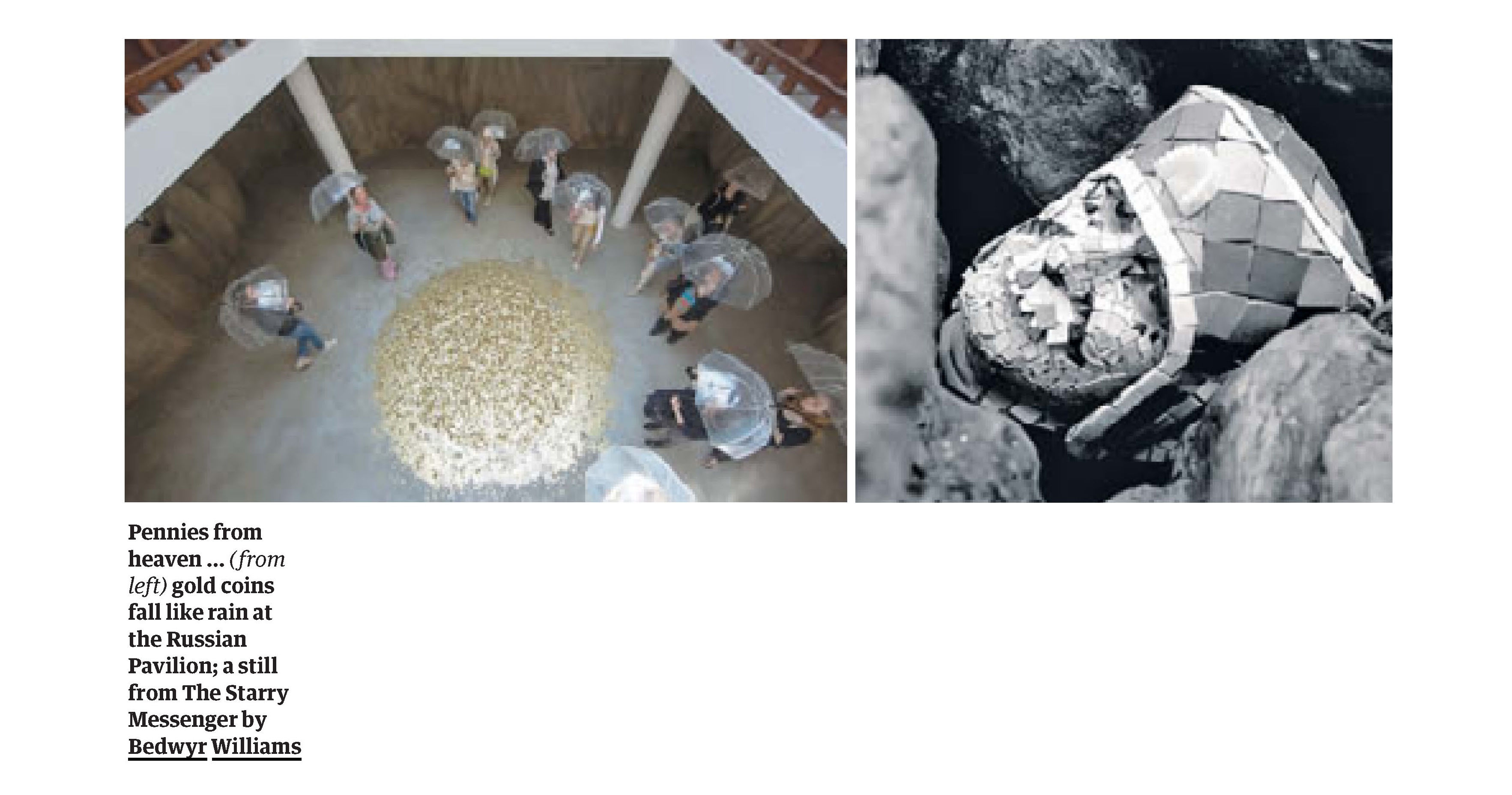


In the Studio: Bedwyr Williams, Painter
The Independent [Radar]
by Karen Wright
4 May 2013


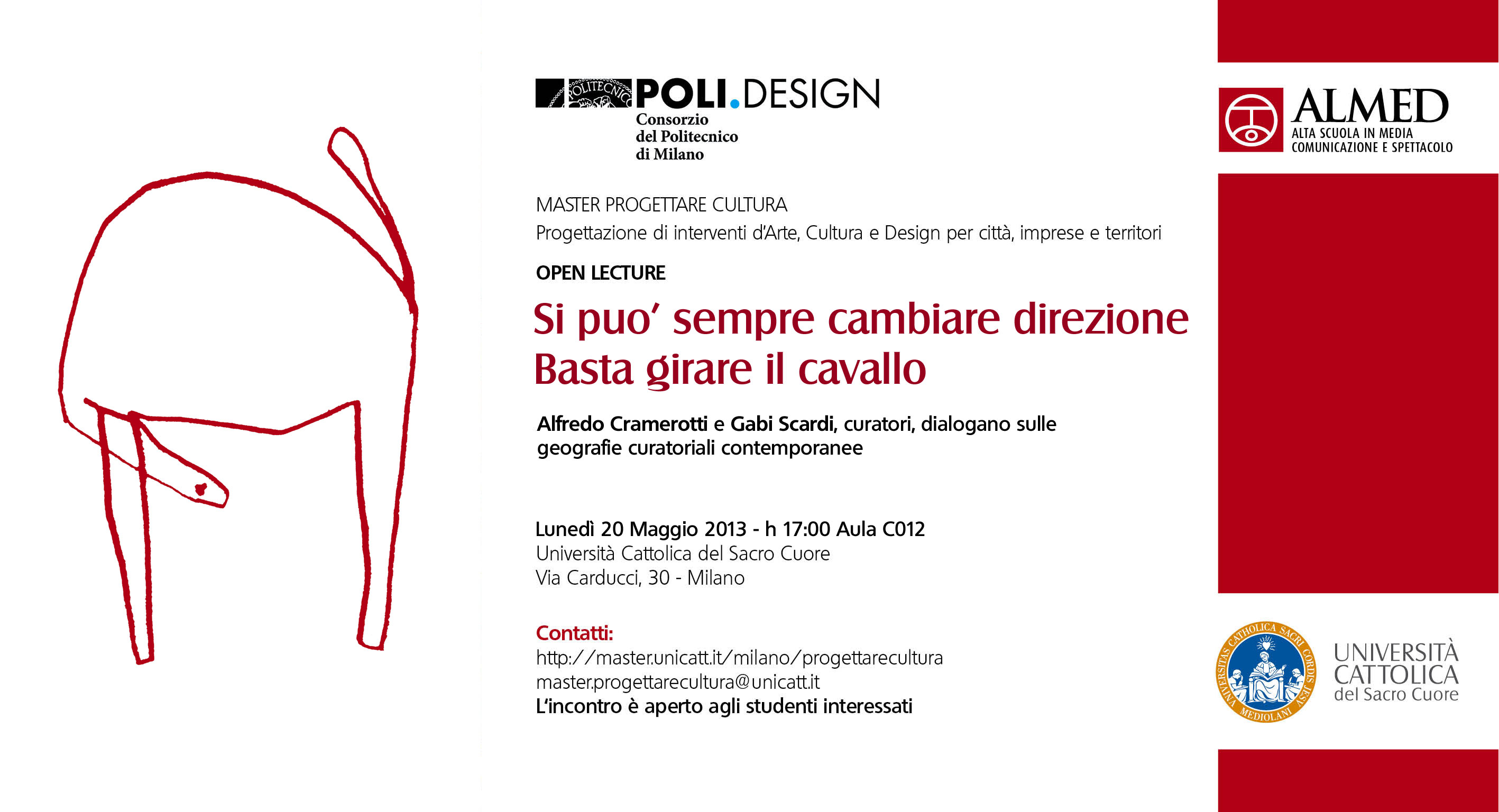


Island Nations Seize the Venice Biennale Spotlight to Decry Climate Change
Blouin Artinfo
06.12.2013
by Kate Deimling


Interview with APT Curator Alfredo Cramerotti
> Question:
What’s the most exciting part of curating at the Venice Biennale? What are your biggest challenges?
> Answer:
“In Venice everything is quite complicated, as you can imagine. So you need either to have the direct contacts or create a structure that supports you before and throughout the exhibition. This goes for planning and construction permissions, transportation, building contractors, installation of works, marketing, and even for such straightforward tasks such as hosting a party.
“Speaking Italian surely helps, in my case. On the other hand, the rewards are equally exceptional. Working in Venice is an incredibly challenging task for both artists and curators, but a feat that goes a long way. There is a lot of preparation to do, and key aspects to prioritize i.e. considering the mediation of the content, the use of the space, the circulation of the visitors, and the ways one wants the points of the artist’s project to ‘get through’.”
“All these aspects are heightened in an environment like the Venice Biennale, for both its prestige and the expectations that international attention puts on the artist.
“In 2013 I’m co-curating not only Wales but also the Maldives Pavilion (as CPS Chamber of Public Secrets), two very different set ups and frameworks; and here the fun begins. My first project in Venice goes back to 2003, when I worked for the Singapore Pavilion.”
Q:
How did you envision your role as a curator when you first started?
A:
“Fundamentally, I work to facilitate artists’ visions, and to provide them the means to realize significant and meaningful projects that can affect (and effect) people’s lives. I do believe that contemporary art it is about contemporary life, nothing less, nothing more. Artists are crucial to help understand better the life we had, we have, we will have.
“To engage our senses in ‘filtering’ the meaning of life through an artistic approach is what differentiate humans from other animals. Art can be frightening, exciting, thoughtful and miserable all at once. Making art, sharing it through relevant and specific displays, interpreting and re-opening debates on many issues via those display and reinterpretation is our business. As a curator, I take care of the last two thirds of the process.”
Q:
What do you consider to be your biggest career achievement, and why?
A:
“I am very proud of my co-curation of Manifesta 8 in Spain in 2010. And of course my directorship of MOSTYN, the leading and largest contemporary art space in Wales, UK. It is a fantastic space offering a truly international program yet retaining a strong local purpose. I am also a real enthusiast of the AGM Culture “expanded” symposium that every year happens in a different location, with a different format: exhibition, performance, debate, screening series, etc. It is helping many hosting organizations to understand better what they do and how they do it, acting as a sort of “critical friend” through the work of the artists we invite.
Q:
APT brings together some of the most talented up-and-coming artists in the art world today. Which emerging artists do you follow?
A:
I follow the work of a number of artists, some of them known already, some not yet on the main circuit of biennials, museums and auction houses. Among others: Laurent Grasso, based in Paris. Marinella Senatore, based in Berlin. Diango Hernandez, based in Frankfurt. Rossella Biscotti, based in Amsterdam. Erick Beltran, based in Barcelona. Haris Epaminonda, based in Berlin. Bedwyr Williams, based in Caernarfon. David Jablonowski, based in Amsterdam. Francesco Arena, based in Cassano delle Murge. Stefano Tsivopolous, based in Amsterdam. Uriel Orlow, based in London. Shannon Ebner, based in New York. Hiwa K., based in Berlin. Julieta Aranda, based in Berlin. Anibal Lopez, based in Guatemala City. Rabih Mroure, based in Beirut. Flavio Favelli, based in Bologna. Sean Edwards, based in Abergavenny. Rosa Barba, based in Berlin. Asier Mendizabal, based in Bilbao. Rä di Martino, based in London. Broomberg & Chanarin, based in London.
Q:
Why did you join APT and why is your role important to the artistic community?
A:
“I joined APT to facilitate and help the work of artists, and also to support them as much as I can throughout their life.
“I invite artists whom I trust, I trust their work, and I am confident they will have a major impact in the art sphere of the decades to come. It’s an exciting perspective, and a rare chance to make a difference in the society one lives. So I am quite accustomed to having a long-term view on things and scenarios. If I can offer this expertise and insights to a number of artists, that makes me happy. And I can make them happy too.”
Q:
What’s your typical day like? What do you like doing outside of work?
A:
“What do you mean outside work?! Every day is long, and so far, still fun. I embrace what a famous American female CEO recently stated: forget the balance; this is the merge. ‘The merge’ is when work and life mesh up and intersperse each other throughout the day. I get up at 7.00am and go to bed at 10.00pm, and in between everything and anything can happen.
“It could be cuddling and feeding my daughter, preparing my older boy for school, coordinating a meeting on email, reading an essay for a presentation, writing a foreword or browsing the portfolio of an artist for the emergent artists program in MOSTYN.
“And we do have family meals daily. At home I might be discussing my wife’s next textile design brief for her looming deadline, playing ‘explorers’ with my son in the living room, babysitting the little one while my wife is replying to her emails – she also merges a lot of things, many more than me.
“Before the evening is over I may have an update on the photo book series I’m editing with a few emails or calls to the various authors and the publisher’s headquarters. Finally, going to bed only to be woken up by my girl after two hours. She’s only two months old. It can only get better.
“Really, there is no ‘outside work’, as there is no ‘outside life’. There is family, private life, public life, curating, writing, management, researching, coaching and creativity all at once.”
Q:
What’s the most interesting upcoming exhibition at MOSTYN?
A:
“The vision of MOSTYN is to open up debates about contemporary life through contemporary art. We have characterized the program by two strands:
“The first looks at the history of the MOSTYN building and its situation in the Victorian town of Llandudno, North Wales. With the Visual Arts Programme Curator Adam Carr we have developed an idea for a sequence of four exhibitions based on the former use of the building and the principles on which it was founded.
“Women’s Art Society looks at the period when MOSTYN was an important place for women to exhibit their art. Women were often denied membership of local art societies on the basis of their gender.
“WAR I & II focuses on the use of the building during the two World Wars; as a drill hall in World War I and in World War II it was occupied by the Inland Revenue as their temporary headquarters.
“MAIL investigates the building’s expansion into the former Royal Mail Sorting Office, and Wagstaff explores the use of the building as a shop / store for pianos.”
“The second strand is concerned with re-evaluating models and approaches of exhibition making and the understanding of classic art genres. The program will comprise solo exhibitions accompanied by related group exhibitions and vice versa. As an example, Y O U that brings together the work of five international artists (Felix Gonzalez-Torres, Aurélien Froment, Jeppe Hein, Július Koller and Rivane Neuenschwander) including pieces that directly request and require you, the viewer, and your involvement.
“Dear Portrait will look at the seemingly faded relevance of portraiture, aiming to update and renew its status. All of the artworks included, by a group of international artists, will be accompanied by texts written by the people depicted in the works.
“Return Journey is an exhibition that aims to enable audiences to open out their view of United Kingdom in connection with the visual arts. It asks instead, and hopes to provide an answer for; what is it to live and work in the United Kingdom, what delineates its land, and in what ways can it be used to form the basis for a work of art?
“There are also a number of solo exhibitions. Among others, Keith Arnatt (Spring 2013), Franco Vaccari (Summer 2013), Nina Beier (Autumn 2013), Tom Wood (Winter 2013), and solo shows for the ‘Uprisings’ program of emergent artists in a dedicated gallery at the first floor: we kick off with Alek O, followed by Becca Volecker.”
original interview here


 Curatorview [Alfredo Cramerotti]
leave a comment