Press Coverage for MOSTYN Open 20
MOSTYN Open 20
Manuel Caldeira finalista em prémio de arte contemporânea galês MOSTYN Open 20

Cheshire Life
Downloadable PDF: Cheshire Life April 2017

Daily Post: Llandudno’s MOSTYN takes global stage as latest exhibit sees hundreds of international submissions
Link: http://www.dailypost.co.uk/whats-on/mostyn-llandudno-open-exhibition-entry-13296172

Press Coverage for WAGSTAFF’S | 18 February – 25 June 2017
WAGSTAFF’S
Art Monthly
Sunday Telegraph
Downloadable PDF: Sunday Telegraph April 2017

Thoughts of Chairman Mwyn
Downloadable PDF: Thoughts of Chairman Mwyn
Link: http://rhysmwyn.blogspot.co.uk
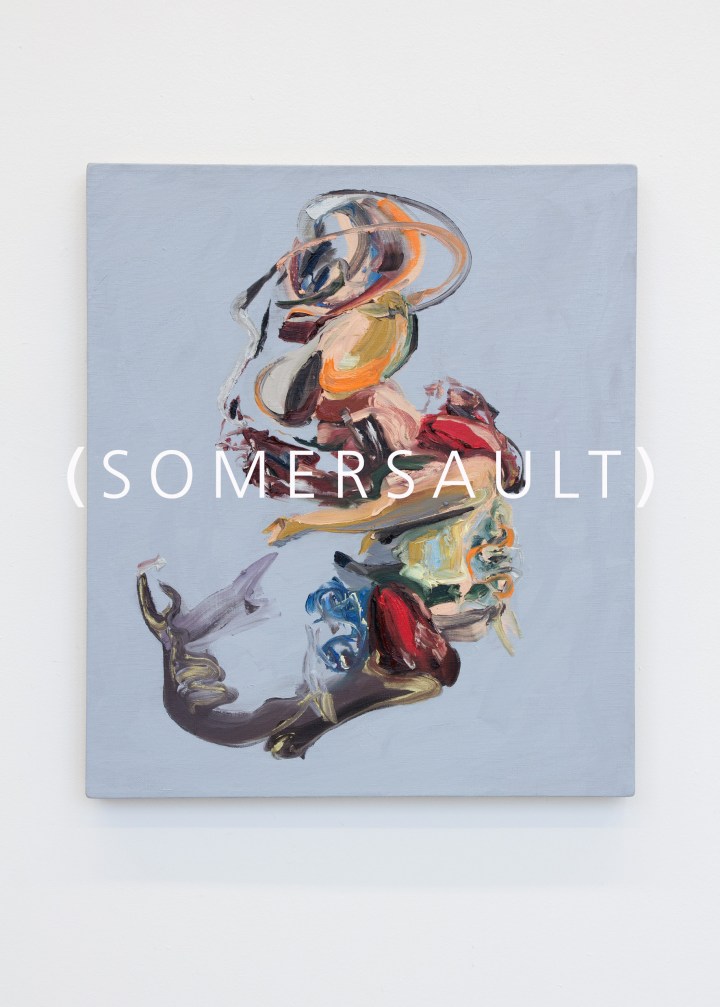
Matteo Fato (SOMERSAULT) | curated by Alfredo Cramerotti | Opening: 22.07.2017 h.18.30 | Galleria Michela Rizzo
Matteo Fato
(SOMERSAULT)
Curated by Alfredo Cramerotti
Galleria Michela Rizzo | Venice, Italy
Opening: 22.07.2017, h.18.30
23.07 – 09.09.2017
In the past our technologically conceived artifacts structured living patterns. We are now in transition from an object-oriented to a systems-oriented culture. Here change emanates, not from things, but from the way things are done.
(Jack Burnham, System Esthetics, 1968)
Burnham, an art critic and curator, wrote the passage above for an essay in Artforum magazine back in 1968; processes of change take time indeed. In the case of visual culture, and the physical environment underpinning it, the system is both the space (for work) and the material (of the work); concerning with method and form together.
A “visual system” sits at the crossroad between image, thought, word and time; it exemplifies the mutability (and complexity) of life. A visual medium then brings about not only the message, but the psychic state that enable us to understand that message: “A mental structure, a way of thinking and feeling that expresses itself in everything we say, write, build and develop, from architecture and advertising to film and fine art.”
The presumed coherence of visual practice is constantly called into question by coupling with other system of visual fabrication, communication or representation (text, painting, impression, graphic design, photography, light projection, object construction and oral commentary). It is an environment made of relation-building amongst sign and signal, people and objects. Our visual actions extract meaning upon which build further relations and effects, either autonomously or through conscious arrangements. In Burnham’s words, “Where the object almost always has a fixed shape and boundaries, the consistency of a system may be altered in time and space, its behavior determined both by external conditions and its mechanisms of control.”
We live now according to a system of visual editing; we became a wider, complex “system” in which users double as creators.
On systems, Alfredo Cramerotti
Open Call: HYPERIMAGING! IMAGES IN AND OUT OUR SCREENS
“Gjon Mili” 2017
Curated by Alfredo Cramerotti
Assistant curator: Atdhe Mulla
Artistic Liaison: Alexis Brocchi
Rationale
We refer to images, or the act of creating images, to act socially, politically and even privately. As a consequence of the digital age of photography, the way we are involved in image making is continuous:we can confer it a specific professional or artistic function, or embed it in they way we shape our existence.
When digital images are imposing themselves as a visual translation of the self, the understanding of photography is striving to go away from standard representational practices. Images compose a visual timeline, comparable to a textual linear narrative, where the grammar is made of our shopping lists, chats, social media’s comments or work emails.
Although these images are not coherent when considered together and are produced for different reasons, they become knowledge ‘chunks’ that visually translate different contexts into what we wish others to think of us. They can therefore be understood as a pictorial alphabet, where the possibilities of communicating are infinite and universal, freed from constraints related to textual translation. The result is a flow of visual forms and meanings that are interchangeable, independently from the situations in which they were generated and consumed.
The 2017 “Gjon Mili” Biennial & Award wants to query this hypothesis; focusing on image-making in the digital era, it wants to test if ‘visual authorship’ today is still associated with holding a specific position through the idea of representation, or rather is about delving into an ever-changing process that never produces a ‘finished’ work to display.
Beyond a classic photographic exhibition, the 2017 “Gjon Mili” Biennial & Award will therefore exhibit an expanded narrative of photography through photo-objects, installations, projections, visual data streams and ‘moving wallpapers’ that will put the curatorial rationale to test, and will engage the audience on a path to discovery, self-reflection and open enquiry about the status of visual culture in the beginning of the 21st century. –Alfredo Cramerotti
Access the full GJON MILI Open Call description here
Application documents:
- Image and /or concept that reflect the curatorial concept
- Application form ( available at the NGK or by emailin grequest at info@galeriakombetare.com), portfolio and biography.
- . The most successful work will receive “Gjon Mili “award in value of 1000 euros.
Note:
- Finished works are not accepted for the application;
- The works submitted must not be exhibited in the past in NGK;
- Applications to be addressed in aclosed envelope to:
“Galeria Kombëtare e Kosovës, Rr. Agim Ramadani 360, 10000, Prishtina, Republic of Kosovo” received before end of working hours on 20.07.2017
- For more information contact Lirije Buliqi at +38138 225 627

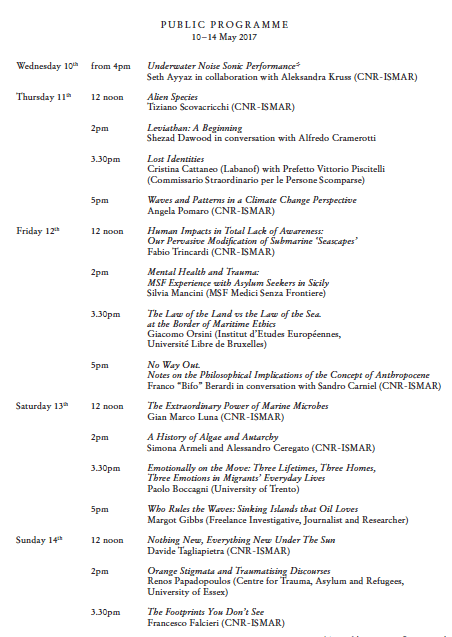
Friday | 12 May No Way Out. Notes on the Philosophical Implications of the Concept of Anthropocene with Franco “Bifo” Berardi in conversation with Sandro Carniel (CNR – ISMAR)
Friday | 12 May 2017
5pm
No Way Out. Notes on the Philosophical Implications of the Concept of Anthropocene with Franco “Bifo” Berardi in conversation with Sandro Carniel (CNR – ISMAR). Introduced and moderated by Alfredo Cramerotti.
Palazzina Canonica
Riva dei Sette Martiri, 1364
Vaporetto Giardini
See full schedule below

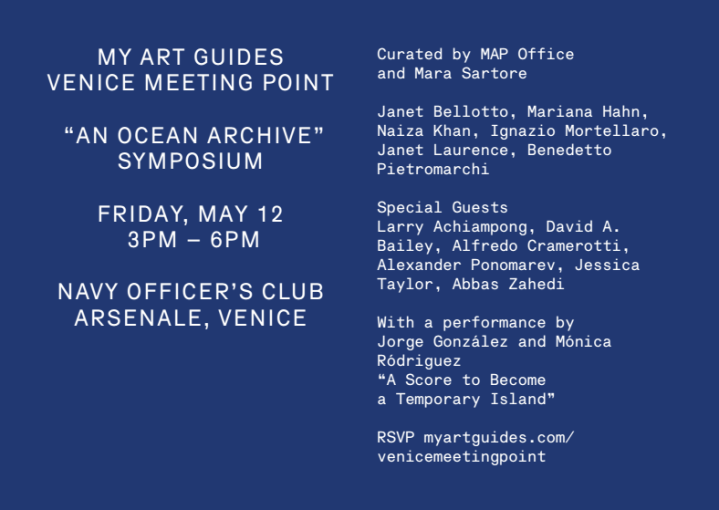
Friday | 12 May My Art Guides Venice Meeting Point “An Ocean Archive” Symposium
Friday | 12 May 2017
3pm
My Art Guides Venice Meeting Point “An Ocean Archive” Symposium
NAVY OFFICER’S CLUB
ARSENALE, VENICE

Thursday | 11 May Lost Identities Cristina Cattaneo (Labanof) with Prefetto Vittorio Piscitelli (Commissario Straordinario per le Persone Scomparse)
Thursday | 11 May 2017
3:30pm
Lost Identities Cristina Cattaneo (Labanof) with Prefetto Vittorio Piscitelli (Commissario Straordinario per le Persone Scomparse). Introduced and moderated by Alfredo Cramerotti
Palazzina Canonica
Riva dei Sette Martiri, 1364
Vaporetto Giardini
See full schedule below
Thursday | 11 May Leviathan: A Beginning. Shezad Dawood in conversation with Alfredo Cramerotti
Thursday | 11 May 2017
2pm
Leviathan: A Beginning. Shezad Dawood in conversation with Alfredo Cramerotti
Palazzina Canonica
Riva dei Sette Martiri, 1364
Vaporetto Giardini
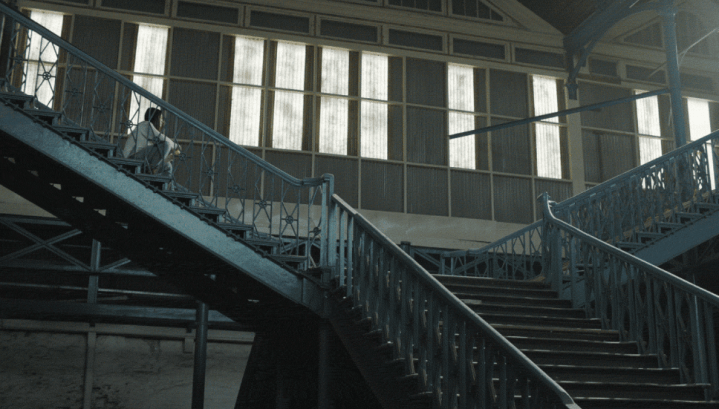
Shezad Dawood, Leviathan Cycle (production stills), 2017. HD video. Courtesy of the artist and UBIK Productions.
Mladen Bizumic Kodak Employed 140,000 People. Instagram 13.
22 October – 5 February 2017

Part of MOSTYN’s ongoing ‘Conversation Series’ the exhibition centres on the company Kodak, a primary point of exposure in Bizumic’s work, and pictures the transition from film-based photography to digital imaging.
Through photography and sculpture the work traces a timeline of Kodak’s development, from its founding in 1880 to its subsequent demise in 2012 when the company filed for bankruptcy. The history of photography and of technology’s progression and obsolescence, alongside a chronological parallel of corporate hubris, is captured by Bizumic. These issues act as a lens through which to consider much larger concepts – how the capturing of images, and the technology that enables this, influences not only aesthetic, social and economic relations, but also the resulting effects when they are replaced and taken out of the picture.

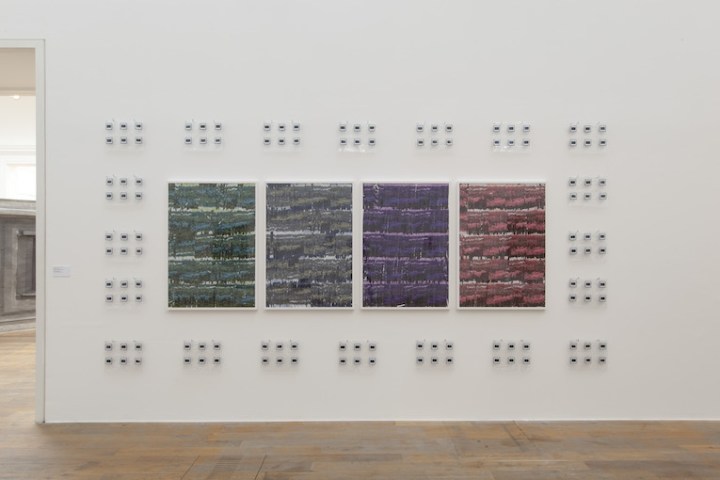
Mladen Bizumic, 2016 installation at MOSTYN. Photo: Dewi Lloyd
Alfredo Cramerotti – Director, MOSTYN and Adam Carr – Visual Arts Programme Curator, MOSTYN talk about the latest in the ‘Conversation Series*’ of exhibitions, showing from 22nd October 2016 until 5th February 2017
Daily Post: End of an era for Llandudno post office
http://www.dailypost.co.uk/news/north-wales-news/end-era-llandudno-post-office-12240188
As postal services move to a new venue in the town, former workers share fond memories of the Vaughan Street site

The mail being wheeled along the road outside Bunneys Corner in Mostyn Street Llandudno
For more than a hundred years the grand post office on Vaughan Street served the people of Llandudno.
Its closure just weeks ago marked the end of an era for the seaside town – now customers will have to use the service in WHSmith on Mostyn Street.
The old post office was opened in 1902 next to MOSTYN art gallery.
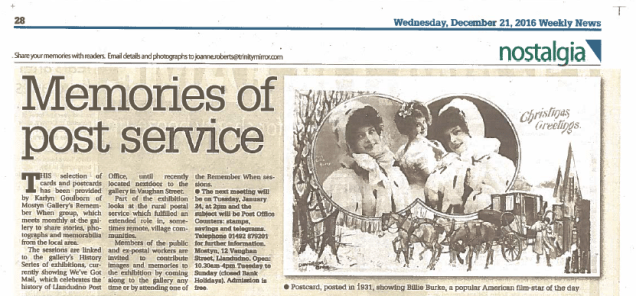
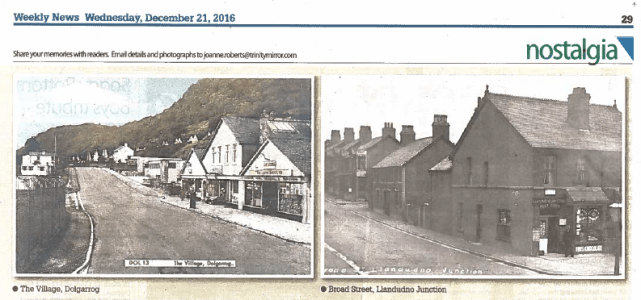
Following its demise the gallery has put on an exhibition about the postal service, with workers sharing their stories alongside work by contemporary artists.
Ken Jones, one of the last telegram boys in the town took part in the We’ve Got Mail III exhibition.
He became a postman just as the seven-week strike began in 1971 – part of his job was to help clear the huge backlog of mail when the protest was over.
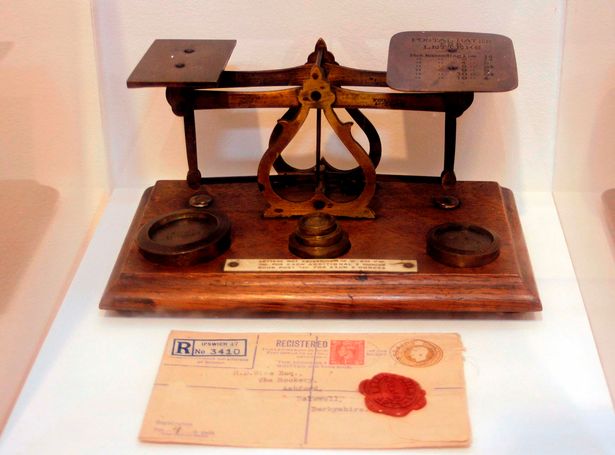
Items on show in Mostyn from the old post office
Ken told the Daily Post: “I’d left school when I was 15 and followed my dad John Henry Jones into the Royal Mail.
“He also started as a telegram boy in Llandudno, and when he was older he was transferred to Llangollen.
“He used to tell us stories about how he was given a dozen eggs and cups of tea on his rounds.”
Ken clearly enjoyed working for Royal Mail for 42 years.
When a telegram arrived from the Queen for a 100th birthday, postmen had to phone Buckingham Palace to confirm it had been delivered to the recipient.
“I had a telegram for an address in Craigside, Llandudno, which was strange as I knew the house was empty,” remembers Ken.
Ken knocked at the door and an old lady answered.
“She told me that she’d asked her residential home to let her wake up in her own bed for her 100 birthday.” said Ken.
Another memorable day for Ken was when he was driving around Penrhynside a little too fast.

Gwyn Hughes (pictured) learnt to ride a bicycle on the one used by his uncle Thomas Ieuan Hughes when he was a telegram boy. Gwyn remembers riding on the red bike through the cornfields near Llanrhos
“The thing with Penrhynside is that it’s a small village with many chapels and a couple of pubs.
“Whenever one of the chapels went on one of their annual day trips to Blackpool or somewhere those that went wrote postcards to the rest of the village so I was stuck delivering all these postcards even though they’d only been to Southport for the day.
“One Saturday I was in the Royal Mail van and was speeding a little too fast around the narrow lanes of Penrhynside as I wanted to get home to play football.
“I lost control and ended up putting the van on top of somebody’s roof.
“The owner was in the bath at the time and had a bit of a shock.”

Post office whist drive and dance at the St Georges Hotel in 1937
Ken said he enjoyed the camaraderie of working for the service.
He said: “One of the funniest days was when we had a damaged packet that turned out to be full of live locusts, they were destined for an owner of a snake.
“And even though all the locusts had gone, I still had to deliver the package.
“When the person asked what had happened to them, I told him he was very welcome to come down to the sorting office and catch them, as they were hanging off the ceiling lights and jumping all over the place.”
Coverage of We’ve Got Mail III Exhibition in Print:



 Curatorview [Alfredo Cramerotti]
leave a comment