Mousse Magazine: Marinella Senatore “The School of Narrative Dance and Other Surprising Things” at MOSTYN, Llandudno
http://moussemagazine.it/marinella-senatore-mostyn-2016/


MOSTYN, Wales UK proudly presents the first solo exhibition in a British institution by Marinella Senatore.
The exhibition presents a selection of the artist’s work from 2009 to today, in a renewed form of installation which will enable visitor participation and active engagement. A special focus is dedicated to The School of Narrative Dance, an ongoing, touring project founded by the artist in 2013 which has received wide acclaim from the public in over ten countries around the world.
For the first time we present, in its original idea, RE:VERB—a multi-layered work consisting of seven videos intended for television broadcast, made with the people of Llandudno during the artist’s residency in North Wales in 2015. This work was commissioned by CALL, and made possible by the collaborative initiative and financial support of the Arts Council Wales Ideas:People:Places grant and Mostyn Estates Ltd.
This is the first solo exhibition of the artist in a British institution and is designed and developed as a panoramic look at her most recent production, and in particular on the increased attention by Senatore towards the involvement of communities. It exemplifies the powerful idea of rethinking places responsible for culture in a more dynamic way. At the same time promoting the active inclusion of the public in the creation and in the use of the artwork, it empowers the individual in relation to social structures and community-gathering systems.
.
at MOSTYN, Llandudno
until 17 September 2016


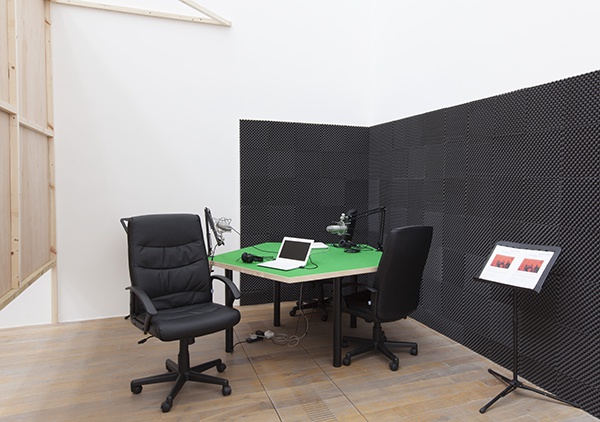


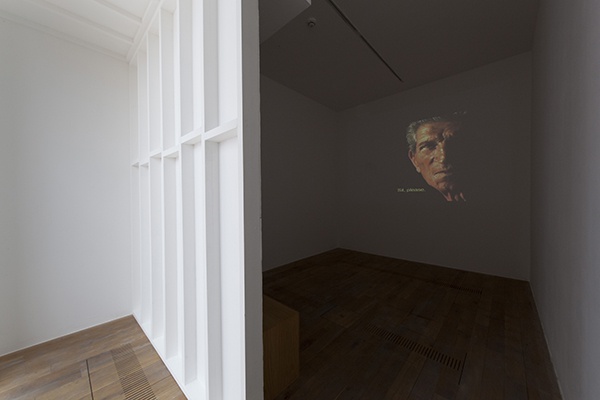
Marinella Senatore “The School of Narrative Dance and Other Surprising Things” installation views at MOSTYN, Llandudno, 2016
Photo: Dewi Lloyd
Shezad Dawood | Leviathan


Shezad Dawood, Leviathan Cycle (production stills), 2017. HD video. Courtesy of the artist and UBIK Productions.
May 7–September 24, 2017
Shezad Dawood
Leviathan
An episodic narrative
Palazzina Canonica
Riva dei Sette Martiri 1364A, Castello
30122 Venice
Italy
Hours: Tuesday–Sunday 10am–6pm
Fortuny Factory
Giudecca 805
30133 Venice
Italy
Hours: Monday–Friday 10am-1pm, 2pm-6pm
An exhibition of a new and ambitious body of work by artist Shezad Dawood will open in May 2017 to coincide with the 57th Venice Biennale. The show will mark the launch of Leviathan, a ten-part film cycle conceived and directed by the artist that will unfold over the next three years. Leviathan is also being released as a series of written fictions. Episode 1 is available to read at www.leviathan-cycle.com.
The first two episodes of the film will be presented alongside a new series of textile and sculptural works in the newly-restored Palazzina Canonica, the former headquarters of the Institute of Marine Sciences in Venice, which is opening to the public for the first time since the 1970’s. The two-part exhibition will also feature a site-specific intervention in the Fortuny Factory in the island of Giudecca.
Curated by Alfredo Cramerotti, Leviathan is being presented by the Fondazione Querini Stampalia in collaboration with the Institute of Marine Sciences (CNR-ISMAR) and Fortuny in Venice. Following the launch in May, the project will embark on a three-year UK and international tour, culminating in a final presentation of all ten episodes in 2020.
Leviathan is set in an imaginary future whose inhabitants are the survivors of a cataclysmic solar event. Each episode is told from the point of view of a different character and follows them as they drift across Europe, Asia and North Africa, encountering a series of idiosyncratic communities. Filming locations include the Institute of Marine Sciences’ oceanographic platform in the Adriatic Sea, the Natural History Museum in London and an abandoned island in the Venetian lagoon.
In dialogue with a wide range of marine biologists, oceanographers, political scientists, neurologists and trauma specialists, Dawood has been exploring some key fault lines of the present and their possible interconnections. Taking a global and collective approach, Leviathan is a reflection on where we could be if a deeper understanding of trauma and climate erosion is not found, looking at what is not only a humanitarian crisis, but a wider crisis within our biosphere.
The new series of textile paintings has been developed in dialogue with the renowned textile manufacturer Fortuny, and will incorporate several of their hand-made fabrics. Dawood has furthermore been working closely with the Labanof in Milan, an institute that conducts research on personal effects lost by migrants during sea crossings to Lampedusa, in order to help families identify missing relatives. A series of artefacts and objects from the Labanof archive will provide the visual references for the new textile works.
The paintings will be installed in the library of the Palazzina Canonica, as well as in the showroom of the Fortuny factory in the Giudecca, established in 1919 and still operational today. In addition, a large-scale outdoor neon work titled Island Pattern, developed especially for the Fortuny Factory, will be unveiled within the garden façade of the building.
The exhibition in Venice will be accompanied by a lively public programme that will bring together specialists involved in the project for a series of informal discussions akin to the philosophical “agora” in Ancient Greece. These discussions will also be available in digital form through the project’s web platform, creating an archive aimed at scientists, researchers, students and the general public. In addition, a special film programme curated by Shezad Dawood in collaboration with streaming platform MUBI will run throughout the duration of the exhibition, with free film screenings taking place at the Palazzina Canonica.
The third film episode will be released in September 2017 and incorporated into the exhibition. Subsequent episodes will be co-commissioned and presented in partnership with a series of international venues, culminating in the presentation of all ten episodes in 2020.
The project is being developed with the support of Timothy Taylor, Outset Contemporary Art Fund, Galerie Gabriel Rolt, CREAM – University of Westminster, University of Salford Art Collection with support from The Contemporary Art Society and a circle of private patrons.
Acts of Appearance – Photographic Exhibition launch and talk at MutalArt / APT HQ, London, UK
- Wednesday 26 April 2017, 6pm
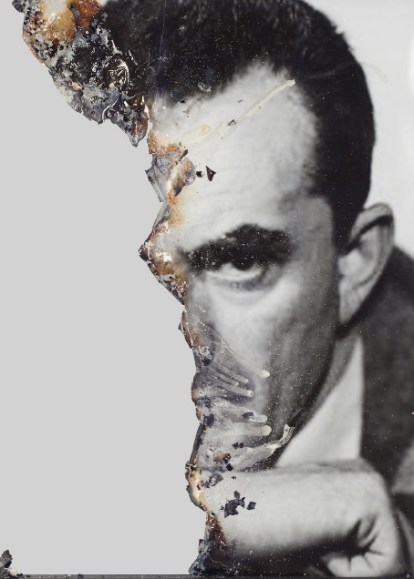

Alfredo Cramerotti: Hyperimaging! European Centre for Photography Research, University of South Wales, Cardiff, UK
- Wednesday 26 April 2017, 2pm
Presentation of the “Hyperimage” body of research concept in relation to the concept of the forthcoming exhibition at the National Gallery of Kosovo, Prishtina, October 2017.

Image from expandedphoto.com
We refer to images, or the act of creating images, to act socially, politically and even privately. As a consequence of the digital age of photography, the way we are involved in image making is continuous: we can confer it a specific professional or artistic function, or embed it in they way we shape our existence.
When digital images are imposing themselves as a visual translation of the self, the understanding of photography is striving to go away from standard representational practices. Images compose a visual timeline, comparable to a textual linear narrative, where the grammar is made of our shopping lists, chats, social media’s comments or work emails.
Although these images are not coherent when considered together and are produced for different reasons, they become knowledge ‘chunks’ that visually translate different contexts into what we wish others to think of us. They can therefore be understood as a pictorial alphabet, where the possibilities of communicating are infinite and universal, freed from constraints related to textual translation. The result is a flow of visual forms and meanings that are interchangeable, independently from the situations in which they were generated and consumed.
The exhibition is conceived as a chapter from the larger Hyperimage research led by Alfredo Cramerotti, Curator of the 2017 Gjon Mili Biennial & Award. It draws on further research by Hannah Conroy and Valentina Bonizzi, Curatorial Consultants. The exhibition is accompanied by a catalogue with an expanded critical text written by Alfredo Cramerotti, Hannah Conroy and Valentina Bonizzi.
Festival of Journalism and Art: Panel Discussion

Image © Edmund Black
Festival of Journalism and Art: Panel Discussion
MOSTYN new exhibition season | Marinella Senatore: The School of Narrative Dance and Other Surprising Things / Camille Henrot, FORT, Meirion Ginsberg : The School of Art, Science & Technical Classes / GALLERY 6 Uprisings: Sïan Rees Astley
MOSTYN, Wales’ foremost contemporary visual arts centre, is delighted to announce a new season of exhibitions, May 21–September 17, 2016

Marinella Senatore
The School of Narrative Dance and Other Surprising Things
Galleries 2 & 3
MOSTYN, Wales UK proudly presents the first solo exhibition in a British institution by Marinella Senatore. The exhibition will present a selection of the artist’s work from 2009 to today, in a renewed form of installation which will enable visitor participation and active engagement.
A special focus will be dedicated to The School of Narrative Dance, an ongoing, touring project founded by the artist in 2013 which has received wide acclaim from the public in over ten countries around the world.
For the first time it will also present, in its original idea, RE:VERB—a multi-layered work consisting of seven videos intended for television broadcast, made with the people of Llandudno during the artist’s residency in North Wales in 2015. This work was commissioned by CALL, and made possible by the collaborative initiative and financial support of the Arts Council Wales Ideas:People:Places grant and Mostyn Estates Ltd.
The exhibition is accompanied by an Open Call for contributions to ESTMAN RADIO, an ongoing “self-service” online radio station which takes up residence in MOSTYN’s Gallery 2.
In addition, Marinella Senatore’s video piece The School of Narrative Dance will be showing concurrently on a media wall in Milan’s Corso Como 15 from May 20 until 31, as part of a joint partnership between MOSTYN and Poincaré Investment Ltd. The partnership also sees the presentation of a new video work by ciriaca + erre from May 1 until 19.
The exhibition, curated by Alfredo Cramerotti (Director, MOSTYN) and related public programme is supported by CALL and Poincaré Investments Ltd.
#MOSTYNnarrativedance
The School of Art, Science & Technical Classes
A school featuring solo exhibitions by Camille Henrot, FORT, Meirion Ginsberg and a historical presentation
Galleries 4, 5, Studio
The School of Art, Science & Technical Classes takes as its point of departure the use of MOSTYN’s building as an art gallery and educational establishment from 1903 to 1912. Some of the subjects on offer included life drawing, light & shade drawing, brushwork, geometrical drawing, woodcarving, metalwork, dressmaking, elocution, music, French and shorthand. The classes were supplemented by lectures on associated subjects.
Some 100 years on, new “classes” have been curated with solo exhibitions by Camille Henrot, FORT and Meirion Ginsberg. An additional room will survey the time of the original art school and its links to the present, along with a history of a number of local schools. The exhibition is part of the “History Series” at MOSTYN and is the seventh exhibition in the series.
The three artists have been chosen for their international relevance and mastery, or emergence and promise, in the respective disciplines of the classes, which are “brush drawing” (Camille Henrot), “metalwork” (FORT) and “light and shade” (Meirion Ginsberg). Arguably the original terms are outdated and have been replaced by new definitions, or have been co-opted by a more general term “Contemporary Art.” Paradoxically, however, they offer new ways of seeing and interpreting the work in display—in the same way that the “History Series” uses the past to establish new pathways for understanding society today.
This exhibition is curated by Adam Carr (Visual Arts Programme Curator, MOSTYN). The historical presentation is brought together in collaboration with Jane Matthews (Engagement Manager/Research MOSTYN) and Richard Cynan Jones (Operations and Facilities/Research, MOSTYN).
#MOSTYNSchool / #HistorySeries
GALLERY 6: Uprisings: Sïan Rees Astley
Gallery 6 is dedicated to presenting the work of young and emerging artists, all of whom are yet to have a solo exhibition in an institutional setting—nationally or internationally. The final exhibition of the programme is by Sïan Rees Astley, born 1992 and based on Anglesey, and a recent graduate from Coleg Menai in Bangor, North Wales.
Sïan Rees Astley’s work makes wide use of everyday materials, often those produced for the domestic space. Her work positions the process of its making at its core, and heightens the sense of time spent working with the materials. A key element of the work is repetition, used throughout, and which sometimes renders the materials used beyond recognition, only apparent by way of the work’s captions.
This exhibition, curated by Adam Carr (Visual Arts Programme Curator, MOSTYN), will present new work made in response to the space.
About MOSTYN | Cymru | Wales
Located in Llandudno, North Wales (UK), MOSTYN is the leading publicly funded contemporary visual art centre in Wales, serving as a forum for the presentation and discussion of contemporary life through international contemporary art and curatorial practice. Through exhibitions, learning programmes, lectures, symposia and publications, MOSTYN plays an active role in discussing contemporary culture in Wales, the UK, and beyond. To be kept up to date with MOSTYN’s new programme, please subscribe to our mailing list by emailing lin@mostyn.org.
MOSTYN
12 Vaughan Street
Llandudno LL30 1AB
United Kingdom
For The Record: Fictional images on the frontline between photojournalism and contemporary art
by Ossian Ward
THE ART NEWSPAPER for FRIEZE ART FAIR
Thursday 13 October 2011

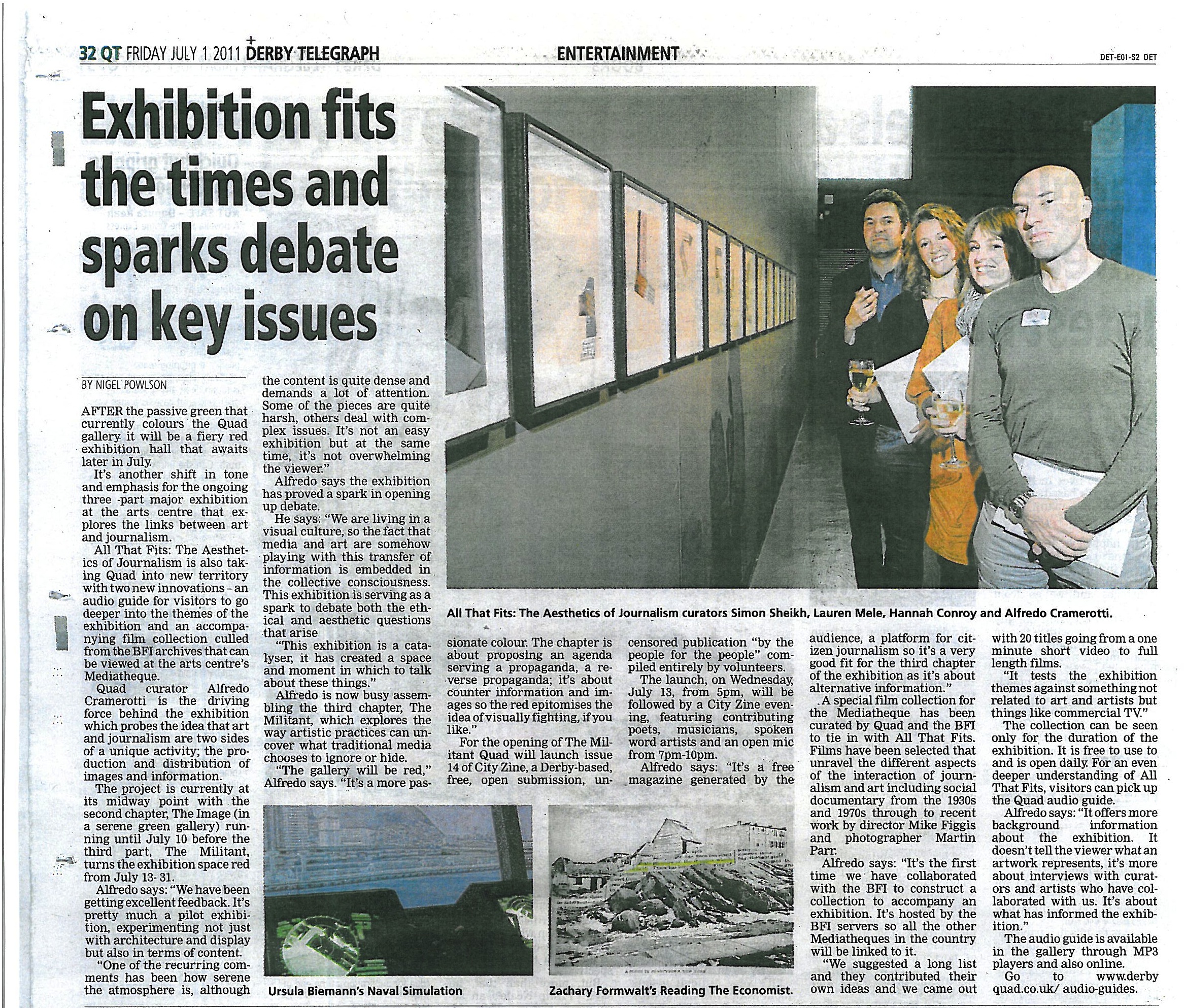
All That Fits: The Aesthetics of Journalism review on DT
Derby Telegraph
by Nigel Powlson
1 July 2011
ARTIST TURNS AUTHOR
Derby Evening Telegraph
Wednesday, April 01, 2009
A STAFF member at Derby’s Quad arts centre has published his first book.
Exhibitions officer Alfredo Cramerotti’s book, called Aesthetic Journalism: How to Inform Without Informing, looks at how writing about art has become more journalistic in recent times.
Alfredo Cramerotti is an international artist, curator and writer and has worked in radio, TV and publishing.
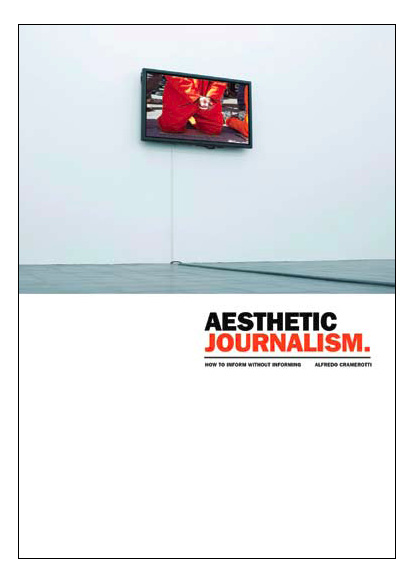
Aesthetic Journalism: How to Inform without Informing
Intellect Books
In print from September 2009
Aesthetic Journalism
How to Inform Without Informing
By Alfredo Cramerotti
ISBN 9781841502687
Paperback 112 pages 230x174mm
Published September 2009
Price £19.95
As the art world eagerly embraces a journalistic approach, Aesthetic Journalism explores why contemporary art exhibitions often consist of interviews, documentaries and reportage. This new mode of journalism is grasping more and more space in modern culture and Cramerotti probes the current merge of art with the sphere of investigative journalism. The attempt to map this field, here defined as ‘Aesthetic Journalism’, challenges, with clear language, the definitions of both art and journalism, and addresses a new mode of information from the point of view of the reader and viewer. The book explores how the production of truth has shifted from the domain of the news media to that of art and aestheticism. With examples and theories from within the contemporary art and journalistic-scape, the book questions the very foundations of journalism. Aesthetic Journalism suggests future developments of this new relationship between art and documentary journalism, offering itself as a useful tool to audiences, scholars, producers and critics alike.


 Curatorview [Alfredo Cramerotti]
leave a comment