Curatorview [Alfredo Cramerotti]

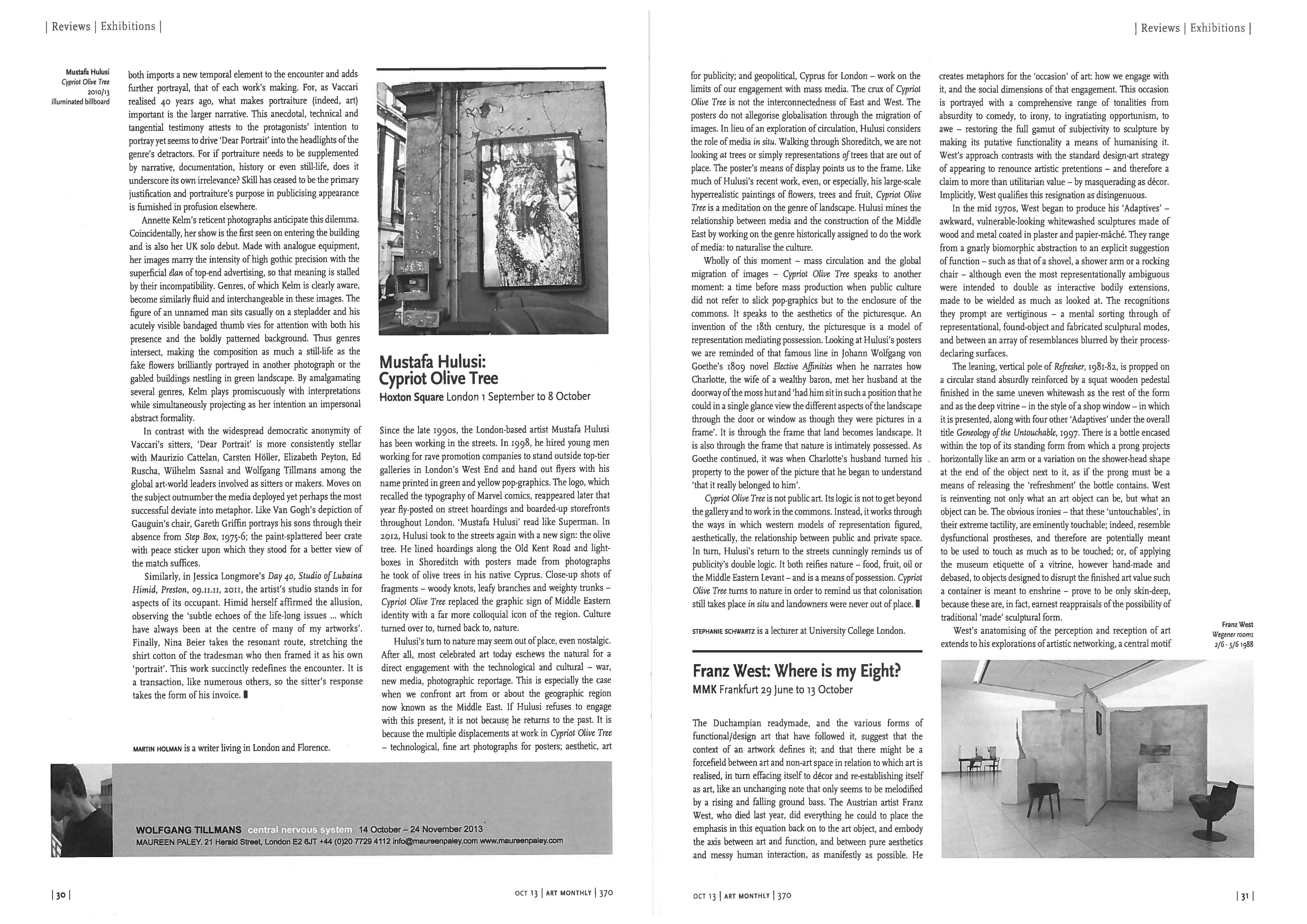
Dear Portrait, Annette Kelm and Franco Vaccari exhibitions at MOSTYN reviewed on Art Monthly

Posted in nEws and rEleases by Curatorview on October 14, 2013

Talk at Open Studio VIR Viafarini-in-residence, MIlan: Alfredo Cramerotti, Stefano Cagol, Isaac Contreras [Italian / English]

Posted in nEws and rEleases by Curatorview on September 29, 2013

VIR Open Studio
Stefano Cagol, Isaac Contreras

opening    Monday September 30, starting at 6.30 pm

VIR IMAGE

VIR Viafarini-in-residence, via Carlo Farini 35, Milano
viafarini@viafarini.org | +39 0266804473

Stefano Cagol presenta opere video e installative realizzate durante la residenza in continuità con la ricerca sviluppata per la sua partecipazione alla 55. Biennale di Venezia 2013, Padiglione Maldive. Viene anche presentato il libretto THE ICE MONOLITH Platform con 34 interviste realizzate dall’artista.

Alle ore 20 Alfredo Cramerotti (direttore del MOSTYN, Galles) racconterà l’esperienza del Padiglione Maldive, del quale è co-curatore come parte del collettivo CPS – Chamber of Public Secrets. Cramerotti è anche co-curatore del Padiglione Galles alla 55. Biennale di Venezia 2013.

Bouvet Island è una delle isole più remote del pianeta (si tratta di un’isola norvegese situata però agli antipodi, nell’area antartica) costituita di rocce vulcaniche coperte per il 93% da bianchi ghiacci permanenti, ‘incontaminata’, è al tempo stesso stata protagonista di uno degli esperimenti nucleari più misteriosi, il caso ‘Vela’, un’esplosione avvenuta nelle sue acque e mai rivendicata da alcuna nazione. L’installazione ne prende il titolo e la ‘forma’ metaforica.

Isaac Contreras ha investigato le modalità di circolazione degli oggetti smarriti quotidianamente nelle città, collaborando con gli uffici oggetti smarriti e rispondendo ad annunci privati in città. Il progetto, dal titolo O.O.O è una ricerca sulle raccolte accidentali di oggetti, frutto dell’errore e della dimenticanza. Questi accumuli di oggetti rappresentano detriti del nostro tempo, sedimentazioni del caos e costruzioni entropiche della quotidianità nelle metropoli. L’artista presenta una serie di sculture realizzate con materiali trovati e sculture in gesso basate sulla somma del volume degli oggetti smarriti e recuperati in città.

“I see my work as an evolving system of forms in which instability, precariousness and emptiness exist not only as given conditions but as triggers for the work to happen. This involves learning to negotiate with the empty, rendering the void, looking for matter in empty places and using available materials and unstable situations as mechanisms to open space for the uncertain, the overlooked and the fragile. I’m interested in open systems that in-form the work and allow it to exist in shifting configurations during the exhibition. This way of proceeding, responding to a system that is not dependent on me, allows me to develop a practice in which negotiation plays a central role.”

Durante l’Open Studio si potrà visitare lo studio condiviso da: Enrico Boccioletti, Roberto Fassone, Toni Fiorentino, Pasquale Gadaleta, Luca Resta, Sebastiano Sofia, Federico Tosi, Carloalberto Treccani.

Y O U at MOSTYN, Llandudno – Exhibition review in MOUSSE Magazine

Posted in nEws and rEleases by Curatorview on July 16, 2013

“Y O U” at MOSTYN, Llandudno

July 7~2013

MOUSSE Magazine


04_RN

Rivane Neuenschwander, […], 2005


03_JK

Július Koller, J.K. – Ping-Pong Club (U.F.O.), 1970 – 2007


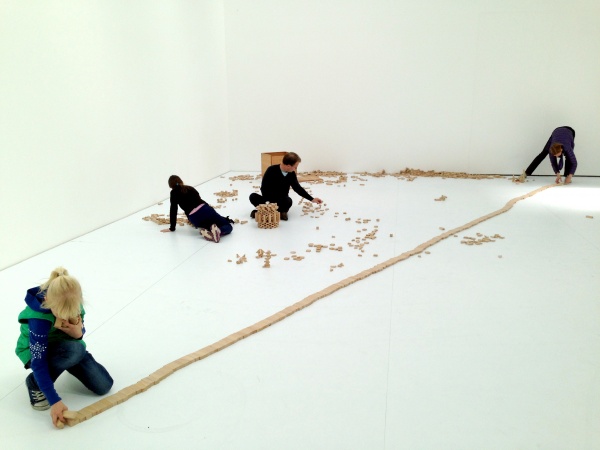
As the inaugural exhibition of MOSTYN’s new programme of exhibitions, “Y O U” addresses, and dialogues with, the time in which it takes place. It brings together works by five international artists that invite or require your involvement, aiming to create close relationships with you, the audience.

“Y O U” engages you in ways that you may not be accustomed to in relation to your experience of artworks and exhibitions to date.  As it responds to you, and is subject to perpetual change and re-order in accordance to your activity, it challenges conventional codes of behaviour in the context of a gallery space.

While the exhibition considers the art historical background of the relationship between artwork and viewer, and its growing status over time, it asks, how do these works engage and forge relationships with audiences in distinctively different ways from any other works of art? How is the role of the viewer elevated and placed into the centre uniquely? Through exhibiting artworks that engender such questions,”Y O U” hopes to build an alliance between you, the artwork and MOSTYN itself.

In addition to the artworks on view is a display by the School of Psychology, Bangor University comprising cultural artifacts, documents and other items showing the connection between physical objects and our cognition.  In so doing, the intention is to place the artworks by the participating artists in a broader cultural and contextual field, and enlarge upon our engagement with, and perception of, objects in general.

This exhibition is accompanied by a solo presentation of the work of Keith Arnatt and is the first set of exhibitions of MOSTYN’s new programme, curated by Adam Carr, Visual Arts Programme Curator at MOSTYN, Llandudno (North Wales, UK).

12_FGT1
Felix Gonzalez-Torres, Untitled (Revenge), 1991
02_JH
Jeppe Hein, Upside Down, 2011
10_AF
Aurélien Froment, Debuilding, 2001

Regional arts venues: less out in the sticks, more out on a limb

Posted in nEws and rEleases, shortEssays/cortiSaggi [English/Italian] by Curatorview on July 14, 2013

Running an arts space outside the city is challenging but, once you realise the range of your potential audience, rewarding too

Guardian Professional
5 July 2013

by Alfredo Cramerotti
Sliced Eye, Rubiks Cube, Flawless Skin, Cardiac Muscle Cell, Orion Nebula-M42, Snow Crystal, 2012

MOSTYN works to find imaginative solutions that draw in national and international visitors (even journalists) while retaining strong links with their local audience. Pictured work by Nikolaus Schletterer. Photograph: Nikolaus Schletterer/MOSTYN


As anyone who has worked in the sector will tell you, running an arts space outside major cities is a hugely rewarding experience, not least because of the challenges that arise from reaching out to an audience in ways that can’t rely on a ready-made critical mass of potential visitors in the immediate area.

MOSTYN is Wales‘ largest gallery dedicated to contemporary art with an audience of roughly 80,000 per year, but being located in the 18,000-strong Victorian sea town of Llandudno and surrounded by a predominately rural area brings with it issues that an equivalent metropolitan space might not need to consider so carefully.

Another part of the challenge is encouraging journalists to visit. The three hours direct train from central London is less an issue than the bias towards reviews focusing on galleries and events in the bigger cities. Obviously there is a responsibility for media to cover stories of interest to as wide an audience as possible, but responses range from “I don’t know where I’d put it” (the same review pages you would put any show on) to “we’re fully booked up covering a major event”.

It’s not that these exhibitions or events don’t warrant media attention, but major institutions and blockbuster events hardly need the publicity to encourage public interest.

So, how are we tackling these issues? Like many other organisations reliant on quality of programming, audience engagement, media coverage and visits to secure funding, we are working on finding imaginative solutions that draw in national and international visitors (even journalists) while retaining strong links with our local audience.

A key element of this is an ambitious curatorial programme featuring world known artists from Wolfgang Tillmans to Elizabeth Peyton. We’ve also initiated a major international exhibition programme including co-curating this year’s Wales in Venice show at the 55th Venice Biennale with Oriel Davies Gallery and the Arts Council Wales – an incredible platform for all involved.

Upcoming shows will draw on our history by inviting artists to indirectly respond, through their work, to the history of the MOSTYN building which has gone from being a gallery for female artists when it launched in 1901 to a WW1 drill hall and piano storage, before returning to a gallery space in 1979.

Partnership is a vital part of our engagement work, showcased by linking with initiatives such as the Artes Mundi visual arts exhibition and prize, the biggest in the UK at £40,000. We are also part of Plus Tate, a major UK network which includes 20 contemporary art organisations outside London.

Building on the success of last year’s Plus Tate-funded Ninjas initiative for 11 to 13-year-olds, we successfully applied to be one of five national partners to be part of Tate’s Circuit programme, a national youth network for the visual arts. Funded by the Paul Hamlyn Foundation, Cylch/Circuit seeks to spark a long-term transformation in the way that young people aged 15 to 25 engage with art and take control of their own learning.

The demographic here is older on average than in cities, and we are developing ways to include those who might not normally visit a contemporary art gallery through exhibitions and events which have a cross-art form approach.

For example, our current show YOU is a conceptually strong group show (Felix Gonzalez Torres, Aurélien Froment, Jeppe Hein, Július Koller, Rivane Neuenschwander) that questions the idea of what art is: the viewer ‘produces’ the artwork through their visit. It’s had an amazing response from families who would never think to visit an art gallery, lured in with an event outside the venue during the Llandudno Victorian Extravaganza when the town was heaving with visitors.

On a marketing level, besides the reviews and articles on specialised art press, particularly helpful are features on magazines, blogs and websites such as ThisIsTomorrow and WeHeart since they are bringing MOSTYN out into the eyeline of the style and culture conscious nationally and internationally.

What have we learned that might be useful for other organisations in a similar situation? Surely, understanding that an organisation such as ours does not have a single, cohesive public but multiple audiences (including our staff, not to forget) who demand attention and have different ways of engaging.

This is not to say that we have to please everyone, but we do have to have a firm strategic direction and a flexible range of delivery via the three main areas of exhibitions, engagement and learning – equally important and each with a dedicated curator and budget.

It’s also crucial to seek and establish a range of platforms and partners that match our values and make the most of our programme in space and time: from local residents, schools and higher education to wider partnerships across the country and abroad.

It’s a long-term strategy, and long-term planning matters for our exhibitions, partnerships and funding agreements alike. Currently we are planning well into 2017 but potentially, a cultural institution like a gallery should look into society 20 or 50 years from now and then work back.


Alfredo Cramerotti is the director of MOSTYN contemporary art gallery in Llandudno – follow it on Twitter @MOSTYN_Wales_

This content is brought to you by Guardian Professional.

MOSTYN Sunday Talk 9 June 2013 : If YOU are in control of your life, who is controlling YOU?

Posted in nEws and rEleases by Curatorview on June 7, 2013

Prof. Guillaume Thierry from Bangor University will be giving this talk at mid-day on 9th June.  Guillaume has done the display about cognition for the current exhibition ‘Y O U’ in MOSTYN.

Reflecting on our perception of and interaction with objects through an ‘expert’s’ eyes, and mixing the included artworks with other fields of study, this promises to be a very engaging and inclusive talk where audience participation is encouraged.

you talk

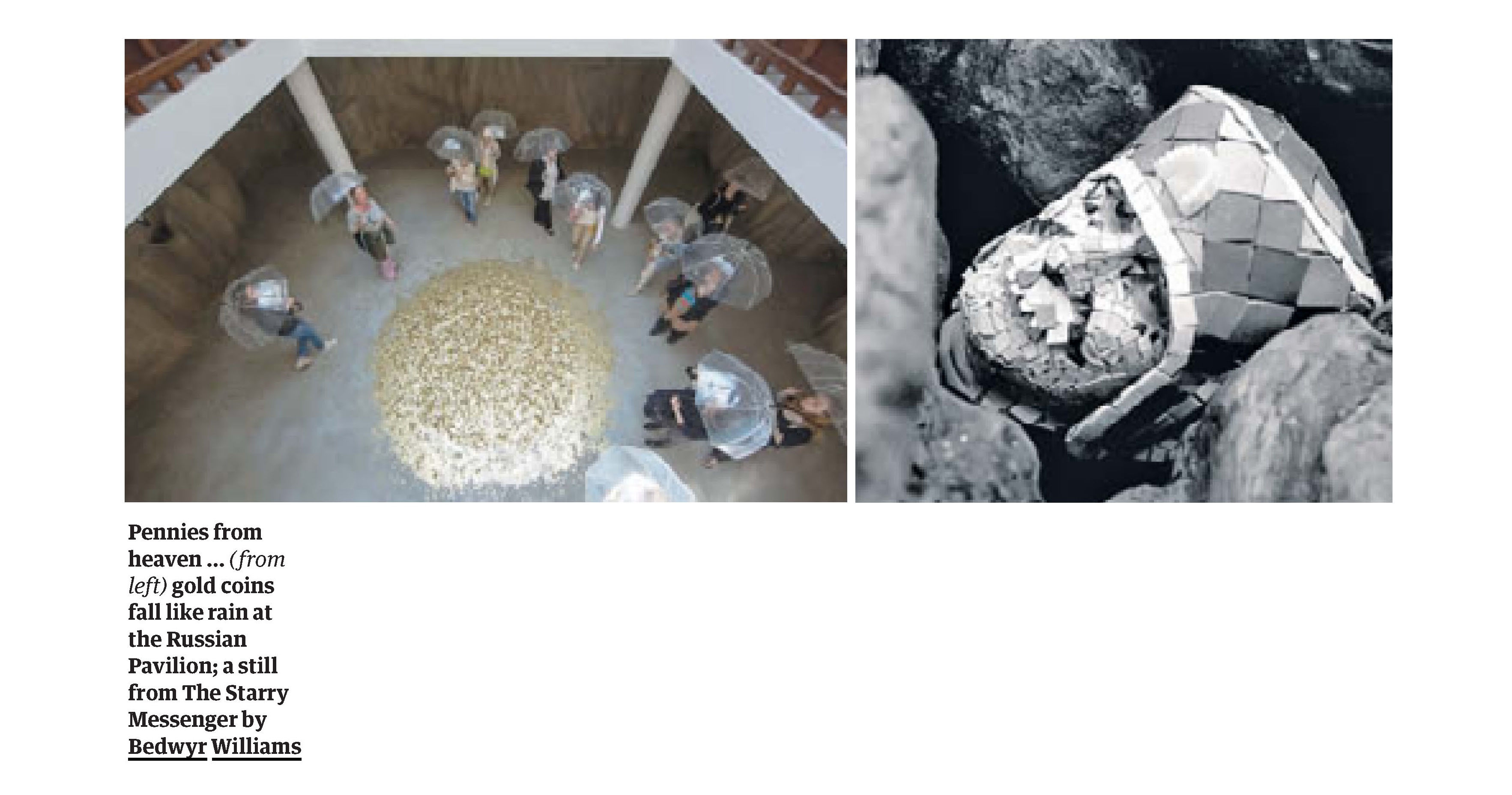
The Guardian’s Adrian Searle gives his verdict on the best of the Venice Biennale

Posted in nEws and rEleases by Curatorview on June 7, 2013

Bedwyr Williams and The Starry Messenger

Posted in nEws and rEleases, shortEssays/cortiSaggi [English/Italian] by Curatorview on May 25, 2013

In the Studio: Bedwyr Williams, Painter

Posted in nEws and rEleases, shortEssays/cortiSaggi [English/Italian] by Curatorview on May 22, 2013

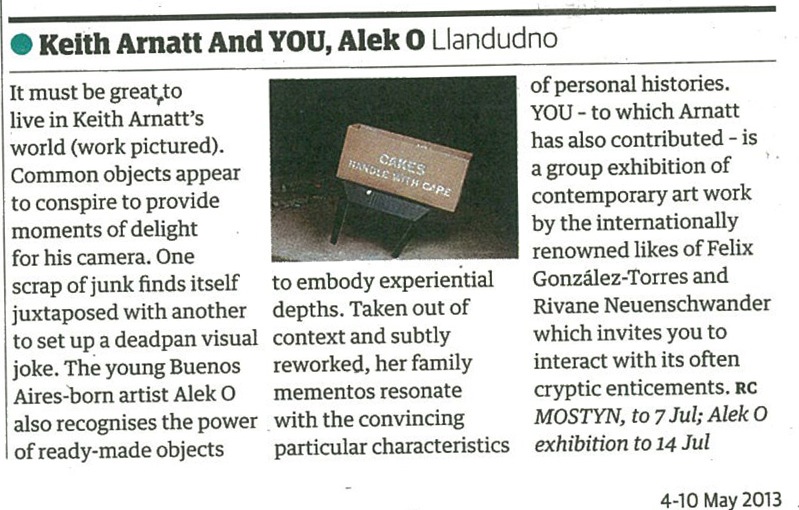
Keith Arnatt, Alek O. and Y O U exhibitions on Guardian Guide

Posted in nEws and rEleases by Curatorview on May 13, 2013

Interview with APT Curator Alfredo Cramerotti

Posted in nEws and rEleases, shortEssays/cortiSaggi [English/Italian] by Curatorview on April 29, 2013

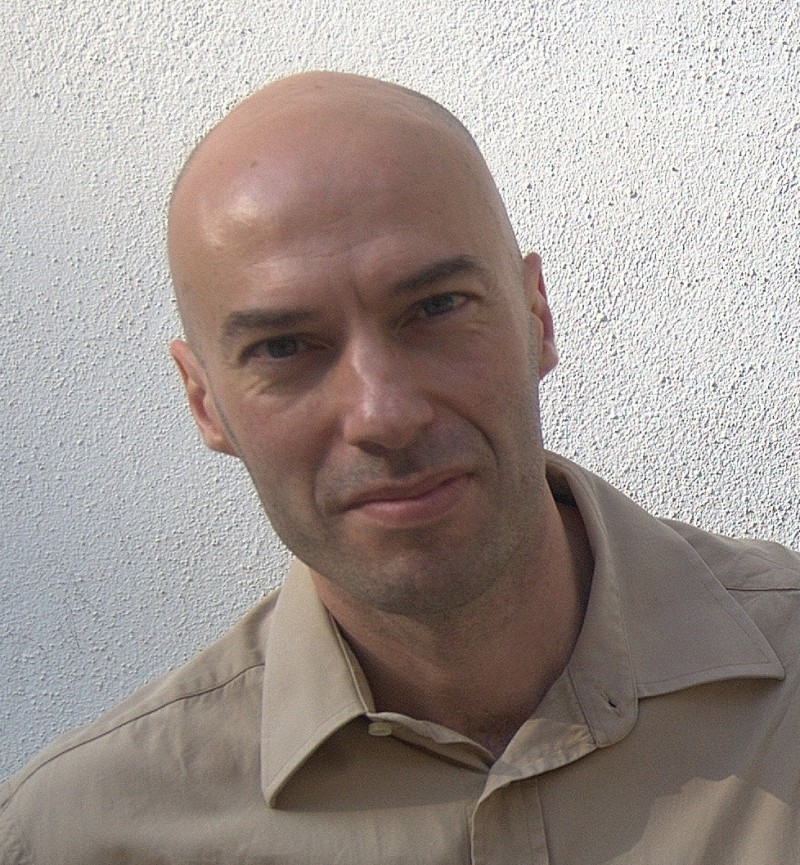
Alfredo Cramerotti

> Question:

What’s the most exciting part of curating at the Venice Biennale? What are your biggest challenges?

> Answer:

“In Venice everything is quite complicated, as you can imagine. So you need either to have the direct contacts or create a structure that supports you before and throughout the exhibition. This goes for planning and construction permissions, transportation, building contractors, installation of works, marketing, and even for such straightforward tasks such as hosting a party.

“Speaking Italian surely helps, in my case. On the other hand, the rewards are equally exceptional. Working in Venice is an incredibly challenging task for both artists and curators, but a feat that goes a long way. There is a lot of preparation to do, and key aspects to prioritize i.e. considering the mediation of the content, the use of the space, the circulation of the visitors, and the ways one wants the points of the artist’s project to ‘get through’.”

“All these aspects are heightened in an environment like the Venice Biennale, for both its prestige and the expectations that international attention puts on the artist.

“In 2013 I’m co-curating not only Wales but also the Maldives Pavilion (as CPS Chamber of Public Secrets), two very different set ups and frameworks; and here the fun begins. My first project in Venice goes back to 2003, when I worked for the Singapore Pavilion.”

Q:

How did you envision your role as a curator when you first started?

A:

“Fundamentally, I work to facilitate artists’ visions, and to provide them the means to realize significant and meaningful projects that can affect (and effect) people’s lives. I do believe that contemporary art it is about contemporary life, nothing less, nothing more. Artists are crucial to help understand better the life we had, we have, we will have.

“To engage our senses in ‘filtering’ the meaning of life through an artistic approach is what differentiate humans from other animals. Art can be frightening, exciting, thoughtful and miserable all at once. Making art, sharing it through relevant and specific displays, interpreting and re-opening debates on many issues via those display and reinterpretation is our business. As a curator, I take care of the last two thirds of the process.”
Q:

What do you consider to be your biggest career achievement, and why?

A:

“I am very proud of my co-curation of Manifesta 8 in Spain in 2010. And of course my directorship of MOSTYN, the leading and largest contemporary art space in Wales, UK. It is a fantastic space offering a truly international program yet retaining a strong local purpose. I am also a real enthusiast of the AGM Culture “expanded” symposium that every year happens in a different location, with a different format: exhibition, performance, debate, screening series, etc. It is helping many hosting organizations to understand better what they do and how they do it, acting as a sort of “critical friend” through the work of the artists we invite.

Q:

APT brings together some of the most talented up-and-coming artists in the art world today. Which emerging artists do you follow?

A:

I follow the work of a number of artists, some of them known already, some not yet on the main circuit of biennials, museums and auction houses. Among others: Laurent Grasso, based in Paris. Marinella Senatore, based in Berlin. Diango Hernandez, based in Frankfurt. Rossella Biscotti, based in Amsterdam. Erick Beltran, based in Barcelona. Haris Epaminonda, based in Berlin. Bedwyr Williams, based in Caernarfon. David Jablonowski, based in Amsterdam. Francesco Arena, based in Cassano delle Murge. Stefano Tsivopolous, based in Amsterdam. Uriel Orlow, based in London. Shannon Ebner, based in New York. Hiwa K., based in Berlin. Julieta Aranda, based in Berlin. Anibal Lopez, based in Guatemala City. Rabih Mroure, based in Beirut. Flavio Favelli, based in Bologna. Sean Edwards, based in Abergavenny. Rosa Barba, based in Berlin. Asier Mendizabal, based in Bilbao. Rä di Martino, based in London. Broomberg & Chanarin, based in London.
Q:

Why did you join APT and why is your role important to the artistic community?

A:
“I joined APT to facilitate and help the work of artists, and also to support them as much as I can throughout their life.

“I invite artists whom I trust, I trust their work, and I am confident they will have a major impact in the art sphere of the decades to come. It’s an exciting perspective, and a rare chance to make a difference in the society one lives. So I am quite accustomed to having a long-term view on things and scenarios. If I can offer this expertise and insights to a number of artists, that makes me happy. And I can make them happy too.”

Q:

What’s your typical day like? What do you like doing outside of work?

A:

“What do you mean outside work?! Every day is long, and so far, still fun. I embrace what a famous American female CEO recently stated: forget the balance; this is the merge. ‘The merge’ is when work and life mesh up and intersperse each other throughout the day. I get up at 7.00am and go to bed at 10.00pm, and in between everything and anything can happen.

“It could be cuddling and feeding my daughter, preparing my older boy for school, coordinating a meeting on email, reading an essay for a presentation, writing a foreword or browsing the portfolio of an artist for the emergent artists program in MOSTYN.

“And we do have family meals daily. At home I might be discussing my wife’s next textile design brief for her looming deadline, playing ‘explorers’ with my son in the living room, babysitting the little one while my wife is replying to her emails – she also merges a lot of things, many more than me.

“Before the evening is over I may have an update on the photo book series I’m editing with a few emails or calls to the various authors and the publisher’s headquarters. Finally, going to bed only to be woken up by my girl after two hours. She’s only two months old. It can only get better.

“Really, there is no ‘outside work’, as there is no ‘outside life’. There is family, private life, public life, curating, writing, management, researching, coaching and creativity all at once.”

Q:

What’s the most interesting upcoming exhibition at MOSTYN?

A:

“The vision of MOSTYN is to open up debates about contemporary life through contemporary art. We have characterized the program by two strands:

“The first looks at the history of the MOSTYN building and its situation in the Victorian town of Llandudno, North Wales. With the Visual Arts Programme Curator Adam Carr we have developed an idea for a sequence of four exhibitions based on the former use of the building and the principles on which it was founded.

“Women’s Art Society looks at the period when MOSTYN was an important place for women to exhibit their art. Women were often denied membership of local art societies on the basis of their gender.

“WAR I & II focuses on the use of the building during the two World Wars; as a drill hall in World War I and in World War II it was occupied by the Inland Revenue as their temporary headquarters.

“MAIL investigates the building’s expansion into the former Royal Mail Sorting Office, and Wagstaff explores the use of the building as a shop / store for pianos.”

“The second strand is concerned with re-evaluating models and approaches of exhibition making and the understanding of classic art genres. The program will comprise solo exhibitions accompanied by related group exhibitions and vice versa. As an example, Y O U that brings together the work of five international artists (Felix Gonzalez-Torres, Aurélien Froment, Jeppe Hein, Július Koller and Rivane Neuenschwander) including pieces that directly request and require you, the viewer, and your involvement.

“Dear Portrait will look at the seemingly faded relevance of portraiture, aiming to update and renew its status. All of the artworks included, by a group of international artists, will be accompanied by texts written by the people depicted in the works.

“Return Journey is an exhibition that aims to enable audiences to open out their view of United Kingdom in connection with the visual arts. It asks instead, and hopes to provide an answer for; what is it to live and work in the United Kingdom, what delineates its land, and in what ways can it be used to form the basis for a work of art?

“There are also a number of solo exhibitions. Among others, Keith Arnatt (Spring 2013), Franco Vaccari (Summer 2013), Nina Beier (Autumn 2013), Tom Wood (Winter 2013), and solo shows for the ‘Uprisings’ program of emergent artists in a dedicated gallery at the first floor: we kick off with Alek O, followed by Becca Volecker.”

original interview here