Curatorview [Alfredo Cramerotti]

Talk at Open Studio VIR Viafarini-in-residence, MIlan: Alfredo Cramerotti, Stefano Cagol, Isaac Contreras [Italian / English]

Posted in nEws and rEleases by Curatorview on September 29, 2013

VIR Open Studio
Stefano Cagol, Isaac Contreras

opening    Monday September 30, starting at 6.30 pm

VIR IMAGE

VIR Viafarini-in-residence, via Carlo Farini 35, Milano
viafarini@viafarini.org | +39 0266804473

Stefano Cagol presenta opere video e installative realizzate durante la residenza in continuità con la ricerca sviluppata per la sua partecipazione alla 55. Biennale di Venezia 2013, Padiglione Maldive. Viene anche presentato il libretto THE ICE MONOLITH Platform con 34 interviste realizzate dall’artista.

Alle ore 20 Alfredo Cramerotti (direttore del MOSTYN, Galles) racconterà l’esperienza del Padiglione Maldive, del quale è co-curatore come parte del collettivo CPS – Chamber of Public Secrets. Cramerotti è anche co-curatore del Padiglione Galles alla 55. Biennale di Venezia 2013.

Bouvet Island è una delle isole più remote del pianeta (si tratta di un’isola norvegese situata però agli antipodi, nell’area antartica) costituita di rocce vulcaniche coperte per il 93% da bianchi ghiacci permanenti, ‘incontaminata’, è al tempo stesso stata protagonista di uno degli esperimenti nucleari più misteriosi, il caso ‘Vela’, un’esplosione avvenuta nelle sue acque e mai rivendicata da alcuna nazione. L’installazione ne prende il titolo e la ‘forma’ metaforica.

Isaac Contreras ha investigato le modalità di circolazione degli oggetti smarriti quotidianamente nelle città, collaborando con gli uffici oggetti smarriti e rispondendo ad annunci privati in città. Il progetto, dal titolo O.O.O è una ricerca sulle raccolte accidentali di oggetti, frutto dell’errore e della dimenticanza. Questi accumuli di oggetti rappresentano detriti del nostro tempo, sedimentazioni del caos e costruzioni entropiche della quotidianità nelle metropoli. L’artista presenta una serie di sculture realizzate con materiali trovati e sculture in gesso basate sulla somma del volume degli oggetti smarriti e recuperati in città.

“I see my work as an evolving system of forms in which instability, precariousness and emptiness exist not only as given conditions but as triggers for the work to happen. This involves learning to negotiate with the empty, rendering the void, looking for matter in empty places and using available materials and unstable situations as mechanisms to open space for the uncertain, the overlooked and the fragile. I’m interested in open systems that in-form the work and allow it to exist in shifting configurations during the exhibition. This way of proceeding, responding to a system that is not dependent on me, allows me to develop a practice in which negotiation plays a central role.”

Durante l’Open Studio si potrà visitare lo studio condiviso da: Enrico Boccioletti, Roberto Fassone, Toni Fiorentino, Pasquale Gadaleta, Luca Resta, Sebastiano Sofia, Federico Tosi, Carloalberto Treccani.

Contingent Movements Symposium – Maldives Pavilion at the 55th Venice Biennale

Posted in nEws and rEleases by Curatorview on September 28, 2013

Saturday 28 & Sunday 29 September 2013
Maldives Pavilion & Library of Historical Archives of Contemporary Arts – ASAC, Venice

The Contingent Movements Symposium forms part of the public program of the Maldives Pavilion, and provides critical input for the Contingent Movements Archive, a curatorial research project conducted over the period of the 55th Venice Biennale by Hanna Husberg and Laura McLean, and developed with Kalliopi Tsipni-Kolaza
http://www.contingentmovementsarchive.com

CMA image

Contingent Movements Symposium locations
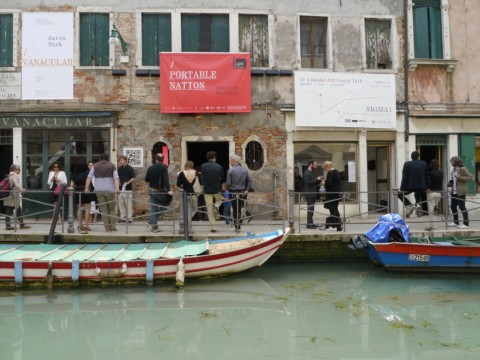
Maldives Pavillion at Gervasuti Foundation,
Fondamenta Sant’Anna (the continuation of Via Garibaldi),
Castello 995, Venice

Library of Historical Archives of Contemporary Arts (ASAC)
access from Calle del Paludo Sant’ Antonio (behind Giardini area),
Castello, Venice

The disappearance of the Maldives beneath the sea is a speculative hypothesis, though a likely and compelling one. The Earth’s average temperature appears set to rise beyond levels considered to have knowable outcomes, and today there is an emphasis on mitigation and adaptation, rather than prevention, in national and international law and policy relating to climate change.

But is dissolution, rather than disappearance, perhaps a more appropriate term to describe the changing state of the Maldives? Already the coral islands are being eroded by rising tides, which take beaches and palm trees with them, while salt water permeates the soil. In a material sense, the islands will not disappear, but they will retreat from human use as the archipelago dissolves into the Indian Ocean.

The former president of the Maldives, Mohamed Nasheed, established a ‘sovereign wealth fund’ to purchase land abroad in anticipation of the displacement of his constituents, proposing Australia, India, and Sri Lanka as territories for relocation. A nation faces a constitutional crisis if all land is lost, and no sovereign territory can be established on foreign soil. The maintenance of territory is one of the key constituting elements of statehood, and should land not be maintained, the state of the Maldives could be legally dissolved.

The prospect of statelessness in this case is a real one. Under current international law there is no such thing as a ‘climate refugee’. Refugee status, and therefore the protection of human rights by host nations, is not currently afforded to individuals displaced by ‘natural’ forces. The acceptance of individuals displaced from low-lying islands into other nations as refugees is thus at present problematic.

Speculating on the contingent circumstances Maldivians may face as a permanently displaced population, and exploring these within a global context, the Contingent Movements Symposium addresses the potential humanitarian and cultural consequences of this situation. Contributors from a range of disciplines have been brought together to think through the effects of national and international law on human movements, and consider how mobile technology and the Internet might assist in preserving the culture of Maldives, while helping dispersed communities adapt and connect.

In financial terms, the role of speculators is to absorb excess risk that other participants do not want, and to provide liquidity in the market place. The Contingent Movements Symposium aims to provide liquidity in the market of ideas surrounding an unprecedented scenario with a not-yet-fixed outcome. Hosted in the archives of the Venice Biennale, on another island affected by floods and inundated by tourism, it seeks to open a dialogue on the future of the Maldives, and the complexity of global responsibility in the face of the world’s changing climate.

Symposium contributions by Alfredo Cramerotti (CPS Curator, Maldives Pavilion), Mariyam Shiuna (researcher), T.J. Demos (writer and theorist), Ravi Agarwal (artist and curator), Klaus Schafler (artist, Maldives Pavilion), Maren Richter (Associate Curator, Maldives Pavilion), Rosa Barba (artist and Film maker), Marianne Franklin (writer and researcher), Nabil Ahmed (artist and curator), Davor Vidas (writer and researcher), Suvendrini Perera (researcher), Irit Rogoff (writer and theorist), Stefano Boato (urbanist and political activist), Luca Zaggia (scientist), Dorian Batycka (writer and curator), Mike Watson (curator and theorist).

Part of the public program of the Maldives Pavilion, the Contingent Movements Symposium and Archive are curated by Hanna Husberg and Laura McLean, and developed with Kalliopi Tsipni-Kolaza.
The Maldives Pavilion is curated by Chamber of Public Secrets, a critical production unit of art and culture. Alfredo Cramerotti and Maren Richter, both curators of the Maldives Pavilion, are moderating discussions at the Contingent Movements Symposium.

Also in association with the Maldives Pavilion, Richter and artist Klaus Schafler and will take symposium participants on a boat trip to the lagoons of Venice, where they will discuss with Venetian urbanist and activist Stefano Boato and scientist Luca Zaggia the recent effects of the rising sea level in the region. Curator and writer Dorian Batycka and curator and theorist Mike Watson, currently in residence at the Gervasuti Foundation, will introduce the project Joan of Art: Towards a Free Education and present a course on art, politics and ecology to be delivered in November.

The Symposium has been assisted by the Australian Government through the Australia Council for the Arts, its arts funding and advisory body. It is also supported by Frame Visual Art Finland, Arts Promotion Centre Finland, and Svenska Kulturfonden, Finland. It is partnered with Maldives Research.

Chaos and order: Trienala Ladina on Dolomiten Zeitung [German]

Posted in nEws and rEleases by Curatorview on September 11, 2013

“Chaos and Order”: Trienala Ladina 2013 on Franz Magazine [Italian]

Posted in nEws and rEleases by Curatorview on August 17, 2013

Le Maldive a Venezia. Cronaca di un debutto – interview [Italian]

Posted in nEws and rEleases, shortEssays/cortiSaggi [English/Italian] by Curatorview on August 16, 2013

Regional arts venues: less out in the sticks, more out on a limb

Posted in nEws and rEleases, shortEssays/cortiSaggi [English/Italian] by Curatorview on July 14, 2013

Running an arts space outside the city is challenging but, once you realise the range of your potential audience, rewarding too

Guardian Professional
5 July 2013

by Alfredo Cramerotti
Sliced Eye, Rubiks Cube, Flawless Skin, Cardiac Muscle Cell, Orion Nebula-M42, Snow Crystal, 2012

MOSTYN works to find imaginative solutions that draw in national and international visitors (even journalists) while retaining strong links with their local audience. Pictured work by Nikolaus Schletterer. Photograph: Nikolaus Schletterer/MOSTYN


As anyone who has worked in the sector will tell you, running an arts space outside major cities is a hugely rewarding experience, not least because of the challenges that arise from reaching out to an audience in ways that can’t rely on a ready-made critical mass of potential visitors in the immediate area.

MOSTYN is Wales‘ largest gallery dedicated to contemporary art with an audience of roughly 80,000 per year, but being located in the 18,000-strong Victorian sea town of Llandudno and surrounded by a predominately rural area brings with it issues that an equivalent metropolitan space might not need to consider so carefully.

Another part of the challenge is encouraging journalists to visit. The three hours direct train from central London is less an issue than the bias towards reviews focusing on galleries and events in the bigger cities. Obviously there is a responsibility for media to cover stories of interest to as wide an audience as possible, but responses range from “I don’t know where I’d put it” (the same review pages you would put any show on) to “we’re fully booked up covering a major event”.

It’s not that these exhibitions or events don’t warrant media attention, but major institutions and blockbuster events hardly need the publicity to encourage public interest.

So, how are we tackling these issues? Like many other organisations reliant on quality of programming, audience engagement, media coverage and visits to secure funding, we are working on finding imaginative solutions that draw in national and international visitors (even journalists) while retaining strong links with our local audience.

A key element of this is an ambitious curatorial programme featuring world known artists from Wolfgang Tillmans to Elizabeth Peyton. We’ve also initiated a major international exhibition programme including co-curating this year’s Wales in Venice show at the 55th Venice Biennale with Oriel Davies Gallery and the Arts Council Wales – an incredible platform for all involved.

Upcoming shows will draw on our history by inviting artists to indirectly respond, through their work, to the history of the MOSTYN building which has gone from being a gallery for female artists when it launched in 1901 to a WW1 drill hall and piano storage, before returning to a gallery space in 1979.

Partnership is a vital part of our engagement work, showcased by linking with initiatives such as the Artes Mundi visual arts exhibition and prize, the biggest in the UK at £40,000. We are also part of Plus Tate, a major UK network which includes 20 contemporary art organisations outside London.

Building on the success of last year’s Plus Tate-funded Ninjas initiative for 11 to 13-year-olds, we successfully applied to be one of five national partners to be part of Tate’s Circuit programme, a national youth network for the visual arts. Funded by the Paul Hamlyn Foundation, Cylch/Circuit seeks to spark a long-term transformation in the way that young people aged 15 to 25 engage with art and take control of their own learning.

The demographic here is older on average than in cities, and we are developing ways to include those who might not normally visit a contemporary art gallery through exhibitions and events which have a cross-art form approach.

For example, our current show YOU is a conceptually strong group show (Felix Gonzalez Torres, Aurélien Froment, Jeppe Hein, Július Koller, Rivane Neuenschwander) that questions the idea of what art is: the viewer ‘produces’ the artwork through their visit. It’s had an amazing response from families who would never think to visit an art gallery, lured in with an event outside the venue during the Llandudno Victorian Extravaganza when the town was heaving with visitors.

On a marketing level, besides the reviews and articles on specialised art press, particularly helpful are features on magazines, blogs and websites such as ThisIsTomorrow and WeHeart since they are bringing MOSTYN out into the eyeline of the style and culture conscious nationally and internationally.

What have we learned that might be useful for other organisations in a similar situation? Surely, understanding that an organisation such as ours does not have a single, cohesive public but multiple audiences (including our staff, not to forget) who demand attention and have different ways of engaging.

This is not to say that we have to please everyone, but we do have to have a firm strategic direction and a flexible range of delivery via the three main areas of exhibitions, engagement and learning – equally important and each with a dedicated curator and budget.

It’s also crucial to seek and establish a range of platforms and partners that match our values and make the most of our programme in space and time: from local residents, schools and higher education to wider partnerships across the country and abroad.

It’s a long-term strategy, and long-term planning matters for our exhibitions, partnerships and funding agreements alike. Currently we are planning well into 2017 but potentially, a cultural institution like a gallery should look into society 20 or 50 years from now and then work back.


Alfredo Cramerotti is the director of MOSTYN contemporary art gallery in Llandudno – follow it on Twitter @MOSTYN_Wales_

This content is brought to you by Guardian Professional.

Chaos And Order: 2013 Trienala Ladina & Richard Agreiter Prize for Sculpture

Posted in nEws and rEleases by Curatorview on July 12, 2013

Plakat Trienala 2013-2


19 July–31 October 2013

Vernissage: Friday 19 July, 6pm

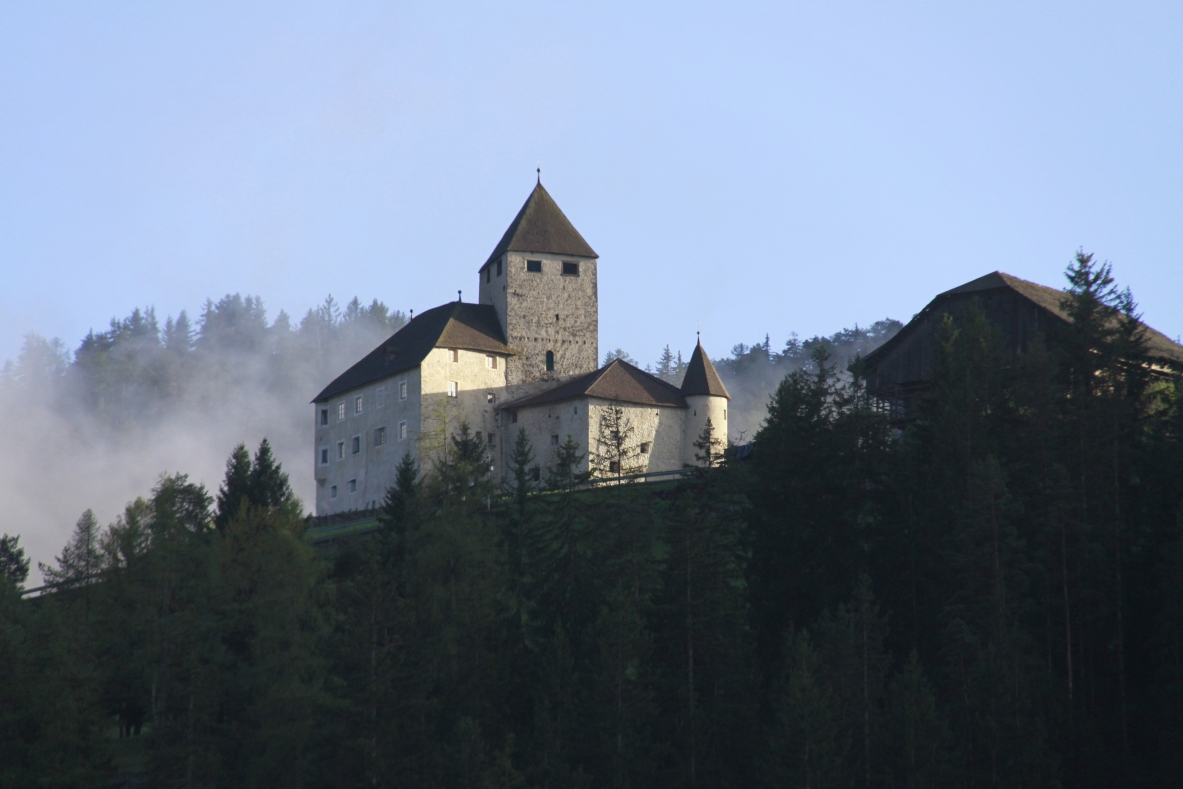
Museum Ladin Ćiastel de Tor
Str. Tor 65
San Martin de Tor, Italy
Participating artists: Flurina Badel (CH), Julia Biasi (USA / I), Fabian Feichter (DE / I), Manuel Riz (I), Martina Stuflesser (I), Alesch Vital (CH), Andreas Zingerle (I / Richard Agreiter Prize winner)

Curated by Alfredo Cramerotti (UK / I)

The Ćiastel de Tor Ladin Museum in San Martino in Badia (I) presents the fourth Trienala Ladina of contemporary art and the Richard Agreiter Prize for Sculpture.

The distinctive leitmotif of the 2013 event is the ambivalence between chaos and order that pervades and prevails in our society: from the economy to the technology, from the environment to the culture, from the gender issues to the questions of identity. However, rather than contrasts between the seemingly conflicting concepts of order and chaos, artificial and natural, and local and global, Chaos and Order emphasis is on the mutual relationships in which they do not cancel each other out.

The Trienala is a key event for the artists in the five Ladin valleys, Graubünden and Friuli, as well as any other artists who have ties to the history, culture and traditions in these areas. The exhibition route begins with a look at the specific features of the Ladin culture and moves on to the more general matter of experiences of alterity, so it conveys the contemporary sense of Ladin character, above and beyond geographical and historical matters.

The 2013 Trienala Ladina encourages the “use” of contemporary art as a means of interpreting the ambivalence of the systems and situations that we encounter on a daily basis, while also contemplating the future prospects for our society.

july8_ladin_logo

Who needs the Guggenheim when you’ve got MOSTYN? Interview with MOSTYN Director, Alfredo Cramerotti on Museums Journal

Posted in nEws and rEleases, shortEssays/cortiSaggi [English/Italian] by Curatorview on June 25, 2013

Who needs the Guggenheim when you’ve got MOSTYN?

Museums Journal
by Simon Stephens
18.06.2013

A recent article in The Guardian by former Plaid Cymru MP Adam Price argued that it made sense to develop a Guggenheim outpost in Wales.

After a recent visit to MOSTYN, a contemporary art gallery in Llandudno in north Wales, it seems to me that developing a Guggenheim in Wales makes no sense at all.

The idea for a Welsh Guggenheim came after Finland rejected plans for a Guggenheim in its capital Helsinki. Some of the concerns centred on the costs of developing and running the gallery. These worries could also apply to Wales.

Also, one of the locations suggested for a Guggenheim was Swansea, where the Glynn Vivian Art Gallery will reopen next year following a £6m redevelopment. The Guggenheim Foundation was not keen anyway so it seems the idea is dead in the water.

I went to MOSTYN to interview its Italian-born director Alfredo Cramerotti. Under his leadership, the gallery is combining an international exhibition programme with support for the contemporary art scene in Wales through initiatives such as the Artes Mundi visual arts exhibition and prize.

The gallery is also part of a £5m arts programme for under-25s funded by the Paul Hamlyn Foundation.

And Cramerotti hopes to address local concerns by using artists to interpret the history of the MOSTYN building, which started life in 1901 as a gallery for female artists then went through various other uses (a world war one drill hall and a piano showroom among them) before reopening as a gallery in 1979 following a campaign by a group that included the artist Kyffin Williams.

MOSTYN added an impressive extension by Ellis Williams Architects that opened in 2010. The gallery now gets about 80,000 visitors a year – and that’s in a town with 18,000 residents.

I came away from Llandudno thinking what Wales needs is another couple of MOSTYNS, not a Guggenheim.

Developments in Conceptual Art: the relationship between Artwork and Audience

Posted in nEws and rEleases by Curatorview on June 24, 2013

Developments in Conceptual Art: the relationship between Artwork and Audience

A symposium organised by North Wales Open Studios Network in partnership with MOSTYN| CYMRU| WALES

 HG

Date:          30.6.2013

Time:          11am-3pm

Venue:         MOSTYN, 12 Vaughan St, Llandudno, LL30 1AB

Speakers:   Aurelien Froment (artist), Bedwyr Williams (artist), Alfredo Cramerotti (Director, MOSTYN), Adam Carr (VIsual Arts Programme Curator, MOSTYN)


Programme

11am-12pm  Presentation by Adam Carr about the art historical background of the relationship between artwork and viewer and its growing status over time.

Carr’s presentation, titled “The Viewer and Conceptual Art & Conceptual Art and The Viewer” will look at the history and legacy of conceptual art investigating its inception, its main proponents and how it looks at the world around us with particular focus on the role of the viewer.

12pm-12.45pm  Lunch

12.45pm-2.45pm Panel Discussion

Some forms of Conceptual Art engage the viewer in ways that they may not be accustomed to in relation to their experience of artworks and exhibitions. The panel will be talking about how shows like “YOU”, the current MOSTYN exhibition, respond  to the visitor, and are subject to perpetual change and re-order in accordance to their activity, thereby  challenging  conventional codes of behaviour in the context of a gallery space.

How do these works engage and forge relationships with audiences in distinctively different ways from any other works of art? How is the role of the viewer elevated and placed into the centre uniquely? Does it build a different alliance between Viewer, artwork and gallery?

This is an opportunity to hear about the “Y O U” exhibition from Curator Adam Carr and discuss the development of the role of the “viewer”, with artists Aurelien Froment and Bedwyr Williams and Alfredo Cramerotti, director of MOSTYN.


If you are interested in booking for this session please contact sabine@helfagelf.co.uk

This project has received funding through the Rural Development Plan for Wales 2007-2013 which is funded by the Welsh  Government and the European Agricultural fund for Rural Development


Biennale Updates: cronache dall’effimero per la prima volta del Padiglione Maldive in Laguna

Posted in nEws and rEleases by Curatorview on June 22, 2013

Artribune.com [Italian only]

30 May 2013

by Francesco Sala

Il-Padiglione-Maldive-480x360

Alle otto del mattino non c’è nessuno lungo Riva di Ca’ di Dio. Pochi temerari in tenuta da jogging, i ragazzini che si trascinano a scuola, un paio di turisti. E poi un blocco di ghiaccio. Sbarca dal Canale dell’Arsenale, trascinato a forza di muletto; prende a sciogliersi, inesorabile, una goccia alla volta. È il monolite con cui Stefano Cagol significa la sua partecipazione alla Biennale di Venezia, ospite di quel Padiglione Maldive che ha trovato casa –alla sua prima volta in Laguna –in uno stabile semi-abbandonato in viale Garibaldi. Verrà il giorno in cui le Maldive non si saranno più, sommerse un centimetro alla volta dall’innalzamento del livello degli oceani; la raccolta messa insieme dal collettivo CPS – Chambers of Public Secrets indugia sul titanico precariato di una terra in crisi di identità, storica piattaforma tra Oriente e Occidente che esorcizza nell’arte la sua eutanasia.

Aggressività post-espressionista per The Disappearance di Wael Darwesh, che colpisce sulla tela con antica disperazione; gli fa da controcanto l’installazione di Patrizio Travagli, tetris di superfici specchianti che illudono e alludono in una straniante frammentazione dello spazio visivo. Inevitabili i riferimenti allo tsunami, che ha portato il suo carico di brutalità anche alle Maldive: sul tema arriva l’installazione di Thierry Geoffroy, mentre a ragionare su una ricostruzione più o meno possibile sono Christoph Draeger ed Heidrun Holzfeind.